

























































Louzetta DeBoe has lived in Maryland her whole life, and at 90 years old, the Essex resident says she now manages her fixed income by doing without. Electricity, medicine and groceries all strain her limited budget, she says, and she's had to dip into savings she once hoped to leave her children.
“I don't feel good. I don't feel good about it,” DeBoe said of being left behind after a lifetime in the state, according to WBFF/Fox45. DeBoe, who was born in Cambridge on Maryland's Eastern Shore, said everything has gone up, and that rising energy and household bills eat into money she needs for food and other everyday necessities.
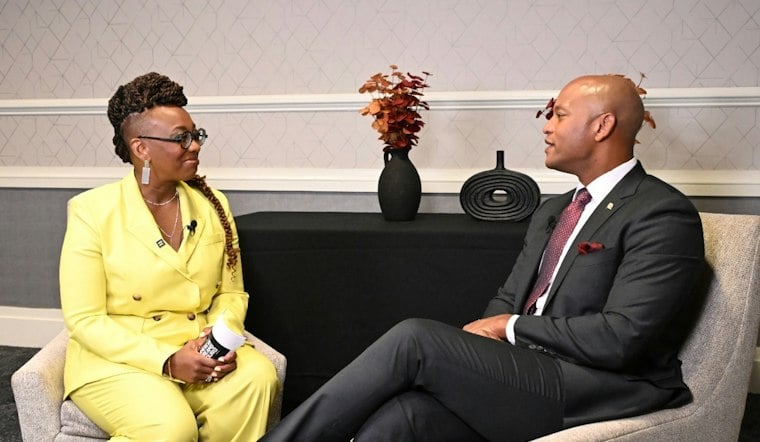
Her frustration lands squarely in the middle of a re-election pitch from Gov. Wes Moore, Maryland's Democratic incumbent, whose campaign website claims his administration made energy more affordable and gave the middle class a tax cut. Moore himself has said, “we have been able to give the middle class and working families a tax cut.” But Spotlight on Maryland — a collaboration between Fox45 News, WJLA in Washington, D.C., and the Baltimore Sun — says it pressed Moore's campaign and his state executive office for more than two weeks for evidence behind those claims, for details on Maryland's finances, and for answers on juvenile crime, and the campaign did not directly answer the questions or provide the requested documentation.
Tax Cut Claims Meet a Thin Record
What documentation does exist tells a modest story. Moore's proposed 2025 budget offered a few dollars per month in income-tax reductions, or no change at all, for most filers, while increasing certain Motor Vehicle Administration fees, including vehicle titling charges and the excise tax on most vehicle purchases. That same year's tax and fee package, which Moore approved and signed, also added a new technology tax that the Maryland Board of Revenue Estimates said greatly underperformed expectations, plus a $5 fee on every new tire purchase.
Maryland lawmakers enacted spending cuts alongside that $1.6 billion tax and fee increase in 2025 — a package the report notes was passed less than three months after President Donald Trump began his second term in January 2025. Moore's campaign spokesman, Carter Elliott IV, responded to questions with a statement crediting the governor with helping create tens of thousands of jobs, among other claimed accomplishments, in a campaign email, but he did not answer the juvenile-crime question directly.
Separately, the governor's own re-election operation points to fresher job numbers: according to a report published on wesmoore.com, Maryland added 17,800 jobs in the first half of 2026, a 0.64% growth rate that outpaced the national rate of 0.35%.
Energy Bills Keep Climbing Despite Relief Programs
Moore and Democratic state lawmakers have touted energy assistance in the final three weeks before Election Day, including a 2025 law that authorized $200 million in electricity-bill credits, distributed in two installments in early 2026. State regulators estimated the average combined credit at about $80 per customer, varying by utility and usage. The Moore administration also expanded energy-assistance eligibility and benefits in July, saying roughly 200,000 households would receive increased help.
Moore and the Maryland General Assembly passed the Utility RELIEF Act earlier in 2026, which could provide $150 credits in 2027 for some residents — working out to roughly $12 per month for qualifying households. That same year's energy legislation allocated another $100 million to offset certain residential utility surcharges, with that relief scheduled to arrive in 2027. Yet the Maryland Office of the People's Counsel reports that BGE electricity delivery rates have climbed 44% since 2020, and gas distribution rates have risen 58% over the same period. BGE sought another electric distribution rate increase in 2026, which the People's Counsel is urging regulators to reject.
DeBoe sees a mismatch between the relief programs and what she experiences paying her own bills. “Some people in office had a surplus of money,” she said, suggesting that surplus isn't reaching people like her anymore, per the same Fox45 report.
Surplus Claim Collides With Billion-Dollar Deficit Forecasts
Moore's campaign claims he turned a projected $1.5 billion cash shortfall into a $250 million surplus. Fiscal 2025 did close with a $271 million general fund balance after revenues outpaced estimates, according to a separate WBFF/Fox45 report, which notes that lawmakers closed a $3.3 billion budget gap that year through a mix of spending cuts, fund transfers and a tax-and-fee package estimated to cost taxpayers roughly $1.68 billion.
The state's own analysts see a far rockier road ahead. The Department of Legislative Services projects a $600 million structural deficit for fiscal 2027, growing to $2.57 billion in 2028 and $3.44 billion by 2030. A separate account from Maryland Matters put the next-term shortfall at $2.3 billion, rising to about $3 billion in fiscal 2029 and $4.1 billion by fiscal 2031, even as Moore's $70.8 billion budget proposal closes a more than $1.5 billion deficit for fiscal 2027 without new taxes or fees. A Department of Legislative Services analyst told the outlet the plan “does not make substantial progress for fiscal '28 and beyond.” Despite a positive year-end cash balance, Maryland's ongoing revenues still do not cover its ongoing commitments, the Fox45 report notes.
Spotlight on Maryland questioned Moore at the Maryland State Fair in September about higher state fees and his pledge against tax and fee increases in the 2027 legislative session. Moore said the past year and a half had been hard and that Maryland was still fighting against Trump's tariffs. He debated Republican challenger Dan Cox weeks after that state fair interview.
Juvenile Crime Numbers and a Leadership Shake-Up
Juvenile complaints received by Maryland's Department of Juvenile Services rose from 12,388 in fiscal 2023 to 14,184 in 2024, then fell to 13,274 in 2025 — still elevated compared with the first year Moore took office. Complaints involving children younger than 13 increased from 300 in 2023 to 466 in 2025, a jump the report describes as more than 55%. Fox45 News separately reported that a 10-year-old and a 12-year-old passenger were allegedly involved in a stolen-car police chase in East Baltimore that ended in a crash.
Moore defended then-DJS Secretary Vincent Schiraldi in April 2024, but Schiraldi left the department in June 2025. Moore and Schiraldi have given conflicting accounts of whether Schiraldi was fired or resigned. Betsy Fox Tolentino was later appointed to fill the vacancy. Moore's campaign did not answer Spotlight on Maryland's question about what the administration is doing in response to the juvenile crime figures.
Spotlight on Maryland reporter Gary Collins, who authored the original report, can be reached at [email protected] or through the outlet's hotline at (410) 467-4670 for tips related to the story.




