

























































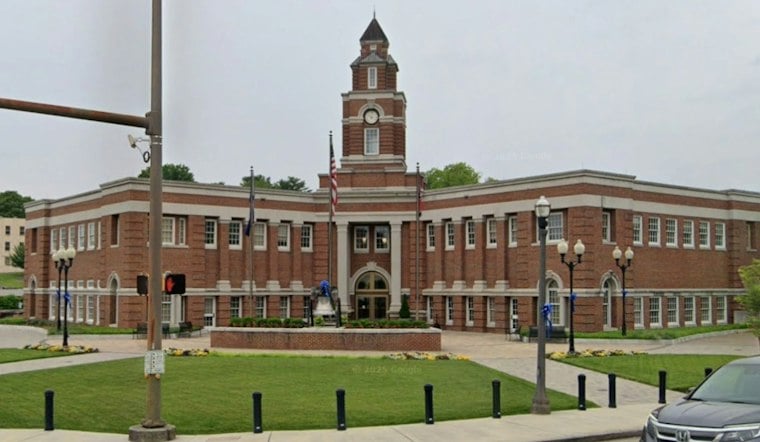
Morristown's city council voted 6-1 on Tuesday to pass a new zoning plan governing where and how data centers can operate within city limits, requiring the facilities to sit at least 500 feet from homes, schools, and occupied government buildings and keep all associated equipment indoors. The move sets Morristown apart from its own county government, which chose a different path entirely just weeks earlier.
A Different Approach Than the County Next Door
While the Hamblen County Commission enacted a one-year moratorium on high-intensity electrical load facilities drawing 5 megawatts or more, according to Hamblen County Government, Morristown's city council instead chose to write zoning regulations rather than pause development altogether. The city's decision, reported by WBIR, came after the Morristown Planning Commission originally approved the draft ordinance on September 8, establishing heavy industrial siting rules alongside the 500-foot distance requirement.
City officials say the new rules are precautionary rather than reactive. Per Andrew Ellard, Morristown currently has no set plan for data centers to move in, but the city anticipates potential applications and created a staff-led amendment specifically because no previous data center rules were in place, the station's report notes.
Existing Crypto Mining Offers a Preview
Morristown isn't entirely new to high-density computing. Per the same account, the city already has cryptocurrency mining centers located in one of its industrial park areas, a legacy of a July 2022 deal in which the city council and Industrial Development Board approved selling parcels in the East Tennessee Progress Center and East Tennessee Valley District to crypto mining firm Wattum, according to WBIR, with that sale capping operational noise at 70 decibels.
Morristown Utility Systems, the municipal power provider that has operated since 1901, reported that its existing industrial park cryptocurrency customer pays the single highest electric bill of all MUS accounts. A local citizen petition also cited a 2022 projection that the facility would employ three to five people, while pushing for explicit decibel and water usage limits, according to the Citizen Tribune.
A Push for a Pause
Not every council member backed the zoning-first approach. James Cox supported a moratorium that would have paused discussion of data centers altogether. The ordinance passed 6-1.
Cox's position echoes moves already underway elsewhere in East Tennessee. Anderson County commissioners voted in June to adopt a two-year moratorium on zoning regulations for data processing, crypto mining, and battery storage facilities, part of a broader wave of local pauses across the region, as reported by WBIR. Meanwhile, Greeneville had a proposal for a report on data-center regulations and definitions, per WGRV.com.
Grid Costs and Rate Pressure Loom in the Background
The zoning debate is unfolding against a backdrop of significant regional energy strain. Data center electricity consumption across the Tennessee Valley region increased sevenfold between 2020 and 2025 to 8.3 million megawatt-hours, enough to supply more than 661,000 homes, according to nonpartisan research organization ThinkTennessee. The same group found residential electric bills in Tennessee host communities rose 3.2% between 2023 and 2024, even as commercial bills in those same municipalities declined by 0.2%.
State and regional regulators have moved to limit how those costs get passed along. Tennessee enacted House Bill 1847 in May, requiring data center operators to pay 100% of the electric generation, transmission, and infrastructure costs their facilities trigger, a statute that forbids municipal and cooperative utilities from raising residential rates to fund data-center-driven grid expansions, per LegiScan. The Tennessee Valley Authority followed in August by approving a dedicated electricity rate class for data centers that phases in a roughly 10% cost increase over three years and imposes upfront capacity commitment fees of about $1.5 million per megawatt, according to LocalMemphis.com.
For now, city leaders maintain Morristown may reevaluate the data center standards as circumstances develop, per the city, even with no applicant currently seeking to build. The new 500-foot buffer and indoor-equipment requirements are designed to be in place before that first proposal ever arrives.





