

























































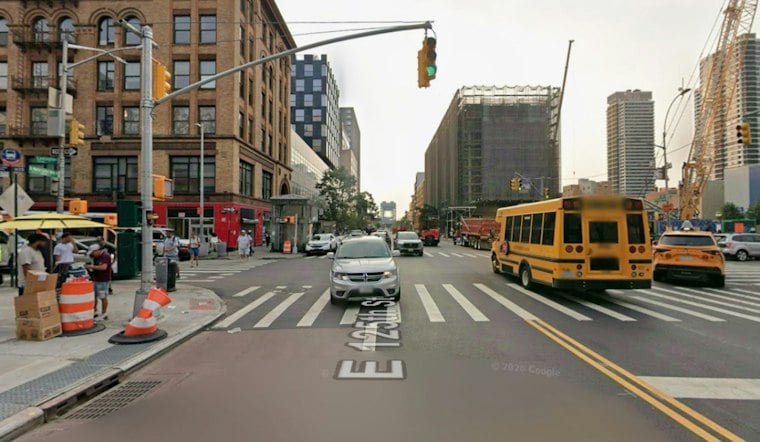
The MTA wants to keep two enormous tunnel boring machines digging west after they finish their work under 125th Street for the Second Avenue Subway, a move officials say could save taxpayers hundreds of millions of dollars and speed up construction by more than two years. The proposal, detailed in an October 21 post from the agency, would extend a new subway tunnel west from the future 125th Street/Lexington Avenue Q station, threading beneath one of Upper Manhattan's busiest corridors.
According to the MTA
, the plan would connect existing subway lines and bus routes along 125th Street, including a tie-in to the Second Avenue Subway. Agency officials reported in October that seamlessly continuing the tunnel boring machines' drive westward beneath Harlem, rather than retiring them once Second Avenue Subway Phase 2 work beneath 125th Street wraps up, is the financial logic behind the expanded scope, according to the
MTA
.
A map attached to the agency's announcement lays out proposed stops at 125th Street–Broadway, 125th Street–St. Nicholas Avenue, 125th Street–Lenox Avenue, and 125th Street–Lexington Avenue, with a connection to Metro-North's Harlem–125th Street station.
What's Actually Being Built Right Now
It's important to note what this initial phase does not include. The current environmental review covers a tunnel shell planned as two tubes beginning near Lenox Avenue, with ventilation and emergency-access structures.
In other words, the MTA is proposing to dig the hole now while the boring machines are already in the neighborhood, leaving the harder question of paying for an operating subway line for a later capital program. Public comments on the draft scoping document opened October 7 and run through November 13, with a Draft Environmental Impact Statement scheduled for release in winter 2027, the agency's report notes. State budget legislation enacted earlier this year included an amendment allowing preliminary tunnel design work to move forward concurrently with the environmental review, as reported by Mass Transit Magazine.
Two Ways To Weigh In This Month
The MTA is hosting two virtual public scoping meeting sessions on Thursday, plus one in-person session next Tuesday, October 27, in the second-floor community room of the Adam Clayton Powell Jr. State Office Building at 163 West 125th Street in Harlem. The agency is inviting the public to register for a session ahead of time.
MTA transit projections cited in October estimate the 125th Street corridor already serves more than 164,000 daily riders. A fully built crosstown subway line is expected to attract 5,500 new daily transit riders while eliminating more than 21,600 daily vehicle miles traveled on Upper Manhattan streets, according to Secret NYC. The street is currently Manhattan's busiest crosstown bus corridor, served by the M60 Select Bus Service, a direct Manhattan–LaGuardia transit link.
A Cheaper Path Transit Advocates Are Pushing
Not everyone is convinced the MTA's current approach is the most efficient one. In an August report, the transit advocacy group Effective Transit Alliance estimated that completing a full 125th Street subway extension with deep cavern stations could cost up to $7.7 billion and push platforms more than 100 feet underground, according to Streetsblog New York City. The group argued the MTA could cut construction costs in half and shorten passenger travel times by using shallower cut-and-cover techniques and smaller station footprints instead.
The crosstown concept isn't new. It was first formally identified for evaluation in the MTA's 2023 20-Year Capital Needs Assessment before advancing to a state-funded feasibility study in 2024. Governor Kathy Hochul allocated $25 million in state funding this past January to move the proposal into formal design and environmental review, bringing it to its current scoping phase.
Riding On The Coattails Of Second Avenue Subway
The proposed crosstown tunnel builds directly on Second Avenue Subway Phase 2, which will extend the Q train from 96th Street to 125th Street and Lexington Avenue. Phase 2 secured a $3.4 billion federal Full Funding Grant Agreement in November 2023, is under construction and is expected to be completed by the end of 2032.
That timeline hasn't been without friction. Hoodline previously reported that early pre-construction work along the 125th Street corridor faced delays earlier this year when the MTA filed federal lawsuits against East Harlem property owners who denied access for mandatory structural surveys and shoring work. Those access disputes underscore the kind of real-world friction that can slow megaprojects even once funding and machinery are in place.
For now, the 125th Street tunnel extension remains a proposal under environmental review, with no funding yet identified for the stations, tracks, and signals that would turn the shell into an operating subway line. Harlem residents have until November 13 to submit comments on the scoping document, with the next opportunity to speak directly to MTA officials coming at next Tuesday's in-person session.



