

























































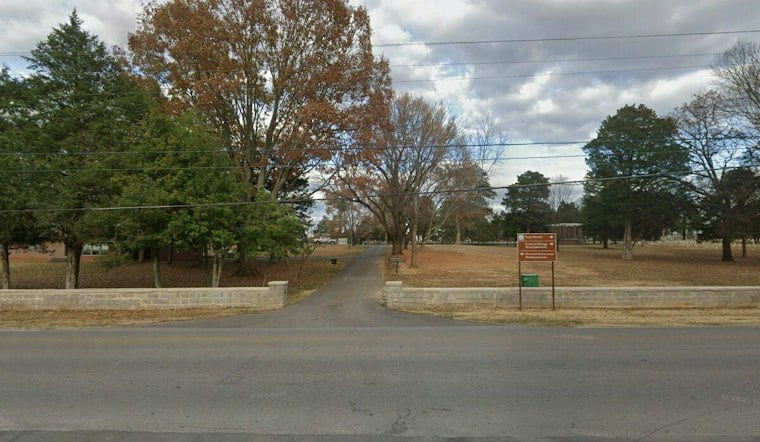
A schoolhouse that once taught generations of Black children off Old Nashville Highway in Murfreesboro has reopened its doors — not for classes, but as a museum. The Cemetery School, which served the educational needs of Black children in Rutherford County for more than 80 years before closing in 1962, now stands restored with its original desks and blackboard intact.
The reopening was reported by WKRN News 2, which detailed how the school educated children off Old Nashville Highway for generations before it closed down in 1962. Vincent Windrow, whose mother attended the school, led the effort to bring it back to life, taking over as caretaker of the site in 2019, according to the station's reporting.
Original Desks and Floors Remain
Rather than gut the space for a modern renovation, Windrow and his collaborators chose to keep much of what made the building feel lived-in. Per the same account, Windrow kept the original desks — with markings from the students who once sat there — along with the light fixtures, the blackboard and even the floors. Half of the restored building is devoted to archives and a museum, while the other half is set up to look as it did in the 1940s.
The restoration drew on a wide network of support. Boro Pulse reported that Windrow worked with the nonprofit Friends of Cemetery School alongside support from MTSU's Center for Historic Preservation, the Stones River National Battlefield and other community members. The outlet also noted that the Cemetery School was built by formerly enslaved people and U.S. military veterans of color from the surrounding community, underscoring the grassroots origins of the site long before its restoration began.
A Building With Two Dates on Its Birth Certificate
Exactly when the current structure was built remains a point of disagreement among sources. NewsChannel 5 reported that the current building was constructed in 1941, replacing the original school built in 1874. The Rutherford County Historical Society, however, states that the last Cemetery School building was erected in 1945. The dossier does not reconcile the discrepancy, and both accounts are presented here as reported.
The school's academic history is better documented. According to WGNS Radio, African American children from first to eighth grade were educated at the school until it closed in 1962. That same report detailed the financial backbone behind the restoration: the project has secured $250,000 in state funding, split into $125,000 grants for the Friends of Cemetery School and the Mel Malone Family Foundation.
National Recognition and a Growing Role in Local History
The Cemetery School's significance has been formally recognized nationally. MTSU News reported that the school, located at 3097 Old Nashville Highway, secured its spot on the National Register of Historic Places in 2022. The same coverage described plans for the site to serve as a repository for everything related to the Cemetery community, with curated exhibits and presentations meant to preserve and share those stories.
MTSU's reporting also pointed to the site's growing role as a community gathering place, noting plans for a Patriot Camp for students alongside an inaugural Juneteenth celebration and fundraiser meant to support ongoing renovations. As of a March 2026 update from Boro Pulse, the restoration work was described as about 75% complete, a marker of how far the project had come from earlier timelines discussed for the building's reopening.
The Cemetery School's journey mirrors a broader pattern of preservation efforts across Tennessee and the South. In Williamson County, a former schoolhouse for Black children was moved to a new location in downtown Franklin for restoration as a historic site, part of a network of schools once built through Julius Rosenwald's partnership with Booker T. Washington to serve Black communities across the rural South, according to WBUR. Boro Pulse has separately covered the Cemetery School's restoration, while MTSU has described the school as one of Tennessee's few surviving Black schools built during segregation, a characterization that underscores why Windrow and his partners have fought to keep its walls — and its desks — standing.





