

























































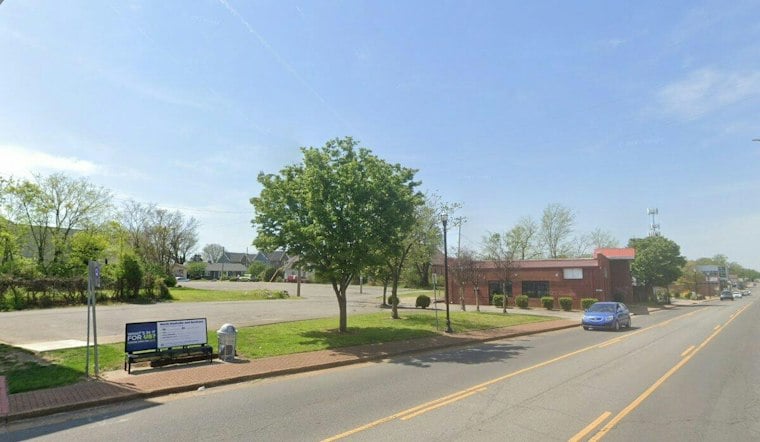
Citizens Bank is marking more than 120 years of serving Nashville’s African American community with a plan to put down new roots just up the road from where it started. The historic Black-owned institution on Jefferson Street announced it will relocate its main office branch and administration office farther along the same corridor, staying anchored in the North Nashville neighborhood even as the area transforms around it.
The bank’s chief operating officer, Corey Hammonds, said the move keeps Citizens Bank exactly where it has always belonged. “We’re going to relocate our main office branch and administration office to right up the street here on Jefferson Street,” Hammonds said, according to NewsChannel 5. He added that remaining in the neighborhood is a priority as development continues along the corridor.
A Mission Dating to 1904
Citizens Bank was founded in 1904 to help African Americans build wealth and economic security, a mission Hammonds said still drives the institution today. “Hammonds said that mission has not changed,” the station reported, and he went further, telling the outlet, “we plan to be here for another 100 years going forward.” According to the station’s report, the bank continues to offer financial literacy programs, mortgages and other financial products to the community it was built to serve.
The bank’s roots run deep in local history. Records from Tennessee State University show the institution, originally organized by members of Nashville’s Black business community, opened its doors on January 16, 1904, and was later reorganized under the name Citizens Savings Bank and Trust Company in 1920. Some sources, including a statement from technology vendor CSI, have described Citizens Bank as the oldest continuously operating African-American-owned bank in the country, while the Tennessee State University archive instead identifies it as the second-oldest minority bank in the nation — a distinction the available record does not resolve.
New Development Rising Nearby
The relocation is tied to Renaissance on Jefferson, a mixed-use project expected to include the bank’s headquarters alongside mixed-income housing and retail space. Per the same report from NewsChannel 5, the project is being built on a 1.4-acre site assembled from eight smaller properties, and it is expected to include leasing suite offices for entrepreneurs. Construction on Renaissance on Jefferson has already begun and is expected to finish in 2028, according to WKRN.
The bank’s plans extend beyond its own walls. Citizens Bank also plans to partner with nearby universities to help shape the future of the Jefferson Street corridor, the station reported. That ambition lines up with a broader wave of investment along the historic business hub: as Nashville Scene has reported, sandy lots and neglected storefronts along the corridor have recently begun changing hands as both public and private money flows into the area.
Sidewalks, Crossings and a Longer Timeline
City planners are working on their own piece of the corridor’s future. The Jefferson Street Corridor Study aims to improve pedestrian infrastructure such as sidewalks and street crossings and add more green space to the area, according to WSMV. That outlet reported the final design is scheduled to be set by 2028, with construction starting the following year — putting the city’s infrastructure timeline roughly in step with the bank’s own relocation and the completion of Renaissance on Jefferson.
For longtime residents, the moment carries weight beyond brick and mortar. Alonzo Rhodes, community achieves manager at Moses McKissack Middle School, described Tennessee State University and Citizens Bank as fixtures of North Nashville, underscoring how closely the bank’s history is woven into the neighborhood’s identity. The bank marked its milestone with a community cookout during Tennessee State University’s homecoming week, a gathering that tied its celebration of more than 120 years directly to the university community it has long served alongside.
The push to grow also reflects a wider challenge facing Black-owned financial institutions. An FDIC survey found that 11.3% of Black households were unbanked in 2021, compared with 2.1% of white households, according to the Tennessean. Against that backdrop, Citizens Bank’s decision to expand rather than retreat from Jefferson Street signals an effort to keep closing that gap from within the neighborhood it has served for more than a century.





