

























































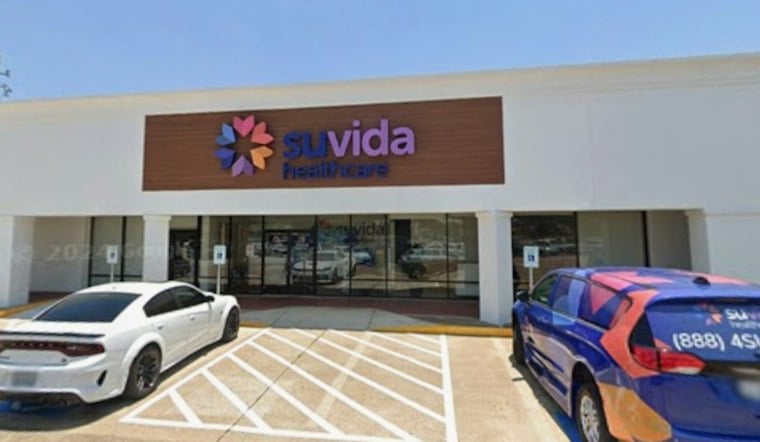
A new primary care clinic has opened in central Phoenix with a simple but overdue promise: older Latino patients won't need a translator to talk to their doctor. Suvida Healthcare's first Phoenix location hires fully bilingual and culturally competent physicians, nurses, physician assistants and other staff, and it pairs primary care with behavioral health services aimed squarely at a population that has long struggled to find providers who speak its language.
The clinic's arrival addresses barriers to health care, including language, culture and transportation, according to KJZZ. Patient Esthela Ribera Valenzuela, who does not speak English, told the station she appreciates not having to rely on a translator because Suvida's providers speak English themselves and can walk her through her own medical needs directly.
A Waiting Room Designed to Feel Like Home
Suvida calls its waiting room “la sala,” Spanish for the living room, and designed it as a gathering space meant to put patients at ease rather than on edge, per the same KJZZ report. The company encourages patients to bring caregivers or family members along to appointments and offers healthy snacks and cafecitos while people wait, a touch Suvida co-founder and chief health officer Ana Fuentevilla said is intentional. Fuentevilla said the company set out to create a new way to solve health-care problems facing Latino seniors, adding that making patients feel at home is part of what gets them to actually show up for care.
Beyond the Phoenix location, Suvida operates centers in Tucson and Texas tailored to the needs of Hispanic seniors, according to kgun9.com. Suvida's two Tucson centers sit at 1227 W. St. Mary's Road and 3728 S. 16th Avenue, and the outlet reports that the company's entire team speaks both English and Spanish, with staff trained specifically to address patients' linguistic and cultural needs.
More Than a Doctor's Visit
The Phoenix clinic offers primary care alongside behavioral health services, and the broader Suvida model includes mental health support, dietary consultations and exercise classes in both English and Spanish at no extra charge, the kgun9.com report notes. The company also hosts events, educational workshops and social gatherings for patients and their families, folding community-building into what might otherwise be a routine checkup. At Suvida's south Tucson facility, the same philosophy showed up as an all-in-one setup combining primary care, a dietician, physical therapy and mental health counseling under a single roof.
Why Bilingual Care Matters
The need behind Suvida's approach is backed by national data. Pew Research Center found that just under half of Hispanic adults, 46%, say they have a close friend or family member who needs a Spanish-speaking health care provider or translator, and 44% point to communication problems stemming from language or cultural differences as a major reason behind worse health outcomes. Language barriers can make communication between patients and health care providers more difficult.
Overall, 68% of Latinos say they currently have someone they consider their primary care provider, per Pew's research. But that access narrows sharply for newer arrivals: only about half, 48%, of recent Hispanic immigrants who have lived in the U.S. for 10 years or less say they have a primary care provider at all.
For now, Suvida's bet is that pairing bilingual medicine with a living-room atmosphere can chip away at those gaps one appointment at a time. Whether the model expands further across the Phoenix area remains to be seen, but its first local foothold is already open for patients like Ribera Valenzuela, who appreciates not having to rely on a translator.





