

























































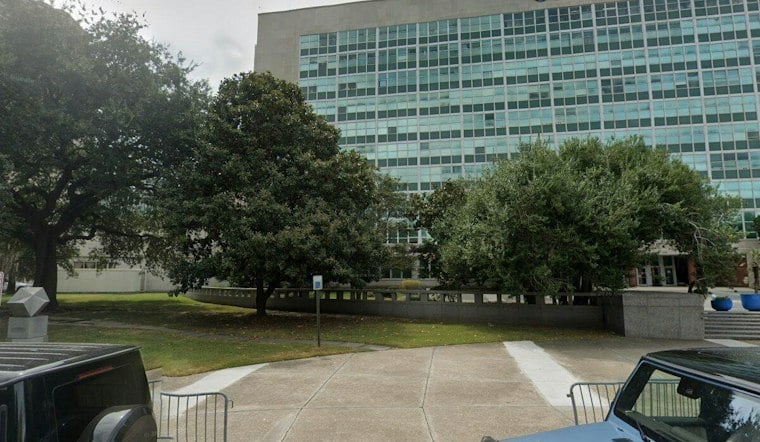
New Orleans’ 2027 budget debate turns on how the city will address a roughly $100 million shortfall and which services it can sustain. The council is three weeks into the process, weighing whether to restore property-tax millages after reassessments or leave them rolled back, while considering funding for public safety, post-carnival parade cleanups, the low-barrier shelter, eviction prevention and violence prevention.
The council is scheduled to hold a public hearing November 5 and vote on whether to roll forward property-tax millages. Under Article VII of the Louisiana Constitution, the move requires a two-thirds council supermajority but no additional voter approval. City officials project it would generate roughly $42.25 million in new 2027 property-tax revenue, taking total ad valorem collections from $255.1 million to $297.3 million, according to the City of New Orleans. The city faces a roughly $100 million overall deficit; without the revenue, $77 million in programs and services could be lost, NOLA.com reported.
Why Property Taxes Automatically Roll Back
Louisiana's constitution automatically rolls back millage rates when property reassessments push up total taxable values, keeping tax yields neutral unless local governing bodies explicitly vote to restore them, per the Public Affairs Research Council of Louisiana. That framework is part of why the city council, rather than voters directly, holds authority to approve the tax increase under consideration, per the same NOLA.com report. The stakes extend beyond this budget cycle, too: Louisiana voters are weighing statewide Constitutional Amendment 2 this November, which would let local taxing authorities keep millages below voter-approved maximums without permanently losing the right to roll them forward later, according to Pelican Policy Research.
To help residents understand what's on the table, the city launched an online property tax calculator in October that lets homeowners enter their property ID to see how different roll-forward scenarios would affect their monthly and annual bills, according to a statement shared on WWL-TV's reporting
. Even if the council approves a full roll-forward, the city would still need to cut about $32 million in services, assuming no other funding sources are found, per the same NOLA.com report.
Grass Cutting and Shelter Funding on the Line
Council member Aimee McCarron has warned that without the millage roll-forward, basic services like city grass or tree cutting could land on the chopping block, and she said the city needs recurring revenue to keep those services funded, per NOLA.com. McCarron plans to hold town halls about the millage to walk residents through the tradeoffs, the outlet reports.
The council has pledged to find $5 million for the low-barrier shelter, which temporarily houses homeless residents, potentially drawing on private partners rather than the general fund, according to the same report. Housing advocates aren't waiting quietly for that pledge to materialize — on October 8, members of the Right to Counsel Coalition rallied outside City Hall during budget hearings to protest proposed cuts to eviction defense funding and the shelter, as reported by The Louisiana Weekly.
Eviction Defense Program Faces Scrutiny
The council is committed to funding the Right to Counsel eviction prevention program and is obligated to protect it under a city charter ordinance, per NOLA.com. That program, established under City Council Ordinance No. 29019 in May 2022, guarantees free legal defense for tenants in eviction court and costs roughly $2.5 million annually to run fully, according to the National Coalition for a Civil Right to Counsel. Council member Lesli Harris has said the council could consider reducing that $2.5 million budget rather than eliminating it outright, per NOLA.com.
The program's track record is part of why advocates are fighting to preserve it. A 2025 study by the Jane Place Neighborhood Sustainability Initiative found that 26% of unrepresented tenants in New Orleans received 24-hour eviction notices, compared with just 2% of represented tenants facing absolute eviction orders — and 65% of represented tenants achieved positive legal outcomes, according to the National Coalition for a Civil Right to Counsel. Harris has separately said that sanitation after Mardi Gras parades is non-negotiable, while council member Freddie King III wants code enforcement, sanitation and public works departments fully funded, per NOLA.com.
What housing data show
The available figures provide snapshots rather than a year-by-year account of eviction filings or program outcomes. WWNO reported that New Orleans eviction filings were running at around 470 per month as of April 2022, a rate it described as on par with 2019. The 2025 study cited above found different outcomes for represented and unrepresented tenants, but the figures provided do not establish how those outcomes changed over time. For homelessness, NOLA.com reported that the Jan. 23, 2023, point-in-time count found 1,390 people living on the street or in a shelter in New Orleans and Jefferson Parish, with about 91% in Orleans Parish. That count offers a measure of need at that time; it does not show how shelter demand or capacity has changed in recent years.
Juvenile Justice Cuts Draw Concern
Mayor Helena Moreno's budget proposes more than $1 million in reductions to the juvenile justice center, cuts that would affect the court system, public defenders and youth programs, according to NOLA.com. The reductions come after Louisiana reduced Orleans Parish juvenile court judges from four to two in the last legislative cycle, the outlet reports. Council member JP Morrell has said community violence intervention programs are essential to maintaining the city's low crime rate, while council member Nellie Catzen has said the proposed cuts would disproportionately burden people already affected by vulnerabilities.
Moreno's $1.47 billion proposed 2027 operating budget, presented on September 22, already includes $77 million in spending reductions — eliminating 152 full-time municipal positions and imposing a 10% salary cut on top city executives — to address the deficit, according to Verite News. It's the second straight year of major shortfalls: when Moreno took office in late 2025, her administration inherited a $222.4 million deficit for fiscal year 2026, requiring $74.5 million in emergency revenue recognitions and cuts to balance the books, according to the City of New Orleans. Hoodline previously reported on the administration's sales tax amnesty push aimed at closing part of the gap.
Who Decides What Gets Saved
Moreno presented her draft budget without recommendations about which programs to cut or save, leaving that call largely to the council, per NOLA.com. Her counsel, Andrew Tuozzolo, has said the mayor's team is meeting with council members to gather priorities on proposed cuts and revenue options. Political scientist Ed Chervenak has said the city council ultimately controls budget decisions.
Harris has called on Moreno to identify a specific budget proposal for a millage roll-forward scenario rather than leaving the council to guess, per NOLA.com. Moreno has said she will weigh in if the council approves new revenue, and that the final budget will be a collaboration between her office and the council. Morrell, for his part, has said the mayor should not dictate which projects get saved if the council goes through with the roll-forward. The council must approve a final budget by December 1, and with more than 75 proposed cuts still on the table, the next three weeks will determine which city services survive intact.





