

























































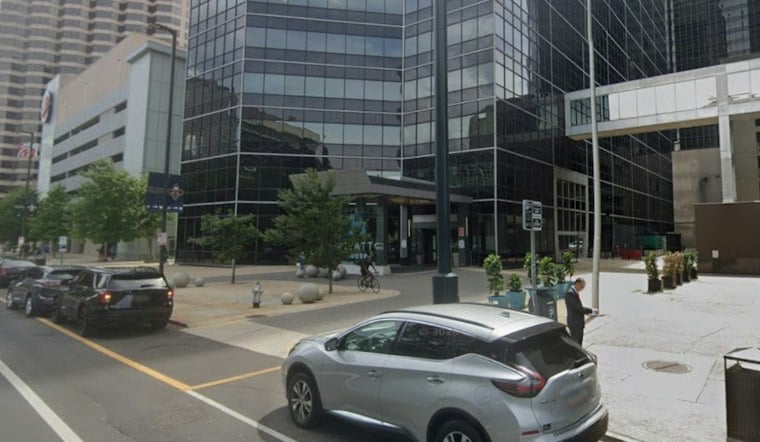
New Orleans is about to become the epicenter of the global economic development world. The International Economic Development Council will bring nearly 2,000 economic development professionals and industry partners to the Hyatt Regency New Orleans from Oct. 25 through Oct. 28, a four-day gathering that doubles as the organization's 100th anniversary celebration.
According to New Orleans CityBusiness, the conference will bring together industry leaders, policymakers and community development experts to discuss challenges and opportunities facing local and regional economies. The International Economic Development Council describes itself as the world's largest association for economic development professionals, and the event's official site confirms the dates and venue, noting the conference is heading to the Hyatt Regency, as detailed on the 2026 Annual Conference page. CityBusiness gives the venue's address as 601 Loyola Ave.
Attendance estimates vary slightly depending on the source. The conference's official website invites thousands of economic development professionals and thought leaders from around the world, while a report from bizneworleans.com puts the figure at nearly 2,000 professionals and industry partners. Either way, it is a substantial crowd converging on the city for a single week.
A Century of Economic Development Work
Founded in 1926, the IEDC is a nonprofit, nonpartisan membership organization serving economic development professionals, and this year's gathering doubles as a centennial milestone. The organization's report notes that organizers received more than 170 session proposals this year, a figure that the station's account describes as a record for the organization, a sign of how much appetite exists for the topics on the agenda.
Those sessions will address entrepreneurship, foreign direct investment, infrastructure, health care, child care, rural economic development and emerging technologies, the same report notes. The conference will also focus on workforce development, housing and economic resilience, with strategies for economic growth woven throughout the programming. Three new town hall discussions and roughly 35 to 40 breakout sessions are planned across the four days.
Speakers and Site Selection
Featured speakers include Louisiana Lt. Gov. Billy Nungesser, author Richard Florida, World Central Kitchen CEO Javier Garcia and Victor Hwang. IEDC President and CEO Nathan Ohle said New Orleans was selected in part because of its recovery from Hurricane Katrina and its history of community resilience, per the same account.
That resilience theme shows up directly in the conference's programming track on innovation, AI and global competitiveness, which per the session proposal guidelines covers AI applications, digital infrastructure and data-driven decision-making. Other tracks focus on entrepreneurship and ecosystem building, including capital access and support for minority and underserved business development, while a fourth track examines cultural assets, creative industries, workforce development and tourism strategy as drivers of economic growth. The guidance also emphasizes aligning workforce systems, housing strategies and community trust as components of long-term community resilience.
Off-Site Tours Highlight Local Industry
Beyond the Hyatt Regency ballrooms, organizers have built in off-site tours of NASA's Michoud Assembly Facility, the Port of New Orleans and Niagara Bottling's manufacturing facility in Tangipahoa Parish. The Michoud stop is designed to highlight how a large-scale industrial facility can anchor regional capabilities, attract specialized talent and businesses, and strengthen supply chains, according to the conference's special events listing. The Port of New Orleans tour, scheduled for Oct. 26, centers on cargo movement, jobs and the infrastructure that supports international trade.
Another tour pairs Strongward, the national disaster-recovery nonprofit formerly known as SBP, with a visit to the Lafitte Greenway, a 2.6-mile linear park, tying the conference's resilience theme to a very local stretch of New Orleans landscape.
Child Care Emerges as an Economic Flashpoint
Child care is on the conference agenda as a standalone topic, and recent Louisiana-specific research underscores why. A statewide survey of 500 adults with children younger than five, paired with an economic analysis from the University of Louisiana at Lafayette's Kathleen Babineaux Blanco Public Policy Center, found that expanded access to early childhood education could generate $5.3 billion in economic output and $3.2 billion in additional earnings statewide, as reported by New Orleans CityBusiness. Those figures are projections tied to a comprehensive statewide system, not a measured outcome.
The same analysis found that such a system could bring nearly 30,000 additional parents into Louisiana's workforce and generate approximately $129 million in additional annual state tax revenue. The survey behind those numbers also found nearly 70% of respondents reporting difficulty finding affordable child care, more than one-third saying they had reduced their work hours because of child care challenges, and nearly one in five saying they had quit a job altogether. Among single parents surveyed, nearly three-quarters reported cutting back work hours and about one-third said they had left a job entirely.
Whether those dynamics surface explicitly in the conference's child care sessions remains to be seen, but the timing lines up: the research landed just days before economic development professionals from around the world arrive in New Orleans to compare notes on workforce, housing and resilience strategies for the next century.




