

























































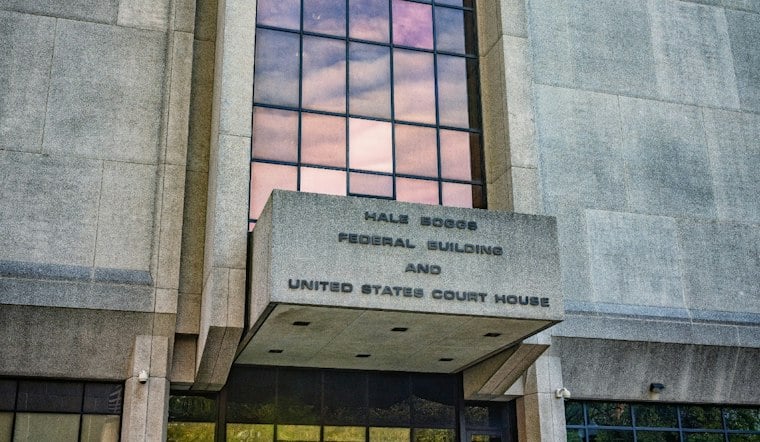
A veteran mitigation specialist in New Orleans federal court is accusing celebrated filmmaker Lance Oppenheim of lifting footage from vulnerable clients' sentencing videos nearly a decade ago, reviving a dispute just as his latest project earns national acclaim. Katie Carter, who works as an investigator and mitigation specialist for the federal public defender's office in New Orleans, says Oppenheim took personal film excerpts from mitigation videos while posing as a Harvard film student attending a closed training session.
A Training Session Turns Into a Years-Old Grievance
According to NOLA.com, Carter says Oppenheim was a Harvard University film student in New Orleans in 2017 for a seminar where federal defense attorneys screened mitigation videos they had produced to seek mercy for clients. The event was the Sentencing and Post-Conviction Film Festival, described by the New York Times as being held in New Orleans in June during an annual training conference for federal public defenders. The festival was organized by Doug Passon, a federal defender the Times describes as an attorney, filmmaker and sentencing-video expert.
Carter claims Oppenheim used the footage to advance his own career and, per the NOLA.com report, said he misrepresented his project while profiting off stories of poor people facing crimes and poverty. She says the resulting edited portions of mitigation footage ended up in his documentary, No Jail Time: The Movie, which he went on to successfully pitch to The New York Times.
Passon Says a Written Agreement Was Broken
Passon's account, laid out in a substack post, adds further detail to the allegations. He says he had a written understanding that Oppenheim was “not to use a single frame of our sentencing videos without explicit permission,” according to the post on setforsentencing.substack.com. Passon says he had granted Oppenheim permission to attend and film the festival, recalling that “that year it was held in New Orleans. Lance wanted to film it.”
Passon alleges the finished film was “filled with private moments of our most vulnerable clients,” and says he never saw a cut of it before The New York Times published it, writing that “I was never going to see what Lance had done until it was too late.” He has also said Oppenheim claimed at the time to be working on a student project, and has characterized Oppenheim's actions as misrepresenting his intentions and fundamentally unethical, per the substack account.
Conflicting Accounts of How the Footage Was Obtained
Other accounts of the episode diverge on some details. A 2018 training is described in one report as the point at which Oppenheim allegedly obtained a password to a private server where federal attorneys stored videos from across the country, a claim attributed to Passon and reported by mediaweek.com.au, which states that account describes attendees being explicitly told not to use any of the films without permission from the lawyers involved, and not to film footage playing on the screen. That version places the training in 2018, while other reporting refers to a 2017 documentary — the dossier does not resolve which date is accurate.
Oppenheim's short documentary profiles Passon and his sentencing-mitigation video practice, according to The Atlantic, which notes that defense attorneys and sentencing-video makers are increasingly drawing inspiration from true-crime entertainment for courtroom visual storytelling. The film remains viewable on The New York Times' Op-Docs page, per NOLA.com.
Carter Says She Tried for Years to Get the Film Taken Down
Carter says this is not a new grievance. She says she spoke to Oppenheim's father years earlier and later contacted New York Times editors and sent letters to Oppenheim's Harvard film professors in an effort to have the documentary taken down and the footage she describes as stolen returned, though her outreach went unanswered, according to the NOLA.com account. A separate report notes Carter attempted to get Oppenheim to take down the documentary and return the alleged stolen footage but was ignored, as reported by NewsNation.
Carter publicly accused Oppenheim of stealing footage for the first time in a video posted to Instagram on October 19, which NOLA.com reports has been viewed about 1.6 million times. She says she posted the video after seeing Dennis Lim, the New York Film Festival's arts director and one of Oppenheim's Harvard professors, introduce Oppenheim's new film at its premiere. Carter says she had always questioned Oppenheim's ethics and that his actions had not changed.
The New York Times Calls It Fair Use
The New York Times has pushed back on the characterization of the footage as private. Nicole Taylor, a spokesperson for the paper, said the footage used by Oppenheim was not private and that his use of video clips to discuss the phenomenon was fair use, NOLA.com reports. The claim touches on a legal standard with deep roots: the fair-use doctrine is codified in federal law under 17 U.S.C. § 107, according to the U.S. Code, though that statute does not itself resolve whether this specific footage qualifies.
Oppenheim could not be reached for comment via social media, and Biscuit Filmworks, the Los Angeles production company representing his work, did not respond to emails and phone calls seeking comment, according to NOLA.com's reporting.
A Rising Director Amid the Controversy
The renewed complaints land as Oppenheim's profile has grown considerably. He directed You Can See Everything, a film about Elizabeth Holmes during her final weeks of freedom, which has received rave reviews for its experimental approach, per NOLA.com. Figures for the film's box-office debut vary by outlet: NewsNation reported it opened with $15 million from 855 screens, while mediaweek.com.au reported the Oct. 16 North American release earned $15.6 million from 855 theaters.
Why Sentencing Videos Carry High Stakes
The dispute unfolds against the backdrop of a fast-growing legal practice. A growing number of lawyers are creating empathetic biographical mini-documentaries, or sentencing videos, to seek reduced prison sentences for clients, according to the Times' earlier reporting, which notes the phenomenon took off after the Supreme Court's 2005 ruling in United States v. Booker allowed trial courts to weigh a defendant's personal history and characteristics. These films are made for an audience of one — the presiding judge — and can cost between $5,000 and $25,000 to produce.
By 2023, the practice had spread beyond the federal system: Legal Aid Society lawyers and a Fordham University School of Law criminal-defense clinic were producing similar videos for state court, with 16 of the 23 submitted to courts reportedly helping draw favorable outcomes, the Times reported separately. Passon has said the videos may reveal vulnerable moments and graphic details of past sexual abuse or other physical trauma, underscoring why defense advocates guard the footage so closely. Carter, for her part, has said film can provide a glimmer of hope for clients within the criminal justice system — which is precisely why she says unauthorized use of that footage cuts so deep.





