

























































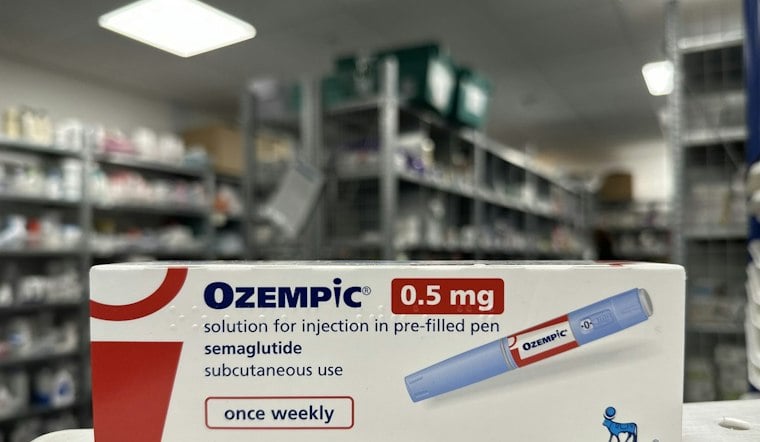
A New Orleans attorney says his firm is now handling dozens of local cases involving sudden vision loss among people taking GLP-1 drugs like Ozempic and Wegovy, after the FDA announced on September 11, 2026, that it was requiring new eye-risk warnings for the popular weight-loss and diabetes medications. Attorney Morris Bart says the calls started rolling in about a month ago and haven't slowed down.
“We've been contacted for probably the last month or so by people in the New Orleans area,” Bart said, “now we're handling dozens of cases in the New Orleans area,” he told WGNO. Bart described the drugs, which include Ozempic and Wegovy, as popular and very effective, but said the vision complaints his firm is fielding follow a strikingly consistent pattern.
Many of his clients describe a similar morning: they wake up and something looks wrong in just one eye. “In one of their eyes it's almost like there's a smudge on their glasses,” Bart said, describing how most clients notice the problem upon waking. That symptom lines up with how the underlying condition, non-arteritic anterior ischemic optic neuropathy, or NAION, typically presents — a very rare eye disease associated with sudden vision loss.
What NAION Actually Is
NAION occurs when blood flow to the optic nerve is reduced, and it can cause sudden vision loss, usually in one eye, according to The Banner. The condition has drawn international regulatory scrutiny over the past year. The European Medicines Agency's safety committee concluded that NAION is a very rare side effect of semaglutide medicines, potentially affecting up to 1 in 10,000 people taking the drug, and recommended that product labeling for semaglutide medicines be updated to reflect that risk.
The European regulator went further, stating that if NAION is confirmed in a patient, treatment with semaglutide should be stopped. Studies cited by the agency found that semaglutide use in adults with type 2 diabetes was associated with roughly twice the risk of NAION, translating to about one additional case per 10,000 person-years of treatment.
The FDA Warning
Bart pointed to November 9 as a turning point in the U.S. “We just did it, as I said, just a few days ago on Nov. 9,” Bart said. The FDA's safety communication requiring new eye-risk warnings for Ozempic and Zepbound is dated September 11, 2026. He also said European authorities had required similar NAION warnings on drug labels more than a year before his interview.
The scientific picture, however, is mixed. A 2026 systematic review and meta-analysis published in PLOS Medicine examined five observational studies and found semaglutide use was associated with a significantly higher hazard of NAION compared with other glucose-lowering regimens. That analysis estimated the absolute risk at 0.014 percent, or about one additional case per 7,000 patients treated with semaglutide annually — but the authors cautioned that their evidence came from retrospective, registry-based studies and graded the overall certainty of that finding as low to very low.
Other research complicates the story further. A 2025 study published in the American Journal of Ophthalmology reported no significant increase in risk of NAION or related optic neuropathy among patients taking semaglutide or GLP-1 receptor agonists compared with diabetes or high-BMI control groups. The Banner's reporting noted a similar split: a review of 20 clinical trials involving more than 83,000 patients found no statistically significant increase in serious eye problems, while a larger FDA analysis suggested a possible increased risk of NAION.
Doctors Say Don't Stop Taking the Medication
Despite the warnings, medical experts are urging caution against overreacting. A Johns Hopkins professor said patients should not stop their medications because of the FDA warning, according to the same Banner report. The article also noted that no additional screening for NAION is currently recommended simply because someone takes a GLP-1 medication.
Bart's firm is pursuing a different kind of claim altogether — one rooted in what the drugmakers told patients, not in the medications themselves. “It would be a failure to warn, an inadequate warning,” Bart said of the legal theory his firm is building. Under Louisiana law, a product can be considered unreasonably dangerous because an adequate warning was not provided if it left the manufacturer's control with a characteristic that may cause damage and no adequate warning accompanied it, according to the Louisiana State Legislature.
A Growing National Legal Fight
The New Orleans cases are not happening in isolation. A federal transfer order from the U.S. Judicial Panel on Multidistrict Litigation references actions alleging that GLP-1 receptor agonist drugs, including Ozempic, Wegovy, Saxenda, and Trulicity, caused patients to develop NAION, an indication that litigation over the drugs' eye-related side effects is already consolidating at the federal level.
The FDA itself says it is requiring application holders for all GLP-1 receptor agonist medications to add information to the Warnings and Precautions section of their labeling about the potential increased risk of NAION, according to a U.S. Food and Drug Administration safety communication. For Bart, the core message to local residents is less about panic and more about vigilance. He said greater public awareness of this rare side effect can help people take action to protect themselves if symptoms appear.



