

























































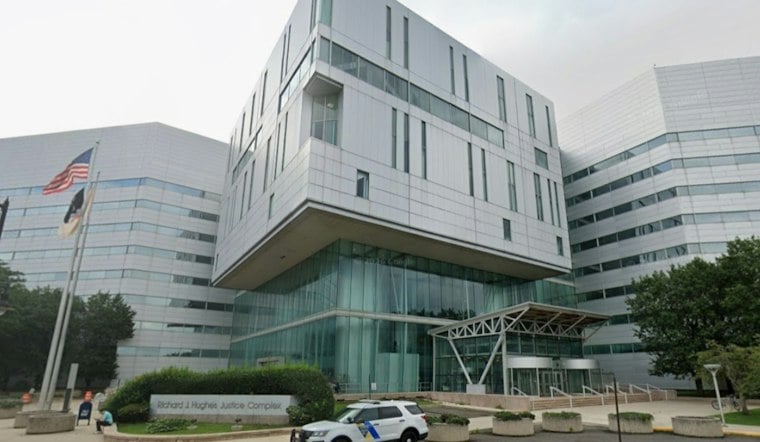
A three-judge appeals panel in Trenton heard arguments this week over whether New Jersey's practice of assigning most students to schools based solely on home address amounts to unconstitutional racial segregation, reviving a legal fight that began more than eight years ago. The children who were in kindergarten when the lawsuit was first filed are now in ninth grade, a detail underscoring how long the case has dragged through the courts without a resolution.
The lawsuit was filed in May 2018 by the Latino Action Network, the NAACP New Jersey State Conference, other civil rights organizations, and families, according to Chalkbeat Newark. The suit argues that New Jersey's requirement that most children attend schools in the districts where they already live perpetuates racial segregation in violation of the state Constitution, which is the only state constitution that explicitly bans segregation in public schools because of religious principles, race, color, ancestry, or national origin, per the New Jersey Legislature. As reported by the New Jersey Monitor, attorneys for civil rights groups appeared before the three-judge panel to revive the case against the state over racial segregation in public schools.
Essex County Districts at the Center of the Case
Plaintiffs' attorney Lawrence Lustberg described decades of pervasive segregation in New Jersey public schools and told the panel that Newark cannot send its own children to other districts to desegregate its schools, arguing instead that authority to address segregation across district lines rests with the state education commissioner, according to the New Jersey Monitor. The lawsuit points to Essex County, where predominantly Black and Latino districts such as Newark, East Orange, Irvington, and Orange border wealthier, majority-white communities, as Chalkbeat Newark reports.
State enrollment data cited in the lawsuit shows an average of more than 270,000 Black and Latino students attended schools where more than 90% of students were nonwhite each year from 2015-16 through 2019-20, representing roughly 46% of those students statewide, per the same Chalkbeat Newark report. The Philadelphia Inquirer adds that one in four Black students in New Jersey attended a school that was at least 99% nonwhite in recent years, while the state's own experts found that about 6% of all students attended public schools where a single racial or ethnic group made up at least 90% of enrollment in 2019-20.
A Narrower Focus, A Broader Fight
The lawsuit focuses on 23 severely segregated districts that enroll roughly 15% of New Jersey's public school students even though those districts represent less than 4% of the state's school districts overall, the New Jersey Monitor reports. Plaintiffs argue a 2023 trial-court ruling wrongly required proof of unconstitutional segregation across the entire statewide school system, despite the lawsuit's narrower focus. That 2023 ruling, issued after Judge Robert Lougy denied both sides' requests to decide the case without a trial, found marked and persistent racial imbalance in numerous school districts across the state but stopped short of finding the entire educational system unconstitutionally segregated, according to the Inquirer. Plaintiffs' attorneys urged the appeals panel this week to overturn that finding.
Lustberg criticized the state's position that enrollment numbers alone cannot establish unconstitutional segregation, calling that argument inconsistent with the law. Representing the state, attorney Francesco Ferrantelli Jr. countered that the plaintiffs' case relies on enrollment data without accounting for district-specific geography, educational opportunities, and parental preferences. Ferrantelli questioned whether Newark students preferred their current schools and what benefits neighboring suburban schools would actually offer, and he cited school choice programs, charter schools, and state oversight as evidence against claims of state inaction, arguing plaintiffs had not proved intentional discrimination.
Judges Press Both Sides on Evidence
Judge Hany Mawla questioned whether the evidence presented was sufficient to rule for the plaintiffs without a full trial, reflecting a broader split among experts who offered differing definitions of segregation during the proceedings, per the New Jersey Monitor's account. Civil rights organizations not party to the lawsuit also presented arguments supporting the plaintiffs during the hearing.
Micauri Vargas, one of the plaintiffs' allies, said segregation deprives students of the chance to learn alongside classmates from different backgrounds and leaves them strangers to one another, adding that existing school choice programs remain too limited to offer meaningful options for many families. Lustberg told the panel that the prolonged absence of a remedy is tragic, and that Newark students continue to suffer from the delay.
A Case With National Implications
Gary Stein, who helped launch the lawsuit, called it one of the most significant civil rights cases in New Jersey history and said the outcome could have implications far beyond the state's borders. Stein said the goal of school desegregation is to give children a better opportunity to succeed in life.
The appellate judges did not issue a ruling at the hearing. They could uphold the 2023 decision, reverse it, or send the case back for additional proceedings, Chalkbeat Newark reports — a timeline complicated by the fact that the New Jersey Supreme Court declined to take up the case in May 2026 before the appeals court had ruled. The current appellate review followed more than a year of unsuccessful mediation before a state appeals court agreed in July 2025 to review the lower-court ruling. If the plaintiffs ultimately prevail, the case could move into a separate litigation phase over what specific measures New Jersey must take to address unconstitutional segregation, and either side may still seek review by the state Supreme Court once the appellate panel rules. Whatever the outcome, the case could reshape how students are assigned to public schools statewide, with particular consequences for Newark and its neighboring Essex County municipalities.





