

























































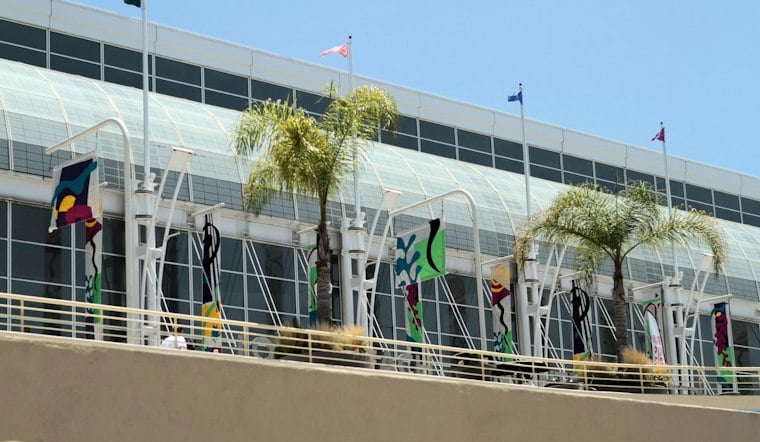
Arnold Schwarzenegger and Gavin Newsom shared a stage in Long Beach on Wednesday to mark 20 years since California's landmark climate law was signed into law, with both the Republican former governor and the Democratic current one highlighting the state's climate leadership and economy. The fireside chat took place during the 15th annual California Economic Summit and doubled as a reunion of sorts for the architects of the Global Warming Solutions Act, the 2006 law better known as AB 32.
A Reunion Two Decades in the Making
The conversation, held October 14, brought Schwarzenegger together with original AB 32 co-authors Fran Pavley and Fabián Núñez, according to Markets Insider. Pavley, then an assemblymember, and Núñez, who was Assembly speaker at the time, wrote the bill that Schwarzenegger signed into law in September 2006. As reported by the Press Telegram, Schwarzenegger told the crowd that a subnational state can show the world what it can do, and argued that market predictability is why people are coming to California. Kate Gordon, CEO of California Forward, moderated the discussion.
Newsom, for his part, credited Schwarzenegger's original signature with creating what has since become California's Cap-and-Invest program, per the same Press Telegram account. The program requires companies to either reduce their carbon emissions, buy allowances, or pay into pollution-offset projects.
From AB 32 to a $36 Billion Carbon Market
The law Schwarzenegger signed set the state's original mandate to reduce greenhouse gas emissions back to 1990 levels, and California met that goal in 2016, four years ahead of its 2020 deadline, according to Next 10. Subsequent governors built on that foundation: Jerry Brown signed Senate Bill 32 in September 2016, legally mandating emissions cuts of at least 40% below 1990 levels by the end of 2030, a measure authored by then-Senator Pavley and enacted alongside AB 197 to tighten legislative oversight of the California Air Resources Board, per the Los Angeles Times.
Newsom later signed Assembly Bill 1279, the California Climate Crisis Act, in September 2022, codifying a mandate for the state to reach carbon neutrality by no later than 2045 and achieve an 85% emissions-reduction target, according to the Office of Governor Gavin Newsom. Separate measures, SB 905 and SB 1314, establish a carbon-capture regulatory framework. By the time of the Long Beach event, the Cap-and-Invest program had generated $36.2 billion in cumulative allowance auction proceeds since its 2013 launch through July 2026, with roughly $15.5 billion appropriated across 122 climate investment programs statewide, according to ClearBlue Markets.
Utility Credits and a Tighter Allowance Supply
At the summit, Newsom said California has reinvested $16 billion to offset residents' electric bills and expects to receive another $8 billion over the next four years, per the Press Telegram's account. California Climate Investments proceeds have gone to environmentally disadvantaged and low-income communities, with cumulative implemented funding reaching 76%, or $11.4 billion, as of July 2026, ClearBlue Markets reports — money that has funded affordable transit-oriented housing, zero-emission buses, and urban greening projects. The program also returns money to residents and small businesses through twice-yearly bill credits.
The allowance pool got tighter after the Air Resources Board adopted Resolution 26-7 to finalize updated Cap-and-Invest regulations, removing 118.3 million carbon allowances from annual budgets through 2030 and roughly 900 million allowances after that, in an effort to align the market with state emissions targets, according to CCarbon. The program was extended through 2045.
A Legal Fight That Predates the Program's Growth
California has sought federal waivers to impose stricter vehicle-emission standards, and the state has faced difficulties securing them.
The tension between California's climate ambitions and political pushback over costs has also surfaced in state races and spending fights, including debates over gas taxes.
Schwarzenegger's framing of California as a state that can model climate policy for the world was the throughline of Wednesday's conversation, but the dollar figures discussed in Long Beach underscore how large that experiment has grown. Their shared message was that environmental and economic goals need not be partisan, while the next test comes as the tighter allowance budgets adopted this year begin working through the market over the final stretch toward the state's 2030 and 2045 targets. Axel Koester contributed photography to the Press Telegram's report.




