

























































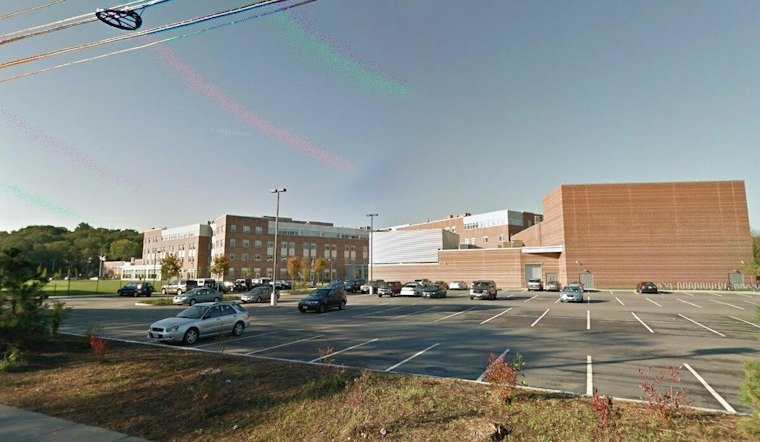
About 200 people gathered at Newton North High School for the start of the city's sixth annual Indigenous Peoples Day celebration, opening with a ceremony in the school courtyard where participants lit a peace pipe over a fire, offered blessings for Indigenous people across North America and the Caribbean, and performed a ceremonial dance around the flames. The festivities then moved inside the school cafeteria, where about 40 vendors showcased art and Indigenous-made goods to the crowd.
The gathering, detailed in reporting by Alexa Gagosz for The Boston Globe, with contributions from Matthew J. Lee, marked the sixth consecutive year Newton has held the event since the City Council voted 22-2 in November 2020 to officially replace Columbus Day with Indigenous Peoples Day locally, according to the City of Newton. That vote followed sustained advocacy from local Indigenous residents and allies, and it led directly to the city's first official Indigenous Peoples Day Ceremonial Celebration at Albemarle Field in October 2021.
This year's event was organized around the theme “Medicines of the Lands: Healing Through Ancestral Plants” under the nonprofit HUAH, Mothers Path to Ancestors, Inc., per the City of Newton's history page. As Fig City News reported, the celebration had originally been planned for Albemarle Field but was moved indoors to Newton North High School because of weather — a repeat of the venue shift that also happened during the 2025 event, when the celebration similarly drew over 1,000 attendees indoors due to rain, according to the Newton Beacon.
Fire Ceremony and Tribal Leadership
Among those present was Anthony Dean Stanton, chief sachem of the Narragansett Indian Tribe, whose tribal name is Crawling Wolf. His presence reflects the intertribal character the event has taken on in recent years — the Globe's reporting notes last year's fifth annual celebration brought together representatives from more than 10 tribal nations, including the Aquinnah Wampanoag, Mashpee Wampanoag, Nipmuc Nation, Narragansett Indian Tribe, and Taíno Nations, according to the Bay State Banner.
Newton's event sits atop a complicated colonial history. In 1646, Puritan minister John Eliot delivered his first sermon in the Massachusett language to tribal leader Waban at Nonantum, in what is now Newton, establishing the region's first “Praying Indian” village before residents were relocated to Natick in 1651, according to the Boston College Law Library. Nonantum translates to “Place of Rejoicing” in the Massachusett language.
Ancestral Plants Take Center Stage
Tuscarora speaker, researcher, and cultural educator Ashleigh Brooks, who traveled from North Carolina, explored the healing power of ancestral plants and traditional medicines rooted in Indigenous lands, while also addressing the growing commercialization and overharvesting of plants including California white sage, the Globe reported. That popularity has raised concerns around cultural appropriation, the Globe noted. California white sage grows in Southern California, and severe commercial demand for smudging products has landed it on United Plant Savers' “At-Risk” medicinal plant list, according to High Country News, with wild populations facing growing threats from illegal poaching on public and private lands.
Fourteen-year-old Munah Lee Neives Flores, a Newton high school student, spoke about bija, a plant traditionally used by Indigenous Caribbean people for body painting and cultural expression, per the Globe's account. Bija seeds produce a vibrant reddish-orange pigment and are used as a natural coloring in Puerto Rican cooking, including arroz con pollo, the Globe reported. The word bija comes from the Taíno name for Bixa orellana, or annatto, a plant native to the tropical Americas whose pigment-rich seeds have been used by Indigenous Caribbean peoples for thousands of years in body painting, rituals, and food preparation, according to the New York Botanical Garden, which notes Spanish colonizers recorded Indigenous islanders using the red seeds for adornment as early as 1492.
Vendors Blend Craft and Culture
Among the vendors was Vic Rodriguez, a Borikén Taíno artist who showcased handmade earrings and accessories blending contemporary beadwork with Taíno heritage, the Globe reported — heritage rooted in the Indigenous Arawakan-speaking peoples of the Caribbean. Also on hand was Lori Shapiro, a scientist-turned-chocolatier who offered samples of her work through Sueños Heirloom Chocolate, her Watertown-based business producing small-batch vegan dark chocolate made with heirloom cacao, according to the Globe.
Shapiro sources her heirloom Nacional cacao directly from independent farmers in Esmeraldas, Ecuador, who grow it under rainforest shade canopies, according to The Trustees of Reservations. The company was founded in 2020 by Shapiro, a former academic biologist, and its direct-trade model stands in contrast to industrial cacao production, which typically relies on clear-cut monocultures rather than the traditional forest agroforestry the heirloom Nacional variety preserves.
A Patchwork of Recognition Statewide
Newton's event unfolds against a broader statewide backdrop still in flux. More than 20 Massachusetts municipalities have independently adopted Indigenous Peoples Day, yet statewide legislation to replace Columbus Day in state law remains pending in the General Court. Holyoke is among the cities still working through that process locally, having advanced its own Indigenous Peoples Day vote in a 4-1 committee decision in September.





