

























































New Hampshire's only death row inmate has lost his latest attempt to escape execution. The state's Supreme Court has dismissed a petition from Michael Addison seeking to overturn or reconsider the death sentence he received for killing a Manchester police officer nearly two decades ago.
The court ruled that state law simply does not authorize another comparative proportionality review of Addison's case, according to concordmonitor.com. Justices noted that lawmakers could have written successive reviews into the 2019 repeal legislation that abolished the death penalty in New Hampshire, but they did not. Addison was convicted and sentenced to death in 2008 for fatally shooting Manchester Police Officer Michael Briggs in 2006 as Briggs tried to arrest him following a string of robberies and a gunfight, per the same report.
A Hearing Months in the Making
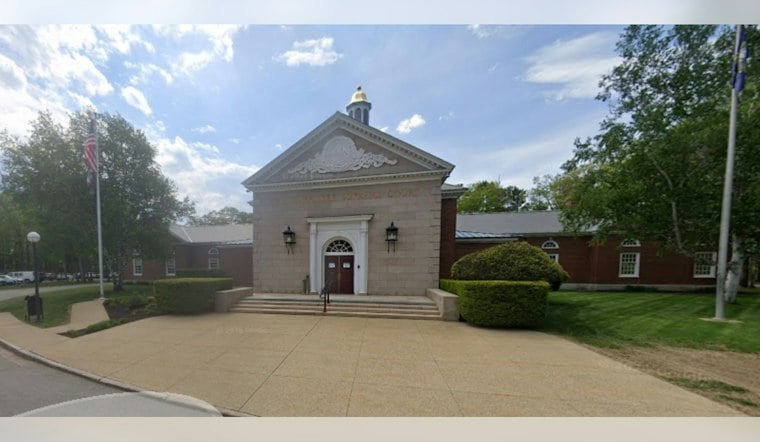
The appeal hearing itself took place at the New Hampshire Supreme Court in Concord back on March 26, after the court had agreed to reconsider Addison's case and accepted his petition the prior year, the Concord Monitor reported. The decision released this week was written by Justice Melissa Countway, with Justices Patrick Donovan and Brian Gould concurring, the outlet noted.
Addison's attorneys had argued that New Hampshire should not execute him now that capital punishment has been abolished statewide, and they sought a sentence of life in prison instead. But the 2019 repeal law carved out an exception: it applied only to people convicted of capital murder on or after its effective date, preserving the sentences of those, like Addison, convicted beforehand — a distinction the court's ruling leaned on directly, per the Concord Monitor's reporting.
The Only Death Row Case of Its Kind Nationally
Addison's situation is unusual well beyond New Hampshire's borders. The Death Penalty Information Center has identified him as the only person currently on death row anywhere in the United States under a death-penalty statute that has since been repealed or judicially invalidated, according to deathpenaltyinfo.org. Researchers who reviewed U.S. jurisdictions that abolished capital punishment found that no one has ever been executed after the death penalty was abolished in their jurisdiction, the organization reported.
Other states that repealed the death penalty have gone further than New Hampshire in resolving the fate of prisoners left behind. In New Mexico, where a 2009 repeal applied only prospectively, the state Supreme Court ordered two remaining death-row prisoners resentenced to life in 2019, per deathpenaltyinfo.org. Connecticut took a similar path after its 2012 repeal, with its Supreme Court ruling that remaining death-row prisoners had to be resentenced to life without parole. New Hampshire's law, by contrast, explicitly preserved sentences imposed before the repeal's effective date.
Political Fight Over Capital Punishment Continues
The question of whether New Hampshire should have a death penalty at all remains politically alive. The New Hampshire House rejected a bill to reinstate capital punishment on February 19, after the House Criminal Justice and Public Safety Committee unanimously recommended against it, according to nhpr.org. Gov. Kelly Ayotte has said she favors bringing back capital punishment but did not publicly push for any of the rejected bills, the station reported. New Hampshire has not executed anyone since 1939, nhpr.org noted.
Ayotte's connection to the case runs deeper than her current office. In her former role as attorney general, she prosecuted Addison's case and opposed his appeals, the Concord Monitor reported.
What's Next for Addison
Addison's attorneys say he still has other avenues for relief, according to the Concord Monitor's account of the dismissal. The ruling closes off only the comparative proportionality review route, with the court stating plainly that state law allows just one such review in the appeal process and that defendants cannot seek additional reviews years later.





