

























































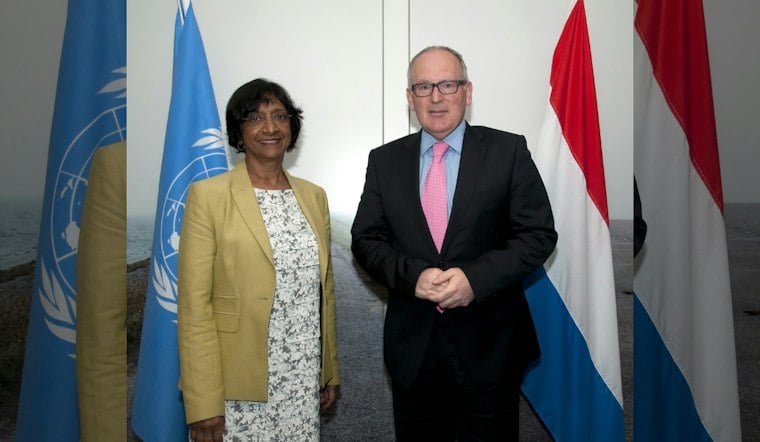
Nobel Peace Prize laureate Navi Pillay walked into the International Criminal Court in The Hague this week, just days after the United States slapped sweeping sanctions on the institution where she once served as a judge. The 85-year-old jurist, honored for promoting peace and international law, used the visit to show support for ICC staff amid the sanctions targeting the court.
A Visit Timed to a Moment of Crisis
The Norwegian Nobel Committee announced on October 9 that it had awarded the 2026 Nobel Peace Prize to Navanethem “Navi” Pillay, according to NobelPrize.org. Hours later, the United States announced it would impose sweeping sanctions targeting the International Criminal Court itself, according to the Charlotte Observer, which reported the news via Reuters. On October 12, Pillay paid a visit to the ICC in The Hague and met with officials and staff, according to the International Criminal Court, which described the visit as a show of solidarity with staff promoting international criminal justice and protecting sanctioned people.
Pillay did not mince words about the timing. As reported by the Charlotte Observer, she said the sanctions' arrival right after her Nobel win could not be coincidental, and added that plans to target international criminal justice through the ICC had been brewing all along. She visited ICC staff in The Hague after returning from Nuremberg, per the same account.
Sanctions Target the Court as an Institution
The sanctions announced October 9 ban U.S. entities from making transactions with the ICC, though the order includes a six-month wind-down period before some restrictions fully take hold, according to Kyodo News. The Charlotte Observer reported that the U.S. carved out exemptions covering transactions for telecommunications, software, pension payments, and matters related to detainees. The move broadened earlier sanctions against individual ICC personnel into action against the court as an institution, according to UN News, which was imposed under Executive Order 14203 per the International Commission of Jurists.
U.S. Secretary of State Marco Rubio, announcing the measures, said the country would never allow the ICC to prosecute Americans and called the court a “rogue court,” per the Charlotte Observer. “We will ban transactions with this rogue court, cutting off their resources and crippling its ability to operate,” Rubio said, as reported by CNN. The Charlotte Observer noted the United States has long been hostile to the court, which was founded by international treaty and whose statute gives it jurisdiction over nationals of member states and others alleged to have committed atrocity crimes on member-state territory.
Pillay's Reaction and ICC's Response
Pillay called the sanctions “unheard of” at a Saturday event, the BBC reported. The ICC itself described the sanctions as an assault on the rule of law and the foundations of the international legal order, per CNN's report. ICC President Tomoko Akane said the court would keep functioning regardless, stating that “the court will continue to fully discharge its mandate, with independence and impartiality,” according to UN News.
The Charlotte Observer's reporting noted Pillay also serves as a judge at the International Court of Justice, the United Nations' highest legal body, and previously sat as an ICC judge from 2003 to 2008 before serving as UN High Commissioner for Human Rights from 2008 to 2014, according to the United Nations. That history gave her remarks in The Hague added weight among court staff who have watched the institution come under sustained pressure.
International Backlash and Legal Questions
The Coalition for the International Criminal Court and other civil-society and legal organizations condemned the sanctions “unequivocally and in the strongest terms,” per the International Commission of Jurists. Foreign ministers from Canada, Denmark, Germany, France, Italy, Japan, the Netherlands and the United Kingdom reaffirmed their “continued and unwavering support” for the court, CNN reported.
The Norwegian Nobel Committee, in announcing Pillay's prize, framed her recognition against a broader backdrop, stating that the system of international law is under tremendous pressure and that its institutions are under attack, according to NobelPrize.org. Accounts differ on how many ICC judges and officials the U.S. had already sanctioned before this latest action — UN News cited 13 judges and prosecutors already under sanction, while the BBC reported the figure at 17 judges and officials.





