

























































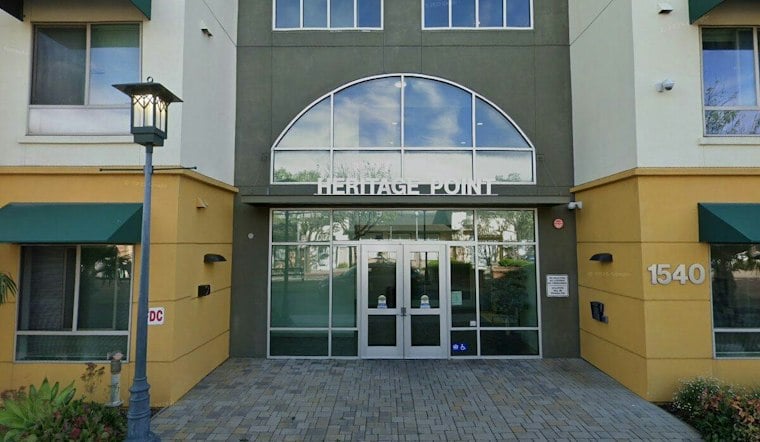
Shovels hit dirt in North Richmond this weekend as residents celebrated the groundbreaking of a grocery store that neighbors have waited on for decades. The ceremonial groundbreaking, held by the Community Housing Development Corporation on Saturday, marks the start of construction on a store that will sit beside the Heritage Point apartment complex at 1540 Fred Jackson Way — a project originally envisioned seven years earlier, back in 2019.
According to CBS News, North Richmond has lacked a place to buy healthy food for decades, with the neighborhood losing its local grocery stores starting in the 1990s. The area also experienced redlining, per the same report, and private companies have not stepped in to locate a store there — leaving the community itself to develop the grocery store instead. CHDC owns the property where the store will sit and plans to lease the space to a private operator once one is selected, according to postnewsgroup.com, which reported the organization had been soliciting proposals for a 3,100-square-foot community grocery store.
A Store Built Into the Neighborhood It Serves
Don Gilmore, CHDC's executive director, framed the project as basic infrastructure rather than a luxury. He said a grocery store is part of community infrastructure and can be reached on foot, without needing a car or a bus ride, per the CBS San Francisco report. That walkability matters directly to residents like De'Jon Boyd, who lives at Heritage Point and told the station that getting to buy food currently takes him about 20 minutes on foot.
The grocery store is planned as part of a broader development that already includes Heritage Point's 42-unit affordable housing complex and a community resource center, the post news group article notes. CHDC built Heritage Point, which was completed in 2019, and the complex includes the 42 affordable units alongside retail and commercial space, according to vcmgmt.org, which also reported the mixed-use project carried a total development cost of $26.6 million. A 2018 report from ccpulse.org had already floated a possible grocery store or deli as part of Heritage Point's future retail plans, well before Saturday's groundbreaking.
Officials Point to Years of Delay and a Community That Refused to Give Up
Contra Costa County Supervisor John Gioia, who is identified in that same ccpulse.org report, said he had discussed the need for a local store for 28 years while in office. He said community vision is what kept the project alive after it could no longer proceed as originally planned within the housing project itself, per CBS News. CHDC board president Jennifer Hicks put the stakes in more personal terms, saying the grocery store is about the possibility of how well people can live.
The new store's construction is expected to be completed about a year after the groundbreaking, based on the project estimate reported by CBS News, and it draws funding from businesses and charitable groups. The project's backers hope it becomes more than a place to shop — organizers expect it to serve as a gathering place that brings the neighborhood together.
Why Richmond Has Struggled to Keep Grocery Stores
North Richmond's food gap fits a pattern documented across the broader city. richmondconfidential.org reported that Richmond's full-service grocery count fell to just three after Safeway closed its Macdonald Avenue location and opened a branch in El Cerrito instead. The same outlet cited a Social Compact study finding that Richmond residents traveled an average of 0.79 miles to reach a grocery store, and a separate study showing a third of residents still traveled about a mile or more even counting supermarkets in nearby San Pablo and El Cerrito. Insufficient parking, shallow city blocks, environmental concerns and limited development resources were all cited as barriers that have historically discouraged large grocery chains from building in Richmond.
Doria Robinson, director of Urban Tilth, a Richmond-based farm that grows fruits and vegetables for local stores, has long argued that the absence of nearby grocers reshapes how people eat. She has said that when shopping requires a bus trip, people without time or vehicles often end up relying on packaged, processed foods instead. Urban Tilth has tried to fill part of that gap by running free farm stands twice a week at Northbridge Gate and once a week along the Richmond Greenway, the outlet reported.
Richmond's Project Echoes Community Grocery Efforts Elsewhere
North Richmond's approach — a community-driven store built with local backing rather than a chain simply moving in — mirrors efforts taking shape in other cities. In southeast Raleigh, the Fertile Ground cooperative is scheduled to break ground on October 24, 2026, on a Black-led, community-owned grocery store after more than a decade of planning and fundraising, according to wunc.org. That cooperative has more than 1,000 members who serve as partial owners voting on major store decisions, and it has raised more than $5 million toward an $11 million goal, with plans to sell food from Black farmers and build a community garden ahead of a projected 2027 opening.
In Southeast Austin, the Del Valle Food Co-op expects to launch a community-owned grocery store in late 2026, per austinvida.com, starting with a pilot store in a renovated portable school building before expanding further. That effort got an early boost in 2021, when Austin's City Council allocated $500,000 from the American Rescue Plan Act to the co-op. For North Richmond, the comparisons suggest Saturday's groundbreaking is part of a wider trend of neighborhoods building their own solutions when traditional grocers won't.





