

























































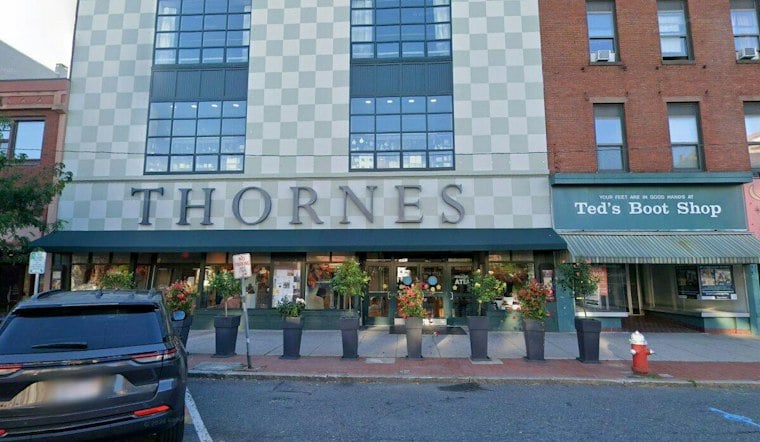
A project meant to reshape downtown Northampton has instead split the city into warring camps, with shop owners and city officials staking out positions on whether narrowing Main Street to two lanes will save the city's commercial heart or finish it off. The $43.3 million Picture Main Street overhaul calls for narrower driving lanes, wider sidewalks, separated bike lanes and a conversion of angled parking to parallel spaces between Bridge and Elm streets. The plan has reached 100 percent design and now sits under review by the Massachusetts Department of Transportation.
According to gazettenet.com, the redesign includes bike lanes, tree plots, public spaces and dedicated center turn lanes along the corridor. Supporters frame it as an infrastructure upgrade that will improve pedestrian safety and revitalize downtown, while opponents warn it is too costly and could worsen traffic congestion and hurt businesses, the outlet reports. Downtown concerns include empty storefronts and sidewalk problems.
A Price Tag That Keeps Climbing
The project's estimated cost has grown from an initial projection of $26.3 million two years ago to $43.3 million today, a jump of about 65 percent, per the Globe's reporting. An earlier account from masslive.com had described the effort as a $29 million reconstruction set for construction in 2026 — figures that conflict with the current $43.3 million estimate and the newer spring 2028 construction timeline, though the dossier does not reconcile the two beyond showing the numbers have shifted.
Of the current total, $31.5 million would come from federal funding, with Northampton contributing roughly $11.8 million locally, according to gazettenet.com's report on the design milestone. Construction, beginning with water and sewer infrastructure upgrades beneath the roadway, is expected to start in spring of 2028, with completion estimated four construction seasons later. MassDOT has said Northampton is responsible for developing the design, while the state will fund construction through the Pioneer Valley Planning Commission, per masslive.com's earlier coverage.
Parking Fears and a Divided Main Street
The redesign would cut on-street parking spaces by 57 percent, eliminating many of the angled-in spots that currently line the street, masslive.com reported. Strada Shoes owner Anna Bowen told the Globe she feels excited but nervous about the project; she separately told gazettenet.com she could likely absorb a 20 percent downturn in profit, but anything greater would put her business at substantial risk. Jackson & Connor owner Will Brideau raised a similar worry to gazettenet.com, saying his business has relied on both Main Street access and customers parking in the E.J. Gare parking garage.
Safety Numbers Behind the Push
Project engineer Jason DeGray of Toole Design in Boston, the firm leading the design, told gazettenet.com that the vast majority of downtown Northampton is currently not in compliance with the Americans with Disabilities Act. MassLive describes a 90-foot crosswalk from sidewalk to sidewalk on Main Street.
The plan would also reshape the street's tree canopy, preserving 17 of the area's 41 existing trees while removing 24 and planting 61 new ones, for a planned total of 78 trees, according to gazettenet.com's report on the 100 percent design milestone. More than 60 residents turned out for a Toole Design presentation on the project at the Northampton Senior Center in September, the same outlet reported.
City Hall Under Pressure
City Hall in the Debate Mayor Gina-Louise Sciarra and current city councilors have discussed the project.
Planners have argued the current redesign reflects a shift toward an economy built more around recreation and dining than traditional retail, which masslive.com reports is increasingly moving online.
What Research Elsewhere Suggests
Statewide data compiled by the Barr Foundation offers some context for both sides of the debate. The foundation found that 75 percent of residents who used outdoor seating areas said it made them more likely to walk, shop and dine, and that 57 percent of businesses reported revenue increases after similar changes. Polling of Greater Boston residents cited by the foundation found majority support for more outdoor dining space, new bike lanes and wider sidewalks even when those changes reduce parking and driving space.
Smaller-scale projects elsewhere in Massachusetts have shown mixed but notable results, per the same Barr Foundation research: a temporary traffic circle in Arlington cut speeding by 65 percent, new bike lanes near a Salem school encouraged safer driving by 61 percent, and dedicated bike lanes in Pittsfield let roughly 5,500 people bike comfortably to businesses within 15 minutes of home.





