

























































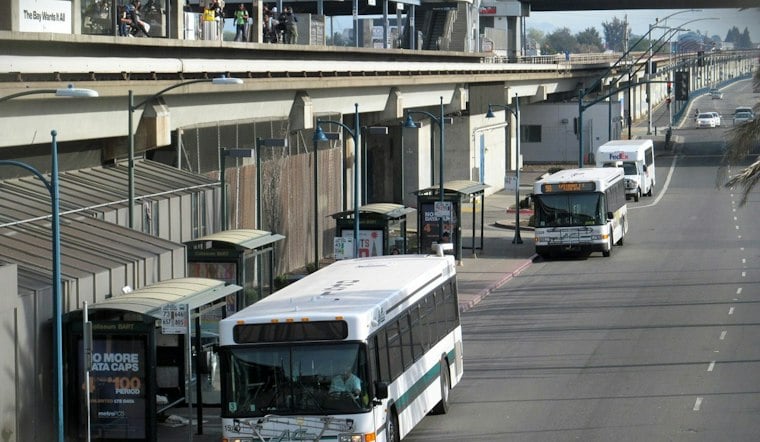
Oakland is preparing to tow an RV encampment near the Coliseum BART station, according to CBS News Bay Area, as the city leans on a new policy that strips inhabited vehicles from the legal definition of a homeless encampment. The move comes months after officials quietly began clearing vehicles along a stretch of road just south of the Oakland Coliseum, and it signals that enforcement near the transit hub is far from over.
The policy shift traces back to April, when the Oakland City Council voted to remove inhabited vehicles from the city's official definition of a homeless encampment, a change that took effect in July, according to The Mercury News. Under the old rules, lived-in vehicles got protections similar to tent encampments. Now, city workers and police can treat an occupied RV or car as abandoned and tow it with little or no notice over code violations, the outlet reports.
City workers already put the new authority to use in late August, when they began towing vehicles or ordering owners to relocate along San Leandro Street south of the Coliseum, the same report notes. That same night, police towed more than 60 abandoned and stolen cars and RVs in the surrounding neighborhoods, according to the newspaper's reporting.
Why Enforcement Is Speeding Up Near the Coliseum
The new rules are designed to move faster in what the city calls high-sensitivity areas, where removals can proceed with less red tape, per NBC Bay Area. Those zones already covered sites like schools and hospitals, and the city has now expanded the list to include utilities and public transit, according to KQED — a category that would sweep in a BART station like the one near the Coliseum.
The amended policy isn't entirely without guardrails. KQED reports it includes added protections for vehicles housing families with children or people with disabilities, giving those residents more time to relocate and requiring referrals to shelters equipped to meet their needs.
Whether those protections apply to anyone currently living near Coliseum BART has not been established. What is clear is the scale of the shortfall facing anyone who is referred to shelter: Oakland had just 1,260 shelter units for 4,410 homeless residents, per the Mercury News report.
Heavy Police Presence Already Hit the Area
The Coliseum corridor has already drawn a visible law enforcement response this year. KRON4 reported a heavy police presence near the Coliseum BART Station on a Wednesday morning, with California Highway Patrol officers saying they were executing a search warrant near San Leandro Street and Hegenberger Road as part of a stolen vehicle investigation.
Conflicting Numbers on Homelessness Trends
City officials and advocates don't agree on which direction homelessness in Oakland is actually moving, and the disagreement partly comes down to which years get compared. The Mercury News reported that homelessness declined about 20% from 2024 to 2026. KQED, citing a different measurement period, reported that Oakland's unhoused population rose 8.5% between 2022 and 2024, reaching 5,485 people. Encampment closures, meanwhile, jumped sharply by KQED's count — from 240 in 2024 to 1,212 in 2025.
Other California Cities Are Tightening Rules Too
Oakland isn't alone in cracking down on vehicles used as shelter. Some California cities are ramping up efforts to ticket and tow vehicles sheltering homeless residents, according to CalMatters, which found that San Francisco saw lived-in vehicles climb from 474 in July 2024 to 612 by June 2025 even as tent counts fell from 319 to 165. San Jose, meanwhile, towed 19 RVs and trailers along with 45 other vehicles since January under its own pilot program, the outlet reported.
San Francisco's rules bar any vehicle taller than 7 feet or longer than 22 feet from parking on city streets for more than two hours, with violators facing a $108 fine and the risk of a tow, according to the San Francisco Standard. By early September, the city had towed more than 360 vehicles and issued nearly 1,100 citations under that rule, while also buying back 154 large vehicles and helping 221 households transition into housing or shelter, the Standard reported.
San Jose has taken a different tack with its OLIVE pilot program, which converts 30 high-volume RV parking locations into temporary tow-away zones, according to CBS News Bay Area. The process unfolds in three steps over six weeks — establishing the zones, notifying residents, then towing — with everyone offered a safe parking site or housing information before the final step, per that report. The city's next safe parking site, planned for Berryessa, is expected to hold up to 85 spots.
Back in Oakland, it remains unclear exactly how many vehicles are parked near Coliseum BART, what notice residents there have received, or whether shelter and safe parking offers will be extended before any tow takes place.




