

























































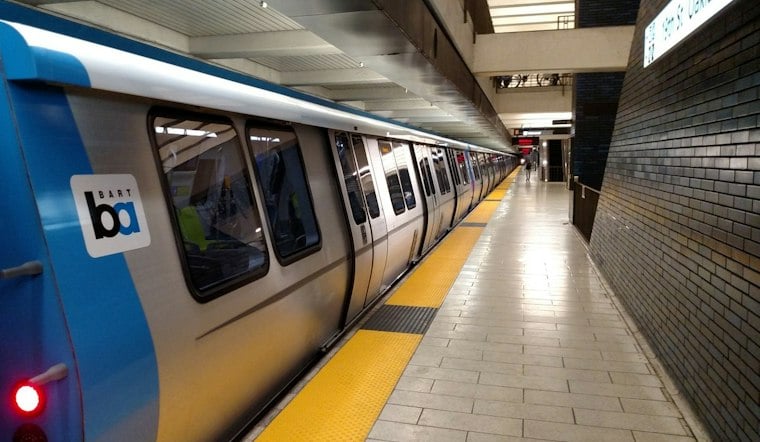
Oakland officials cut the ribbon this week on a new protected bikeway linking the 19th Street BART station to Lake Merritt, closing a gap that cyclists and transit riders have navigated without dedicated protection for years. The route runs along 20th Street, also known as Thomas L. Berkley Way, and ties directly into the existing Harrison Street two-way protected bikeway on the lake's west side.
The project, first reported by sf.streetsblog.org, brings concrete curb-protected bike lanes, wider sidewalks, fewer car lanes, and new plantings in the median to the corridor. The city describes the effort on its own project page as closing a last-mile gap between the BART station and the lake through upgrades aimed at both pedestrians and bicyclists, according to oaklandca.gov. Oakland also removed one driving lane to make room for the protected bikeway, a change that, per cited research, can slow drivers and reduce dangerous speeding.
Beyond the bike lanes themselves, the stretch now includes high-visibility crosswalks, accessible curb ramps, sidewalk extensions, pedestrian refuge islands, and improved signage, the same report notes. Crews also added LED lighting, traffic-signal upgrades, and audible pedestrian push buttons, along with an enhanced BART passenger drop-off area and an accessible loading zone for riders.
Old Trolley Tracks Surface Mid-Construction
Getting the bikeway built was not simple. Oakland's transportation director, Josh Rowan, said messy cabling and underground infrastructure delayed the build, and that crews ran into utilities nobody knew existed, calling the work very complex. During construction, workers found old trolley tracks with creosote-soaked railway ties, along with old basements and previously unknown utilities tucked beneath the street. Electrical upgrades for the corridor also required placing fiber optic cable under the road, adding another layer of complication to the dig.
In parts of the corridor, the bikeway uses an at-grade design, level with the sidewalk and separated from traffic by a wide asphalt strip. Rowan noted that at-grade bike lanes are easier to build where there is more road and sidewalk space available, pointing to Madrid, which has similar at-grade lanes along its wide avenues, as a comparison point.
Years in the Making
More than a dozen city staff members turned out for the ribbon-cutting. Bike East Bay advocate Robert Prinz said his organization first wrote a letter in 2016 to get funding for the project, and active transportation funding was approved that same year to help pay for it. Prinz used the occasion to call on local officials to find funding for similar projects elsewhere in Oakland. The Oakland Bicycle and Pedestrian Advisory Committee's infrastructure group also helped shape some of the project's details along the way.
Oakland Mayor Barbara Lee said the project showed a commitment to safety and green spaces. District 3 Council member Carroll Fife said she was deeply grateful for the new lane and its safety benefits, while District 2 Council member Charlene Wang said the project adds to a string of streetscape improvements around Lake Merritt that are making biking around Oakland easier and safer, adding that the city is creating the connected network it deserves.
A Boost for BART Commuters
Victor Flores, who represents Oakland on BART's board of directors, said the new lanes will benefit hundreds of BART staff who work at the agency's nearby headquarters at 2150 Webster Street. The bikeway extends three blocks, giving those employees and other commuters a protected route straight from the station to the lake's edge.
The 20th Street project fits into a broader pattern of bike-safety investment taking shape around Oakland. Bike East Bay is separately campaigning for a two-way protected cycletrack that would wrap entirely around Lake Merritt, with connecting routes reaching residents across the city, according to bikeeastbay.org. Nearby, the Metropolitan Transportation Commission has approved a $30 million grant to redesign Martin Luther King Jr. Way from Jack London Square to Old Oakland, a project that would add a two-way cycle track and new intersection infrastructure, according to oaklandside.org. That corridor is intended to eventually create continuous protected bike lanes stretching from West Oakland all the way to Lake Merritt.
Oakland's own research backs the broader push for protected infrastructure. A prior Oakland Department of Transportation study of Telegraph Avenue found that walking and biking increased by more than 100 percent after protected bike lanes and other safety features went in, even as collisions rose by 33 percent, per the earlier sf.streetsblog.org report. That same study found dangerous traffic violations, including speeding and failing to yield at crosswalks, had dropped significantly, and cited research from Montreal, Toronto, and Vancouver linking permanent protected bike lanes to the lowest collision risk among comparable designs.


