

























































Ohio voters will pick a new state auditor on Nov. 3, and the choice comes down to two very different résumés: Secretary of State Frank LaRose, a Republican pitching artificial intelligence and mandatory performance audits, against Maple Heights Mayor Annette Blackwell, a Democrat whose central argument is that she already pulled a struggling city back from the brink. The winner replaces term-limited Auditor Keith Faber, who is barred from seeking a third consecutive term and is instead running for attorney general.
Two Candidates, Two Very Different Pitches
According to the Springfield News-Sun, LaRose has overseen Ohio elections for the past eight years as secretary of state and is campaigning largely on that experience in state government. He views the auditor's office as a watchdog for corruption and waste, and has said people who cheat taxpayers or pocket unearned money deserve to face adjudication, per the same report. Blackwell, for her part, is leaning on 11 years running Maple Heights, a city of about 20,000 people, arguing that local-government experience is exactly what the office needs.
As reported by nbc4i.com, LaRose has served as Ohio secretary of state since 2019 and is completing his second term in that role. Blackwell has served as mayor and safety director of Maple Heights since January 2016 and is now in her third term, nbc4i.com reports — though a separate account from tiffinohio.net states she became mayor in 2014. The Springfield News-Sun also reports on Blackwell’s tenure as Maple Heights mayor. The Ohio Democratic Party recruited Blackwell to run for state auditor, according to the Springfield News-Sun.
What The Auditor's Office Actually Does
The office that both candidates want to lead investigates suspected misuse of public money, reviews government operations for potential savings, and helps communities facing fiscal distress, nbc4i.com notes. Figures vary on exactly how large that portfolio is: nbc4i.com reports the auditor leads more than 800 employees and audits over 5,900 public entities, while cleveland.com puts the number at more than 6,000 state and local government agencies. The office audits public entities statewide and works to root out waste, fraud and abuse.
LaRose's Pitch: Data, AI And Fewer Jurisdictions
LaRose wants performance audits to be mandatory under certain conditions, and specifically said he would ask lawmakers to require them when a local agency's per-person costs far exceed those of similar agencies, according to nbc4i.com. He also wants nearly 6,000 public entities' financial data folded into a consistent format and sees artificial intelligence as a tool to help investigators spot signs of fraud, the outlet reports. Beyond data, LaRose supports reducing Ohio's total taxing jurisdictions and consolidating entities with overlapping responsibilities, and he has floated creating a public-data tool for the auditor's office, with interpretive artificial intelligence potentially making that tool more useful, per the Springfield News-Sun. He has framed all of it around making government spending more transparent.
Blackwell's Pitch: A Recovery Story From Maple Heights
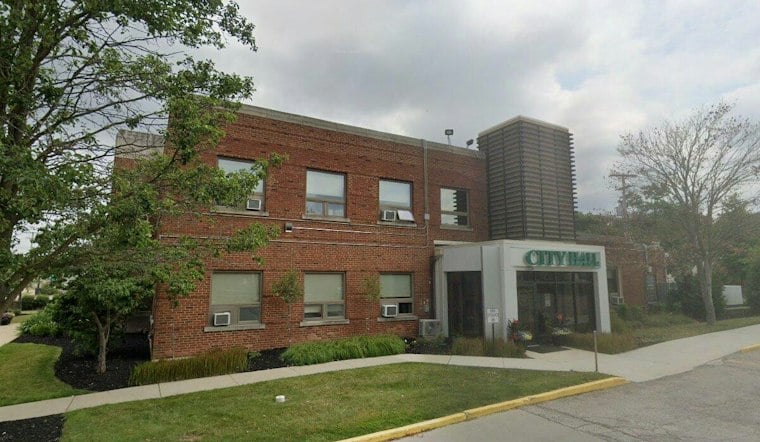
Blackwell's campaign centers on what happened in Maple Heights during her tenure. Maple Heights entered fiscal emergency before Blackwell took office as mayor: nbc4i.com reports the city entered fiscal emergency in February 2015, nearly a year before she took office, while wkyc.com reports she took office shortly after the city was placed in fiscal emergency by the state auditor's office. What isn't disputed is the outcome: the auditor released Maple Heights from fiscal emergency in November 2020 after the city improved its accounting system and met the major objectives of its recovery plan, per nbc4i.com.
Blackwell has said she led development of that recovery plan, which focused on lowering expenses and rebuilding city revenue. The Springfield News-Sun's reporting details some of the specific measures the Maple Heights administration used to generate cash and cut costs: roughly $50,000 from new economic development, $110,000 raised by selling capital assets, a levy generating $340,000 annually, increased inside millage bringing in $638,000 a year, $173,000 collected in 2019 through a delinquent property tax program, and at least $100,000 in building permit revenue from a development program. Blackwell brings a background in financial companies and other roles to the position, according to that same reporting, and Maple Heights has since received several clean-audit awards from the auditor's office, including one as recently as February, according to ohiocapitaljournal.com.
Competing Visions For The Office Itself
The contrast between the two candidates extends to how each would run the office day to day. Blackwell has said the auditor's office should act as a proactive partner to local entities rather than simply a checker of boxes, per the Springfield News-Sun, and separately told tiffinohio.net she wants more outreach and a more positive relationship between the office and local governments. LaRose's campaign, by contrast, is built around transparency, efficiency and accountability, with Blackwell saying she would emphasize corruption investigations and taxpayer oversight while helping communities avoid fiscal distress, according to nbc4i.com.
History leans heavily in LaRose's favor on paper. No Democrat has won a race for Ohio state auditor since 1990, and no Ohio Democrat has won a partisan statewide race of any kind since 2008 except for Sherrod Brown's U.S. Senate victories in 2012 and 2018, according to cleveland.com. Money has followed that trend: campaign-finance filings covering activity from April 16 through June 5 showed LaRose with $876,348 on hand for his auditor bid, compared with Blackwell's $140,986, per ohiocpa.com.
Whoever wins will inherit an office that helps communities facing fiscal distress, including Maple Heights, which was released from fiscal emergency in 2020.





