

























































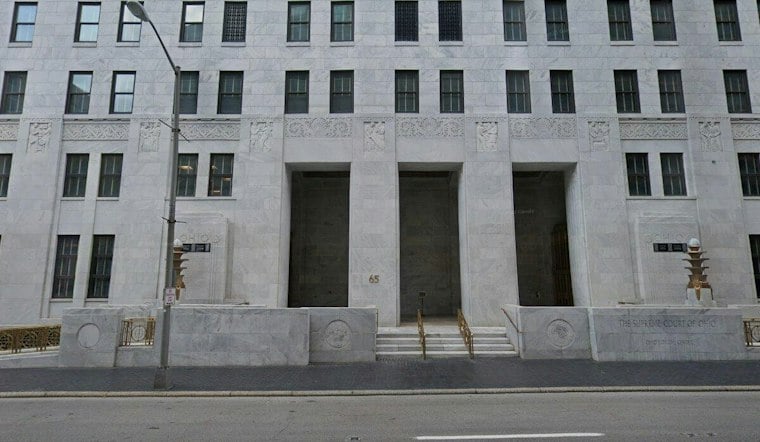
Lorain water and sewer customers who believed the city overcharged them for years just lost their best shot at fighting back together. The Ohio Supreme Court ruled Thursday that the customers cannot pursue their case as a class action, reversing a lower appeals court and reinstating a trial judge's earlier decision that blocked class-action status altogether.
The dispute traces back to a lawsuit filed by Tia Hilton, Paul Flores Jr. and Anna M. Cruz, who sued the City of Lorain and related entities over what they alleged were unlawful rates and fees for water and wastewater services, according to court records. The three sought to represent every Lorain ratepayer charged those fees since May 7, 2012, a group that would have covered more than a decade of billing. As Cleveland.com reports, the Lorain County Court of Common Pleas denied class-action status in the first place, concluding the proposed class wasn't identifiable or unambiguous and that it failed to meet the predominance and superiority requirements laid out under Ohio's civil rules for class actions.
Appeals Court Reversal Set Up the Showdown
The Ninth District Court of Appeals initially sided with the ratepayers, reversing the trial court's denial of class-action status after finding its reasoning contradictory. The city then appealed that reversal to the Ohio Supreme Court, which agreed to take up the case. Rather than settling the underlying question of whether Lorain actually overcharged anyone, the justices zeroed in on a narrower procedural issue: whether a trial court can even analyze all seven requirements for class certification once it has already found that one or more of them haven't been met.
The high court said yes. Per the station's report, the justices held that a trial judge may still review the remaining certification requirements even after identifying a fatal flaw in one of them, and found that Lorain County's trial court had properly and thoroughly analyzed the ratepayers' certification request from the start. Justice R. Patrick Fischer authored the opinion, which the other six justices joined in full.
What the Ruling Does — and Doesn't — Decide
The Supreme Court's decision reverses the Ninth District's ruling and sends the case back to that appellate court to address the remaining assignments of error the ratepayers raised. Notably, the ruling did not resolve whether Lorain customers were actually overcharged for water and sewer service, leaving that core question untouched.
Practically, the decision means Lorain ratepayers can no longer pursue their claims as a unified group. Individual customers would instead have to file their own separate lawsuits to challenge any alleged overcharges, a route that can be costly and time-consuming and may prove less practical for most people affected.
Rate Pressures Already Loom Over Lorain Households
The legal fight comes as Lorain officials have separately been weighing whether to raise water and sewer rates again. The city's sewer fund has been running a deficit since 2021, and roughly 25,000 Lorain households hadn't seen a rate increase since 2020, according to discussions held by the City Council Utilities Committee reported by the Morning Journal. That same reporting noted Lorain residents pay $6.48 for sewer and wastewater treatment usage, compared with a reported national average of $12.
Lorain has raised utility rates before — the city increased water rates in 2017 and later raised sewer rates as well, according to News 5 Cleveland. At the time, the mayor said utility rate increases were planned to continue for roughly 20 years to pay for infrastructure improvements. Whether this week's court ruling affects the city's ongoing rate discussions remains to be seen, but it does close off, for now, the possibility of a single consolidated legal challenge over past charges.


