

























































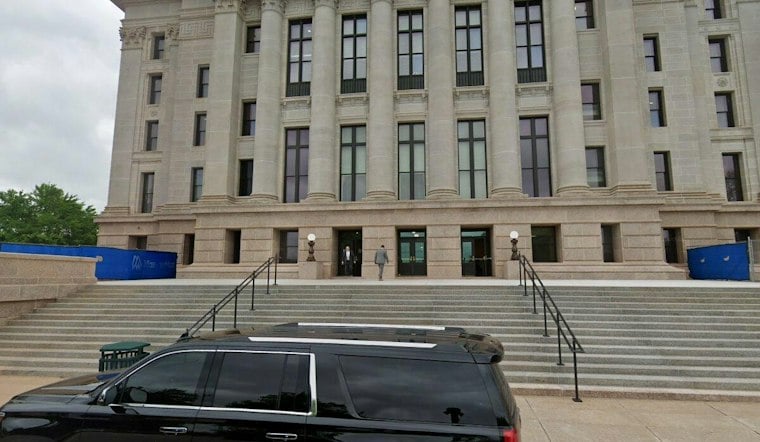
Republican Rep. Marilyn Stark and Democrat Chaunté Gilmore are facing off for a third consecutive election in Oklahoma House District 100, a northwest Oklahoma City seat where the 2024 race was decided narrowly. The district, which includes part of northwest Oklahoma City, Bethany and Warr Acres and stretches into Canadian County, has become one of the most closely watched legislative races in the state heading into the November 3 general election.
Stark narrowly held off Gilmore in 2024, 50.9% to 49.1%. That tight finish stood in sharp contrast to their first matchup in 2022, when Stark won by 54.4% to 45.6%, an 8.8-percentage-point margin. Both candidates cruised through their June 2024 primaries, with Stark taking 70.6% against Johnny Hargis and Gilmore winning 70.5% over Cyndi Parrish, according to the Oklahoma City Free Press.
As reported by NonDoc, the Oklahoma Democratic Party now considers Stark's seat a top pickup opportunity in the overwhelmingly Republican legislature. The party views HD 100 as a premier target this cycle, a status reinforced by the razor-thin 2024 result.
A Billboard Dispute Over Public Safety Funding
The sharpest flashpoint of the campaign so far is a billboard paid for by the Oklahoma Democratic Party criticizing Stark's votes on police and firefighters. The billboard was not authorized by any candidate, the same NonDoc report notes. Party chairwoman Erin Brewer said the billboard refers to Senate Bill 838, a 2021 measure that allowed municipalities to form voter-approved districts funded by increased property tax increases to pay for public safety equipment or salaries.
The Oklahoma House passed SB 838 by a vote of 57-40, but Stark voted against it. No Oklahoma community has actually used the public safety district measure since its passage. Stark told the outlet she did not know what the billboard referred to, saying she had reviewed her votes and consulted both House leadership and the Fraternal Order of Police before concluding her vote on SB 838 was simply a vote against raising property taxes, a position she stands by.
The dispute echoes an earlier clash between the two camps. The Oklahoma Democratic Party has said that in 2024, Stark's campaign mail falsely claimed Gilmore opposed police while concealing Stark's own public-safety funding record. Gilmore declined to comment on the current billboard when asked by the same publication.
Healthcare Access Takes Center Stage
Gilmore, a physical therapist assistant, is running on her background as a healthcare worker and has made faster access to clinicians a cornerstone of her campaign. She has identified recruiting and retaining healthcare workers as one possible way to shorten the wait times patients face across the state, pointing to Oklahoma's ranking of 49th in healthcare outcomes.
The data backs up the concern. As of 2025, 75 of Oklahoma's 77 counties contained federally designated Health Professional Shortage Areas, with more than 1.17 million residents living in primary care shortage zones where patient-to-provider ratios exceed 3,500 to 1, according to the Cicero Institute. Metriarch ranks Oklahoma fifth worst among states for Health Professional Shortage Area severity. The state faces healthcare workforce vacancies and turnover challenges, including in nursing.
Stark Leans on Legislative Record
Stark has said she does not approach the Legislature with an agenda. She points to the Sarah Stitt Act, which she co-authored and which requires everyone leaving prison to receive a state ID, as a signature accomplishment that she says has reduced recidivism and improved employment outcomes after release.
Stark also plans to refile legislation making nonprofit organizations sales-tax exempt statewide for the sixth time, arguing nonprofits contribute meaningfully to local and state economies.
Schools, Property Taxes and Insurance Costs
On education, Gilmore said she wants to invest in public schools and support teachers and administrative staff, while Stark said she supports literacy reforms modeled on the so-called Mississippi Miracle and believes family involvement is necessary to improve outcomes.
Gilmore has described herself as a first-generation college graduate who earned an MBA and once received Section 8 housing vouchers, and she said she has stayed involved in the district between election cycles by emphasizing community relationships. Stark has represented the district since 2019. Oklahoma limits state legislators to a cumulative maximum of 12 years of service across the House and Senate, according to Ballotpedia.
When And Where To Vote
Early voting for the HD 100 race runs from Wednesday, October 28, through Friday, October 30, from 8 a.m. to 6 p.m., with an additional early voting day on Saturday, October 31, from 8 a.m. to 2 p.m. Election Day polls open November 3 from 7 a.m. to 7 p.m. for voters across the northwest Oklahoma City district.



