

























































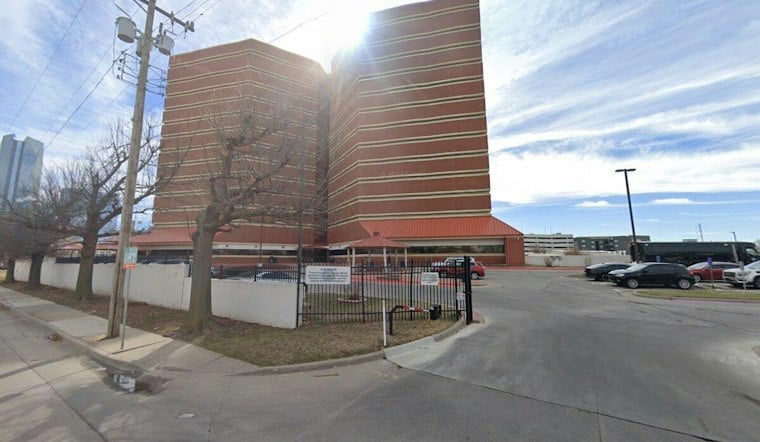
An 18-year-old man was booked into the Oklahoma County Jail on Oct. 10 and released the next afternoon. Less than 30 minutes later, he was unresponsive in a hospital, according to a new lawsuit. The complaint alleges jail staff failed to respond appropriately to signs of a medical emergency; it does not allege that Hendricks’ brain bleed began while he was in jail.
The lawsuit, filed on Hendricks’ behalf earlier this week, names the Oklahoma County Criminal Justice Authority, the Board of Oklahoma County Commissioners and jail staff members as defendants. The complaint says Hendricks was booked at 7:15 p.m. on Oct. 10 and released at 2:25 p.m. the next day. Court documents describe his injury as a severe brain hemorrhage, according to The Oklahoman. Hendricks was arrested by Oklahoma City police after officers found a gun in his waistband and determined he did not have a valid driver’s license.
Body Camera Footage Shows a Different Hendricks
Body camera footage from the arrest showed Hendricks appearing to walk, talk and behave normally, according to the lawsuit’s account as relayed by his attorney. The Oklahoma City Police Department has said its records indicate Hendricks had no injuries or medical needs when officers brought him to the jail, according to KFOR. Attorney Steven Terrill, who represents Hendricks, said his team is still in the early stages of piecing together what happened inside the jail.
Terrill said jail medical staff noted at one point that Hendricks was behaving strangely, but urgent medical requests on his behalf were not acted upon. He said Hendricks later experienced severe confusion and incontinence while in custody. According to Terrill, staff discharged Hendricks two minutes after recognizing the severity of his medical need, then called 911 after he was outside their custody.
A Mother's Account of the Aftermath
Hendricks' mother, Clovia Long, said last October that her son could not speak to her, be touched or be kissed in the aftermath of his injury. Terrill said Hendricks now has a severe physical disability that affects his ability to walk, use one arm, concentrate and speak effectively. Hendricks' mother more recently told KFOR that he is now awake, but has a long recovery ahead of him.
Terrill said the 19 hours Hendricks spent in the jail changed his life permanently. The station notes that News 4 first reported on Hendricks the previous year after his family began questioning what happened to him at the jail.
Jail Allegedly Had Record of the Emergency, But Didn't Report It
The lawsuit alleges the Oklahoma County Jail did not report Hendricks’ emergency transport to the Oklahoma State Department of Health, despite having a copy of a news report documenting the transport on file. OSDH confirmed it had no prior record or report of the incident before it became public, according to KFOR. The agency said it would investigate during its next inspection and could cite the facility for failure to report if the allegation is substantiated. The jail’s Internal Affairs Division is also investigating the case.
State rules obtained from the Oklahoma Legislature require the health department to be notified no later than the next working day when an injury is life-threatening or requires transfer to an outside medical facility. The Oklahoma State Department of Health is separately required to inspect city and county detention facilities at least once a year to check compliance with such standards.
A Jail With a Documented History of Monitoring Gaps
The allegations arrive against a backdrop of previously documented problems at the facility. A state inspection found 98 hourly site checks that were not performed or documented as required over a six-day span in December 2024, according to KOCO. That same report found that medical procedures and medication administration could not be completed because of a lack of detention staff, and identified broader staffing shortages and inadequate inmate monitoring.
At least 84 people have died at the Oklahoma County Detention Center since 2009, according to data compiled by The Frontier. The outlet reports the jail's average annual death rate over the past decade has been 3.3 per 1,000 inmates, more than double the national average, and that the facility now employs fewer detention officers than it did in 2008.
Oklahoma's largest county jails recorded an average annual mortality rate of 2.16 deaths per 1,000 inmates between 2009 and 2019, the second-highest rate in the nation behind West Virginia, according to Oklahoma Watch. That outlet has also documented other Oklahoma jail deaths tied to delayed medical care, including Terral Ellis Jr., who died of sepsis and pneumonia in 2015 after Ottawa County Jail staff allegedly ignored his pleas for medical attention, and Joshua England, who died of appendicitis in 2018 after five written requests for medical care went unanswered at the Joseph Harp Correctional Center.
Earlier Inspections and Federal Oversight
Other records describe concerns predating the findings cited above. News 9 reported that a separate Oklahoma State Department of Health inspection identified inadequate medical care and checks on inmates, including people on suicide watch. In a July 31, 2008, findings letter, the U.S. Department of Justice cited constitutional concerns including inadequate protection from harm and mental health care. A 2009 memorandum of understanding addressed the federal investigation; the county expressly stated that signing it did not constitute an admission of a legal violation, according to the agreement. Oklahoma Watch reported that the county jail had 40 deaths and an average annual mortality rate of 4.77 deaths per 1,000 inmates from 2016 through 2019. That county- and period-specific figure does not by itself establish a like-for-like comparison with national rates; the figures must cover the same years and populations to support one.
The Oklahoma County Jail has declined to comment on the Hendricks lawsuit, citing the pending litigation. The Oklahoma County Criminal Justice Authority has not responded to requests for comment.


