

























































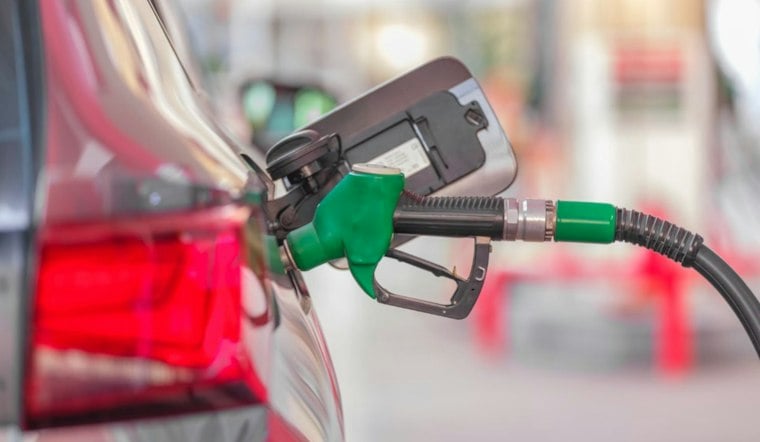
Drivers across the Omaha metro spent this week hunting for a working pump as gas stations from Bellevue to west Omaha reported running low on fuel or out completely. A Sam's Club employee confirmed the store was out of gas, and viewers told local news crews they found empty pumps at multiple Casey's locations around the city.
Cornhusker Quick Stop in Bellevue posted a public statement on Monday saying it was completely out of fuel, pointing to outages at regional supply terminals as the cause, according to Nebraska Public Media. First Alert 6 also received reports from across the Omaha metro of stations running low or dry, as reported by WOWT. Casey's acknowledged temporary fuel supply challenges affecting availability at some of its locations, saying it was working with suppliers to restore full availability and apologizing for the inconvenience to guests, per the same WOWT report.
Prices Climb as Pumps Run Dry
The shortages hit just as pump prices have surged over the past year. Regular unleaded gas in Omaha averaged roughly $4.25 per gallon this week, up from $2.65 a year earlier, while diesel averaged $6.00 a gallon — close to the metro's record of $6.27 set last month, according to Nebraska Public Media. AAA Nebraska said it was still trying to determine what was happening behind the outages, per WOWT's reporting.
Not every analysis points to a full-blown market collapse. A social-media post by Patrick De Haan, GasBuddy's head of petroleum analysis, found that while a specific Omaha-area fuel supplier was experiencing localized supply disruptions, gasoline and diesel availability issues were not widespread across the entire market, as reported by The Reader Omaha.
Shared Pipelines, Harvest Timing Collide
Industry representatives trace the squeeze to simple plumbing. The Nebraska Petroleum Marketers and Convenience Store Association explained that because diesel and gasoline travel through the same shared pipeline systems, heavy harvest-season diesel shipments significantly reduce the pipeline capacity left over for retail gasoline. Refineries are also switching from summer-grade to winter fuels and conducting seasonal maintenance at the same time demand spikes, per WOWT's reporting.
A spokesman for the Nebraska Petroleum Marketers and Convenience Store Association, Tim Keigher, told WOWT that fuel supplies tend to run tight this time of year, but that this year's crunch feels worse than usual, though he said he did not know exactly why. “The system is not built for everyone to fill up on the same day,” Keigher said, adding that fuel suppliers are working to keep up with demand. He also cautioned that panic buying tends to make the problem worse, and said fuel supply chain members were doing their best to meet consumer demand. Keigher said stations that ran dry would probably not remain out for long.
State and Federal Orders Try to Unclog Supply
Governor Jim Pillen signed an executive order aimed at helping meet fuel supply demands in Nebraska, saying global supply disruptions combined with the short, busy harvest season had boosted fuel demand and that the order would help Nebraska farmers, businesses and families access the fuel they need, according to WOWT. That order is effective through November 18, 2026, and builds on a federal waiver the Federal Motor Carrier Safety Administration issued on September 16, 2026, relaxing out-of-service requirements for interstate fuel truck drivers.
That federal Hours-of-Service waiver, issued by the Federal Motor Carrier Safety Administration, runs through December 16, 2026, and allows interstate truck drivers hauling gasoline and diesel to drive up to 16 hours per 24-hour period. The waiver still requires haulers to take at least 6 to 8 hours of rest per cycle, grants drivers mandatory 10-hour rest periods upon request, and bars carriers with conditional safety ratings or active out-of-service orders, according to the Asmark Institute.
Pillen's latest order builds on two earlier ones he signed aimed at combating high diesel costs, per WOWT: one allowed highway-registered vehicles to use untaxed dyed diesel, and the other made diesel taxes paid while transporting Nebraska seasonal products and livestock on state roads eligible for a refund. On September 24, 2026, Pillen also signed Executive Orders 26-20 and 26-21, which waived state penalties for using untaxed red-dyed diesel on highways for 90 days and granted vehicles transporting seasonal crops up to a 25% weight limit increase, according to the Office of Nebraska Governor Jim Pillen. The same day, Pillen sent a formal letter to the White House requesting a temporary 90-day federal ban on U.S. diesel exports to rebuild domestic reserves and lower costs for producers.
President Donald Trump signed a federal executive order in Grand Island, Nebraska, on October 5, 2026, waiving off-road restrictions and tax penalties for using red-dyed diesel on public highways, a move aimed at easing high fuel costs and distribution bottlenecks, according to the Associated Press. Nebraska was among several states that have taken similar action this fall; Hoodline has previously reported on Michigan's diesel move and on a Nebraska activist's push for a recurring harvest-season fuel tax holiday tied to Pillen's agricultural relief orders.
For now, the combination of federal and state waivers is meant to buy time while regional terminals face supply problems. Whether that's enough to keep pumps full through the rest of harvest season remains an open question for drivers checking gauges across the metro.




