

























































Samudra, the Oregon Zoo's 18-year-old bull elephant, is leaving Portland behind. Zoo officials say he's set to depart for the St. Louis Zoo sometime next year, trading the only home he's ever known for a habitat in Missouri where three unrelated females await him as potential mates.
The move was detailed by The Oregonian/OregonLive, which reported that Samudra is expected to remain in Portland at least until spring 2027, possibly longer, as the zoo has not yet determined an exact travel date. Steve LeFave, who oversees the Oregon Zoo's elephant area, told the outlet the transfer is the right thing for Samudra. Wild elephant herds, LeFave explained, are made up of related females and their offspring, and young males naturally move away from the herd they were raised in during their teen years — meaning Samudra needs the chance to mingle freely with a different herd.
Samudra isn't just any elephant to Portland. Born at the Oregon Zoo on August 23, 2008, weighing 286 pounds, he was the first calf born to his mother, Rose-Tu, and the first third-generation zoo elephant born in the United States, according to the same report. He's since packed on roughly 9,700 pounds. His father is Tusko, and his birth marked the zoo's first calf since Rose-Tu herself was born there in 1994.
A Family Rooted in Oregon Zoo History
Rose-Tu's own lineage runs deep in Oregon. She was born at the Oregon Zoo in August 1994 and descends from a matriarchal line tracing back to her wild-born grandmother Rosy, who in 1953 became the first elephant ever to live in the state, according to OPB. That legacy extends back even further to Packy, born at the zoo in April 1962 as the first Asian elephant born in North America in 44 years, who lived in Portland for nearly 55 years before his death in 2017.
Samudra's family has also faced real loss. His six-year-old full sister Lily died at the Oregon Zoo in 2018, less than 24 hours after active Elephant Endotheliotropic Herpesvirus was detected in her blood — a tragedy that triggered candlelight vigils and protests from local animal welfare advocates at the time. The fast-acting disease remains the leading cause of death among young Asian elephants in captivity.
There's a hopeful counterpoint closer to the present. Samudra's younger sister, Tula-Tu, born in 2025, became the first elephant on the West Coast to receive an experimental mRNA vaccine against the virus this past August, developed by Baylor College of Medicine and the Houston Zoo. Hoodline previously reported on the vaccine breakthrough and on Tula-Tu's arrival and bonding with the Portland herd.
Waterfalls and a Deep Pool Await in Missouri
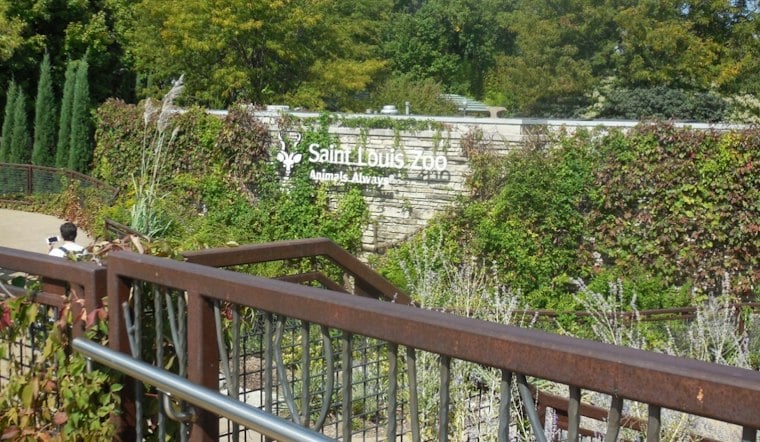
Once he arrives, Samudra will live in the River's Edge area at the St. Louis Zoo, a space featuring waterfalls, streams and large pools, per the OregonLive report. LeFave said Samudra will have access to a shallow splash pad as well as a deep pool where he can submerge and swim the length of the habitat.
Waiting for him will be three female elephants: Maliha, 20, Jade, 19, and Priya, 13. All three are daughters of Raja, the St. Louis Zoo's longtime resident bull who was the first elephant born at that zoo in 1992 and who fathered all three females there, according to the Saint Louis Zoo. That shared parentage is exactly why Samudra matters so much to the herd — Association of Zoos and Aquariums guidelines require unrelated breeding pairs to protect genetic diversity, and Samudra fills a genetic void left by Raja's own daughters being unable to breed with their father.
Raja himself was announced in December 2023 to be relocating to the Columbus Zoo and Aquarium, a move that cleared space for Samudra to become St. Louis's new breeding male and that reportedly sparked public concern among St. Louis residents over the longtime bull's departure. The St. Louis herd has kept growing in the meantime — in November 2024, 17-year-old Jade gave birth to a male calf named Jet, conceived through artificial insemination as part of the AZA breeding program, adding a fourth generation to the family Samudra is set to join.
Part of a Bigger Conservation Push
Samudra's transfer is designed to support the population of an endangered species. Wild Asian elephant populations have declined by at least 50 percent over three generations, leaving fewer than 52,000 individuals across 13 native range countries and landing the species on the IUCN Endangered list. Between 2015 and 2019, accredited Association of Zoos and Aquariums institutions contributed more than $16.5 million toward field projects protecting wild Asian elephants through the AZA SAFE program.
For now, Samudra remains in Portland, his departure date still unsettled. When he does leave, he'll carry with him a lineage that stretches from Rosy in 1953 through Packy, Rose-Tu and Lily — and a role, officials hope, in keeping a vulnerable species going for generations to come.





