

























































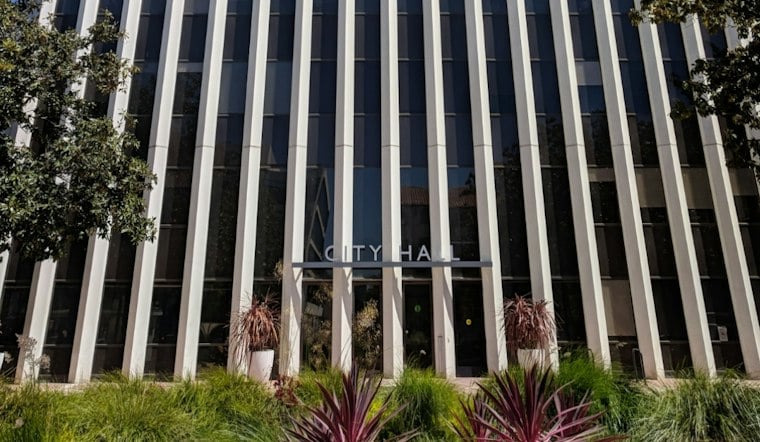
Palo Alto leaders will consider a one-year moratorium on new and expanded ICE detention facilities when the city council meets on Oct. 26, a proposal that would block the use of public or private property anywhere in the city for detention or holding operations, including jails, prisons and processing facilities.
The draft ordinance, reported by Palo Alto Online, states that ICE facilities severely affect the environment of surrounding communities and have a history of poor living conditions and substandard medical care. City staff have flagged a gap in the current zoning code: public-facility-zoned properties, which allow facilities used by local and federal government agencies, could in theory let a private property owner establish a detention operation in Palo Alto. Per the staff report, officials consider that outcome unlikely given the size, location or existing uses of the city's public-facility parcels, but they want the moratorium in place while they study permanent fixes.
What the Freeze Would and Wouldn't Cover
The moratorium would not apply to existing custodial facilities already in operation, such as holding areas inside the public safety building or the superior court building, according to city staff. It would take effect immediately if the council approves it on Oct. 26, and it would expire automatically unless the council votes to extend it. During the pause, the city says it would use the time to analyze updates to regulations addressing the impacts of detention and custodial facilities and to evaluate which locations, if any, might be appropriate.
City attorney's office staff have already met with the staff of U.S. Representative Sam Liccardo and with the Immigrant Protection and Empowerment Network, a nonprofit that coordinates with groups working to protect immigrants in Santa Clara County. Liccardo's office issued a land-use policy toolkit in August giving Bay Area local governments draft zoning language and legal strategies to restrict ICE detention facilities through municipal police powers.
A Regional Pattern Takes Shape
Palo Alto's proposal follows a string of similar moratoria already established in San Jose, Los Altos and Gilroy, according to the Palo Alto Online report. The wave of local action traces back to the federal government's move to begin building an ICE detention facility on a parcel in unincorporated Santa Clara County near Gilroy, a project first reported by San José Spotlight in May and also covered by Hoodline. According to Local News Matters, a federal judge granted a preliminary injunction late Friday, Sept. 11, ordering a halt to federal construction on the proposed 18,700-square-foot facility at 7240 Holsclaw Road, after Santa Clara County and state prosecutors sued alleging federal environmental review violations. Palo Alto backed the county's lawsuit against ICE, per the Palo Alto Online report.
Mountain View's city council voted earlier this month to establish its own temporary moratorium on applications for detention, custodial or processing facilities. The San José Spotlight reported that Gilroy's council unanimously adopted a 45-day moratorium on Oct. 5 blocking land-use applications for new detention facilities on public or private land, citing community safety and agricultural preservation, while San Jose's council first endorsed its own moratorium on detention center proposals on Sept. 15 amid concerns about emergency-response times and infrastructure impacts, then voted unanimously later.
The Legal Playbook Behind the Moratoria
These temporary freezes rest on California Government Code Section 65858, which lets municipal and county legislative bodies pass emergency interim urgency ordinances for up to 45 days — extendable for up to two years — to halt land-use permit approvals while studying zoning updates, according to the California Sign Association. Extensions beyond the initial 45 days require a four-fifths vote of the city council. Cities are leaning on zoning authority rather than outright bans because of a 2022 ruling: an en banc panel of the U.S. Ninth Circuit Court of Appeals found in *GEO Group v. Newsom* that California's Assembly Bill 32, a statewide ban on private, for-profit detention facilities, violated the Supremacy Clause by interfering with federal immigration operations. The zoning approach instead relies on municipal police powers affirmed nearly a century earlier in the 1926 U.S. Supreme Court ruling *Village of Euclid v. Ambler Realty Co.*, which established local government authority to regulate land use, public health and safety, according to Liccardo's office.
State lawmakers have moved on a parallel track. Governor Gavin Newsom signed Senate Bill 423, the Detention Facility Transparency Act, on Sept. 29, requiring local agencies, upon public request, to provide audio recordings and written records of 911 calls from privately run facilities, subject to an active-investigation exception and redactions, according to CalMatters. The proposed ICE detention facility near Gilroy has become a focus of local debate.
Local Policing and Political Backdrop
The Palo Alto Police Department already prohibits its officers from working with ICE and from asking about immigration status to make an arrest, according to the Palo Alto Online report. The proposed moratorium also arrives against the backdrop of the killings of Renee Nicole Good and Alex Pretti by federal officers earlier this year, per the same report. Separately, Mayor Vicki Veenker and Vice Mayor Greer Stone had floated a colleague's memo about ICE back in January, but the proposal was scrapped and never returned to the dais, according to Palo Alto Online.
If the council approves the moratorium Oct. 26, the ordinance would find that Palo Alto's public health, safety and welfare warrant a temporary pause while the city studies how to permanently address the impacts of detention and custodial facilities and evaluate where, if anywhere, such uses might be appropriate. The vote would place Palo Alto alongside San Jose, Gilroy, Los Altos and Mountain View in a regional effort to keep new ICE facilities out of Santa Clara County for now.





