

























































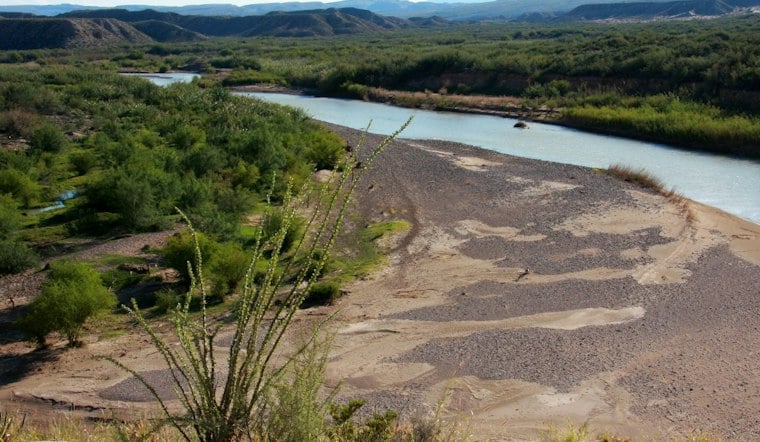
A fleet of 11-foot, solar-powered drone boats that has quietly patrolled the Rio Grande since January is now pushing into open water, with the Pentagon weighing whether to send the autonomous vessels deeper into the Gulf of Mexico as part of its border-security push. The move would mark a significant expansion of a program that started with just 10 test vessels monitoring a single stretch of river.
The vessels, called Lightfish, are built by San Diego-based Seasats, and the company announced Friday that a fleet of the boats had been launched from the Texas coast to conduct persistent autonomous surveillance of illegal maritime activity, including drug trafficking and unauthorized vessel movement, according to a Seasats news release. The company says Lightfish vessels have operated on the Rio Grande since January, supporting federal border-security efforts there before this latest push into the Gulf. Separately, Reuters reports that the Pentagon has been monitoring the Rio Grande with 10 Lightfish vessels and may expand their use into the Gulf of Mexico.
From River Patrols to Open Water
Breaking Defense reports that the Pentagon is eyeing an expansion that could mean pushing unmanned surface vessels into the Gulf of Mexico, building on a program that has so far kept 10 Lightfish boats monitoring the Rio Grande border area, according to Breaking Defense. Seasats describes each Lightfish as roughly 11 feet long and 340 pounds, solar powered, capable of multi-month endurance on station, and small enough for two people to launch and recover, per the company's release. A San Diego Business Journal report separately describes the vessel as 11 feet long and approximately 350 pounds, a discrepancy that has not been reconciled across the available accounts.
The boats carry a modular payload bay that has included electro-optical and infrared cameras, signals payloads and sonar across prior missions, the Seasats release states. Reuters reports that sensor data from the vessels feeds real-time tracking information into military software networks, including Anduril Industries' Fortress platform and Palantir Technologies' Maven Smart System, alerting Customs and Border Protection and Coast Guard units.
A Cost-Effective Layer for Stretched Patrols
Forbes reports that the autonomous vessels are geared toward providing detection and early warning while augmenting Coast Guard, military and law-enforcement vessels, rather than replacing them, according to Forbes. A related Forbes.es report frames the vessels as a way to extend the range of manned patrols within a broader, multilayered security network.
That framing echoes concerns raised by the Coast Guard itself. Writing in USNI's Proceedings, the service has said its existing mix of aircraft, automatic identification systems, human reports and cutter radars is insufficient for live tracking of vessel movements, and has pointed to surface, air and subsurface unmanned assets as tools that can operate for long periods in dangerous areas while carrying multiple sensors, according to USNI. The service is also expanding its own unmanned surface vessel capability through Saildrone deployments in strategic maritime locations, and is separately seeking contractors to provide drone-based intelligence, surveillance and reconnaissance services, per DefenseScoop.
Comparable Systems Already at Sea
The Lightfish program is not the only autonomous maritime effort underway. Breaking Defense has reported that the Coast Guard is deploying 16 Saildrone Voyager vessels to the Great Lakes and North Atlantic to close surveillance gaps and support rescue and interdiction missions, with each Voyager able to remain at sea for roughly 100 days at a time. Saildrone has partnered with the Coast Guard on operations in its Southwest and Southeast districts dating back to 2023, the outlet's reporting notes.
Seasats has its own track record beyond the border mission. Defense News reported that a Lightfish vessel completed a 4,000-mile transatlantic crossing from South Carolina to Portugal in just over two months before entering a NATO autonomous-craft exercise. The company’s Lightfish Security System is a tool for persistent maritime domain awareness, according to an earlier Seasats announcement.
Business Is Booming for the Drone-Boat Maker
The expansion has translated into a financial windfall for Seasats. The company says it has booked more than $24 million in new orders from U.S. national-security customers in a single month, according to its release announcing the Gulf deployment. The company has not disclosed how many vessels that order volume represents.





