

























































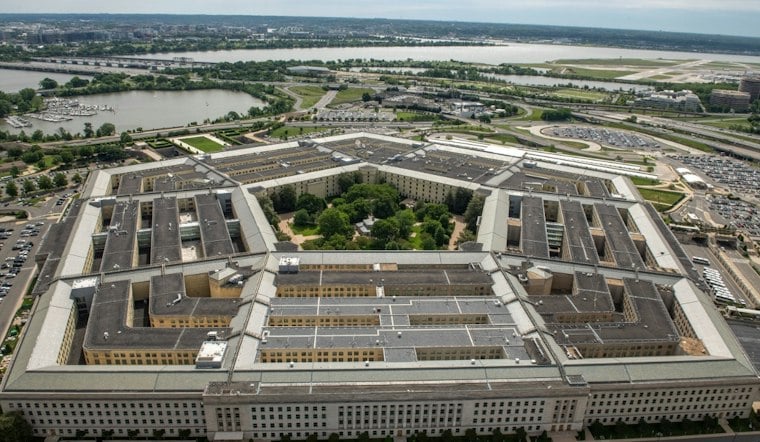
The Pentagon is reportedly working to build a more robust deep-cover spying program aimed squarely at economic warfare against China and other U.S. competitors, according to an exclusive report published Wednesday. The initiative would mark a significant expansion into territory long dominated by the CIA, with economic espionage emerging as a new priority inside the Defense Department.
The report, citing half a dozen people familiar with the initiative, was written by Zach Dorfman and Warren P. Strobel and published in the national security section of The Washington Post. The Post's account notes that the Pentagon has a poor track record with human spying, a history that stretches back decades and has shaped skepticism around any new clandestine push.
A History of False Starts
That track record is well documented. A declassified history compiled by the National Security Archive describes “multiple starts, stops, and reversals in the human intelligence activities of the Department of Defense,” according to nsarchive2.gwu.edu. For almost 70 years, the site notes, responsibility for human intelligence collection fell mainly to the CIA rather than the military.
The Pentagon has tried before to build its own espionage muscle. In 1993, a review led by then-CIA Director James Woolsey and Deputy Defense Secretary William Perry produced a decision to establish a Defense HUMINT Service, intended to absorb the military services' clandestine collection activities along with non-tactical overt collection efforts, per the same archive. Nearly two decades later, on April 20, 2012, Defense Secretary Leon Panetta formally established the Defense Clandestine Service, a new Pentagon spy organization built atop that earlier foundation.
China's Hard Target Problem
Any expanded Pentagon effort would run headlong into one of the toughest espionage environments in the world. Beginning in 2010, Chinese authorities systematically dismantled CIA spying operations inside the country, killing or imprisoning more than a dozen sources over a two-year span, according to The New York Times. Two former senior American officials told the Times that the toll actually reached 18 to 20 sources, effectively unraveling a CIA network built over several years.
Investigators were divided over how the breach happened. Some believed a mole inside the CIA had betrayed the operation, while others concluded that Chinese hackers had penetrated the covert communications system the agency used to manage its sources, the Times reported. Despite that catastrophic loss, the CIA still considers spying in China one of its top priorities — the Times notes that the country's extensive security apparatus makes it exceptionally hard for any Western intelligence service to develop and sustain sources there.
Economics as a Battlefield
The Pentagon's reported interest in deep-cover operations tracks a broader shift in how officials talk about economic competition with Beijing. Export controls, sanctions and supply-chain leverage have increasingly been described as an “operational domain of warfare,” according to an analysis published by War on the Rocks. That piece argues the Pentagon and intelligence community should develop new pathways to collect economic data from U.S. firms operating in China or heavily exposed to Chinese business.
The same analysis points out that the Pentagon has already launched several initiatives in this vein — the Economic Defense Unit, the Office of Strategic Capital, and the Defense Innovation Unit — but argues a body to integrate those efforts is still missing. It also flags a visibility gap in corporate supply chains: roughly 60 percent of firms report comprehensive visibility into their tier-one suppliers, but only about 30 percent can see further downstream, and just 17.1 percent track critical suppliers down to tier four and beyond.
The scale of China-linked cyber and economic espionage activity has been substantial. Since 2000, China has been associated with 90 cyber espionage campaigns, according to research from the Center for Strategic and International Studies, out of 114 documented Chinese cyber campaigns tracked between 2000 and 2020. Thirty-two of those operations targeted private entities across 10 different commercial sectors, and a survey of chief financial officers cited by CSIS estimated that one in five U.S. corporations has had its intellectual property stolen.
CSIS also highlighted Operation CuckooBees, a multiyear cyber espionage campaign targeting multinational companies that was revealed by the cybersecurity firm Cybereason in 2022 and tied to the hacking group APT41 — the same group connected to 2020 Justice Department indictments against five Chinese nationals accused of hacking more than 100 companies. CSIS says the operation exfiltrated hundreds of gigabytes of intellectual property.
Oversight Built Into Law
Any Pentagon clandestine service operates under specific congressional oversight requirements already written into federal law. Under Title 10 of the U.S. Code, the Secretary of Defense must promptly notify covered congressional committees of the nature of any significant change to the Defense Clandestine Service following a required certification, according to the U.S. House's codified statute text. The same chapter requires the Secretary to provide those committees with quarterly briefings on the deployments and collection activities of Defense Clandestine Service personnel.
What remains unclear is how any newly reported deep-cover push would fit alongside that existing legal framework, or whether it represents an expansion of the Defense Clandestine Service itself or a separate effort entirely. The Washington Post's report relied on half a dozen people familiar with the initiative, but the broader record of Pentagon human-intelligence efforts — stretching from the 1993 Defense HUMINT Service decision to the 2012 creation of the Defense Clandestine Service — shows an institution that has repeatedly tried, stumbled and restructured its approach to the same basic problem the CIA has spent nearly seven decades wrestling with.




