

























































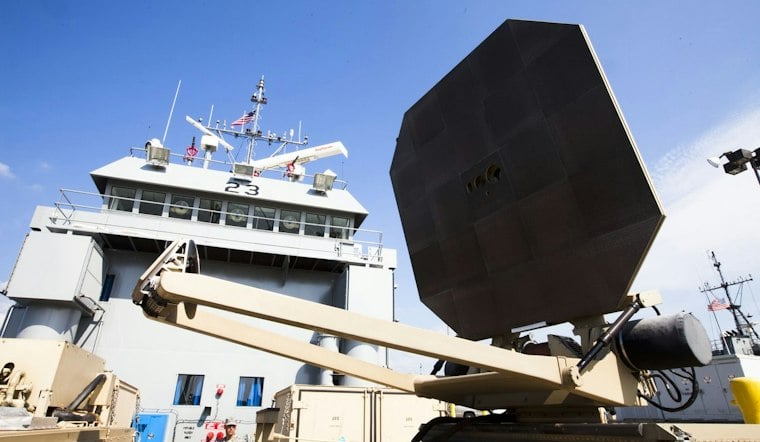
The Pentagon has cleared the Department of Homeland Security to test a military-grade heat weapon for possible use at the southern U.S. border, authorizing a temporary loan of the Active Denial System that could put a controversial, pain-inducing technology into the hands of border authorities for the first time. Defense Secretary Pete Hegseth signed the memo authorizing the move, which allows DHS to test the system and develop tactics for its eventual use along the border.
The device, sometimes nicknamed a heat ray, projects an invisible millimeter-wave beam that, according to military officials, can reach a little more than half a mile, as reported by WJLA. The beam causes an intense burning sensation on the skin that Pentagon officials have compared to opening a hot oven, with effects that can include tingling lasting 10 to 15 minutes, and military officials have said the system creates what they describe as an instinctive and irresistible urge to run from the effect. Technically, the weapon works by emitting a 95-gigahertz beam that penetrates only about 1/64 of an inch into human skin, heating surface water and fat molecules to roughly 130 degrees Fahrenheit to trigger that instant burning sensation without reaching deeper tissue, according to Newsweek.
A Weapon Years in the Making, Never Used in the Field
The underlying technology is not new. The Active Denial System was first developed in the early 2000s under the Department of Defense's Joint Non-Lethal Weapons Program, with the Air Force Research Laboratory leading the effort in partnership with defense contractor Raytheon, according to Physicians for Human Rights. The military version has an effective range of up to 1,000 meters, or roughly 0.6 miles, and projects a 1.5-meter, man-sized beam, per the National Defense University.
Despite that range, the weapon has never actually been used in an operational setting. The U.S. military sent a vehicle-mounted unit to Afghanistan in 2010 for evaluation, only to recall it months later without ever firing it in combat, due to operational constraints and concerns about public perception, as detailed by Forbes. DHS's own request to the Pentagon did not specify a testing location or method, nor how the system might eventually be used, the station's report notes, and the Active Denial System has not previously been deployed at the U.S. border.
Border Officials Weigh Crowd Control Near Rivers
Current and former Customs and Border Protection officials have discussed using the system to disperse crowds in areas that see high numbers of crossings, per CNN reporting cited by the station. Officials have specifically considered deploying it to deter people from crossing near a river, but that idea has already drawn internal pushback: officials have raised concerns that people struck by the beam could be incapacitated or pushed into the water and need rescue.
Legal and jurisdictional questions loom as well. Officials have also raised legal, use-of-force and sovereignty concerns about possibly using the weapon on people who have not yet crossed into the United States. Those worries echo a history of hesitation inside the federal government. Then-Homeland Security Secretary Kirstjen Nielsen rejected a 2018 proposal to use the system against migrants, and NPR, citing The New York Times, reported that she instructed aides never to raise the idea in her presence again.
From Lafayette Square to the Border Fence
The system's domestic history extends beyond the border. U.S. officials considered deploying the Active Denial System during domestic unrest, including the protests that followed George Floyd's murder near the end of Donald Trump's first term, according to a former U.S. official cited by the station. Separately, military police officials in Washington, D.C., inquired in June 2020 whether National Guard units had an Active Denial System available just hours before federal officers forcibly cleared peaceful civil rights protesters from Lafayette Square near the White House, according to NPR.
Domestic law enforcement has flirted with smaller versions of the technology too. A smaller version of the technology was proposed for testing on jail prisoners, according to Prison Legal News. Raytheon has also marketed a smaller commercial variant called Silent Guardian, with a reduced range of about 250 meters aimed at civilian law enforcement and private security buyers, as reported by The Guardian.
Terms of the Loan and What Comes Next
Under the new memo, the Pentagon is authorizing a temporary loan of one Active Denial System for seven months beginning in September. The system will not be operated by Department of War personnel; instead, DHS is solely responsible for its use and for developing its own tactics and procedures, per a defense official cited by the station. That same official said DHS can request further use of the system for border operations once the loan period ends.
A Customs and Border Protection spokesperson said the agency continually evaluates new technologies, particularly those that enhance operational effectiveness and strengthen mission capabilities. The Pentagon referred inquiries to DHS for comment. The Active Denial System has also been the subject of legal and treaty reviews.
The move follows a broader pattern of expanding military involvement at the border under Hegseth. Earlier this month, the FAA issued civilian-drone restrictions along the border and separately described an FAA-Pentagon agreement. Department of Defense testing involving more than 13,000 human exposures to the Active Denial System has resulted in two documented second-degree burns requiring medical care, including an April 2007 training injury at Moody Air Force Base in Georgia, according to Newsweek.


