

























































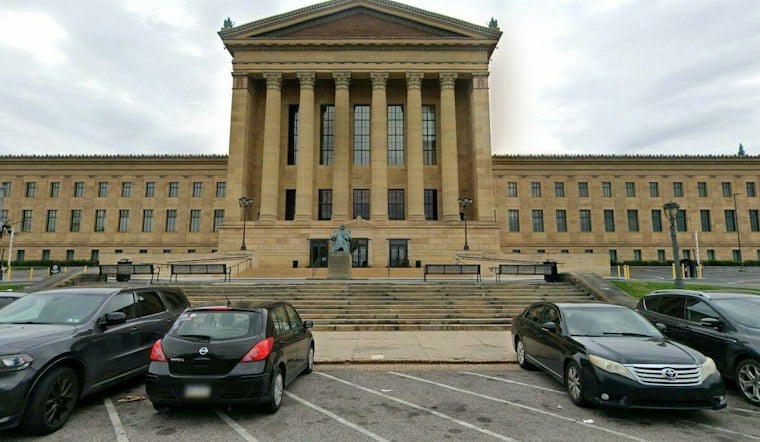
The Philadelphia Museum of Art has received a $20 million gift from Lois G. and Julian A. Brodsky to build a new learning and engagement center just inside its north entrance, with plans calling for a family learning center, art studios, a visitor orientation area, and a multipurpose community hub. The museum says the roughly 19,000-square-foot Brodsky Center will more than triple its current education footprint and allow it to serve more schoolchildren while also welcoming the general public.
According to The Art Newspaper, the museum currently offers free admission to visitors 18 and under, and it welcomes around 36,000 students each year. ARTnews likewise puts annual student visits at about 36,000. What is consistent across accounts is the scale of the planned upgrade: the museum's existing education space totals under 6,000 square feet, and the new center is designed to more than triple it.
From a Guide and a Comcast Co-Founder
Julian Brodsky, a 93-year-old Comcast co-founder who has served on the museum's board for three decades, and Lois Brodsky, a former schoolteacher and longtime museum guide and volunteer, are the gift's namesakes. The new space will be called the Lois G. and Julian A. Brodsky Learning and Engagement Center. Julian said the project centers on education, community outreach, and cultural involvement, framing the gift as rooted in both of their decades inside the institution.
Lois joined the museum as a volunteer in 1982 and worked as a weekday guide from 1986 to 2019, per the Art Newspaper's reporting. Julian joined the museum's board in 1995 and became a trustee emeritus in 2024. The couple, who live in Center City, began discussing their support for the project years ago, during a previous director's tenure, before the plan took its current shape.
A Scaled-Back Vision After Leadership Change
The center's path to its current design has not been straightforward. An earlier concept, developed while the museum worked with architect Frank Gehry on a pricier version of the project, carried project costs reported at up to $50 million, with some estimates closer to $30 million and potential borrowing costs of roughly $20 million on top. That version took shape under a previous director who was dismissed in 2025.
Once a new museum leadership took over the project was reconfigured into its current, leaner design. Julian Brodsky said Gehry's proposal had been expensive, and that the museum found another way to approach the center without shrinking its ambitions. MGA Partners, a Philadelphia-based architecture firm, is now developing the design, according to WHYY.
Where the New Space Will Go
The Brodsky Center is set to occupy parts of the north wing's ground floor currently used for nonexhibition functions, a section that also includes space used for mechanical equipment and an unexcavated portion beneath the building's easternmost end. The center will retain the museum's existing education spaces and convert some multipurpose areas now used only part-time for education into full-time dedicated classrooms and studios, consistent with plans described by ARTnews.
It marks the museum's first major capital project since completing its Core Project, a four-year interior renovation and expansion designed by the late architect Frank Gehry that wrapped up in 2021. That earlier effort, per the museum's own account in a release from Philadelphia Museum of Art, was backed by a $525 million campaign and added 23,000 square feet of new gallery space as part of a broader Facilities Master Plan.
Funding the Center and What Comes Next
The Brodsky gift will fund capital improvements for the new center, with any remaining funds expected to support an endowment for the museum's educational programs, WHYY reports. The gift also includes a matching component intended to draw additional donations.
Construction timelines have varied across reporting on the project: WHYY has reported construction is expected to begin in summer 2027 and take a few years to complete, while earlier coverage from Billy Penn described multiyear renovations slated to start in fall 2026, with no opening date yet set. The available reporting does not explain whether or why the start date shifted. Billy Penn's earlier coverage also described a longer-term vision of a 20,000-square-foot center eventually taking over the entire north wing.
Demand for the museum's education programs has already been running ahead of expectations. Billy Penn reported that the museum's free busing program for school groups brought in 36 buses carrying 443 students, 12 percent more than its own internal forecasts, in an earlier school year, and that the program would return for the full 2025-26 school year.
Museum director and CEO Daniel H. Weiss, who took over the institution in December 2025 following the prior director's dismissal, called the gift a positive, forward-looking development for the museum and said it reflects a shared vision between the Brodskys and the institution. Weiss said the museum is examining the possibility of extending its weekday hours as part of the broader push to expand its educational reach. Julian Brodsky, for his part, said the number of schoolchildren the museum serves could ultimately be substantially higher once the new center is complete.


