

























































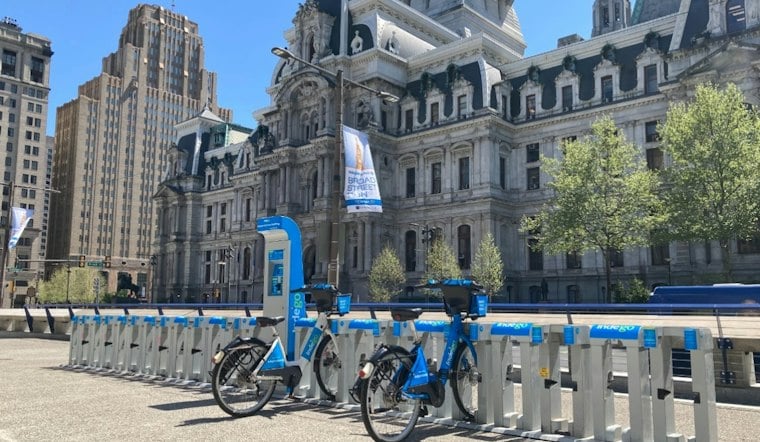
Riders pulling up to Indego bike-share stations around Philadelphia are now greeted by glowing, dual-sided touchscreens that do a lot more than point toward the nearest dock. New interactive kiosks developed by IKE Smart City are already in place at Indego stations across the city, offering everything from real-time transit information to free public Wi-Fi. The rollout marks the latest step in the bike-share system's push to modernize a decade-old network that keeps setting ridership records.
What the New Touchscreens Actually Do
According to NBC10 Philadelphia, the kiosks feature ADA-accessible design with dual-sided touchscreens and multilingual interactive apps, meaning they're built to serve a broad cross-section of riders and passersby. They provide real-time transit information, local events, nearby dining options and public safety alerts, the station notes. On top of that, they offer free public Wi-Fi and display public art, community messages and important safety information, giving the stations a role that goes well beyond just unlocking bicycles.
Indego program manager Waffiyyah Murray said the touchscreens are meant to make the city easier to navigate, not just for people on two wheels. “These touchscreens will help residents and visitors navigate our city, access real-time weather updates, and receive key community messaging,” Murray said, per the same report. The kiosks are also designed to help residents and visitors discover local attractions and connect with their communities, a function city officials are framing as a civic upgrade as much as a transportation one.
Advertising Dollars Funding the Bike Network
Money is part of the equation too. Revenue from advertisements displayed on the kiosks will be directly reinvested into the Indego system, the outlet reports, a model designed to help fund operations and expansion without leaning solely on fares or subsidies. Indego's own blog post, the 2026 Expansion Update, notes that the program rolled out IKE Smart City Kiosks at ten stations across the system during 2025, describing the touchscreens as sharing public service information, local resources and art.
That kind of ad-funded kiosk arrangement has played out differently elsewhere. In Berkeley, California, the city has received just $75,000 per year from its IKE kiosk program in the three years the devices have been active, according to Berkeleyside — far below the more than $26,000 per kiosk the city had projected back in 2018. Oakland, by contrast, struck a 2022 deal with Orange Barrel Media guaranteeing $10,000 per kiosk annually plus a $65,000 payment for city oversight of the program, the same outlet reports. Philadelphia's financial arrangement with IKE Smart City was not detailed in the reporting on the Indego rollout.
A Decade of Growth for Indego
The kiosk rollout lands as Indego, launched in 2015, continues to expand well beyond its original footprint. NBC10 Philadelphia reports the system has grown to include 2,000 classic and pedal-assisted electric bikes across 250 stations citywide, with bikes available 24/7 for transportation, recreation, fitness or fun. Indego's own 2026 Expansion Update post says riders took more than 1.3 million trips in 2025, the system's highest total since launch, after the program added 36 new stations and 530 docking points that year.
Looking ahead, Indego aims to add roughly 40 new stations and 800 docks to its system by the end of 2026, according to the expansion update. Separately, Axios reported on the program's tenth anniversary that the system has grown to more than 2,200 bikes, up from around 600 in 2015, with stations ballooning to more than 250 from an original 60 — figures that differ somewhat from NBC10's count but point to the same trajectory of rapid growth. Axios also reported that Indego rides have replaced more than 2 million car trips over the program's lifetime, according to a company spokesperson, and that electric pedal-assisted bikes were added to the fleet in 2018.
For now, the new kiosks represent a visible, everyday change for anyone rolling up to a dock — a touchscreen that can tell them the weather, flag a nearby safety alert, or simply point them toward dinner before they pedal off.





