

























































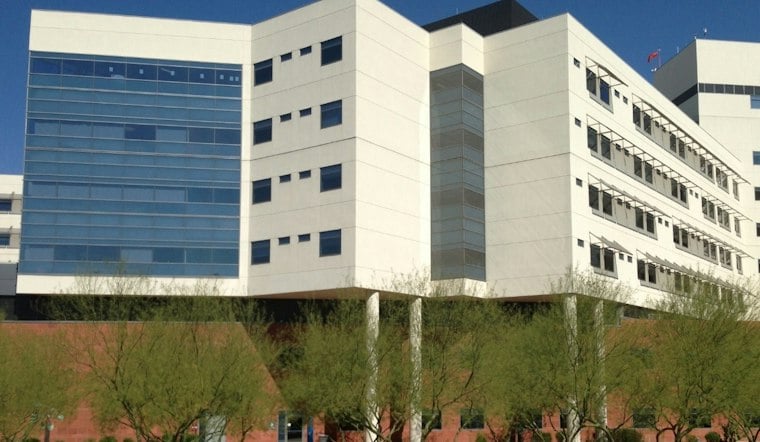
Barrow Neurological Institute in Phoenix has received another $25.3 million from the National Institutes of Health to continue its work on ALS, pushing the federal government's total investment in the research consortium it co-leads to $76.5 million. The new funding extends the ALL ALS initiative for two more years and marks the largest externally funded research grant in Barrow's 64-year history.
As reported by KTAR News 92.3 FM, the ALL ALS Consortium was established in 2023 with the goal of making clinical data and biological samples widely accessible to researchers across the country in hopes of accelerating drug development for amyotrophic lateral sclerosis, the progressive and fatal neurodegenerative disorder commonly known as Lou Gehrig's disease. Barrow serves as the consortium's West Clinical Coordinating Center, managing 19 of its 37 clinical research sites nationwide, while the East Clinical Coordinating Center is led by Dr. James Berry out of Massachusetts General Hospital, which oversees the remaining 18 sites, according to Mass General Brigham.
A Scarce Arsenal Against a Relentless Disease
The urgency behind the consortium's work is stark. ALS patients have an average survival time of about three years following diagnosis, and while available medications can modestly slow disease progression and supportive therapies can improve quality of life, no treatment currently reverses or halts the disease, per KTAR's reporting. Amylyx Pharmaceuticals voluntarily pulled Relyvrio from the market in April 2024 when its Phase 3 trial failed to show effectiveness, according to BioPharma Dive.
Dr. Robert Bowser said broad participation, collaboration and access to high-quality clinical data and biological samples are needed to accelerate ALS research and drug development. He added that the additional NIH funding lets the consortium build a resource for scientists worldwide to understand ALS and identify drug targets for more effective treatments, the station's report notes.
From First Enrollee to a Growing National Dataset
The consortium fulfills research requests through the ALS Knowledge Portal, which the Arizona-based Critical Path Institute co-stewards with the NIH. C-Path is working to standardize actigraphy data to help FDA officials accept wearable measures in future trials. Biosamples from ALL ALS are sent to BioSEND, an Indiana University-based biorepository funded by NINDS, and ALL ALS has already begun sharing initial sets of those samples with the broader scientific community.
The consortium runs two parallel studies: ASSESS tracks longitudinal clinical outcomes and biological samples from people living with ALS alongside healthy controls, with recruitment scheduled to run through February 2027, while PREVENT ALL ALS focuses on individuals with elevated genetic risk of developing the disease. Enrollment for PREVENT officially wrapped up after exceeding its national recruitment goal, according to the ALL ALS Consortium. ALL ALS emphasizes accessibility and prioritizes geographic, socioeconomic and ethnocultural diversity in clinical research.
A Funding Clock Ticking in Washington
The consortium traces its legal roots to the Accelerating Access to Critical Therapies for ALS Act, signed into law in December 2021, which mandated federal public-private partnerships to speed rare neurodegenerative disease drug development. The law's five-year funding authorization had been scheduled to expire at the end of the fiscal year on September 30, 2026. An estimate puts U.S. ALS cases at about 32,000, with an average of 5,000 new cases each year.
Barrow itself, which has a 64-year history and is part of Dignity Health St. Joseph's Hospital and Medical Center, has research infrastructure that anchors the Phoenix end of a data-sharing pipeline the NIH designed to stretch from Phoenix to Boston. Those interested in participating in or supporting the consortium's research can contact the organization at [email protected], according to KTAR.





