

























































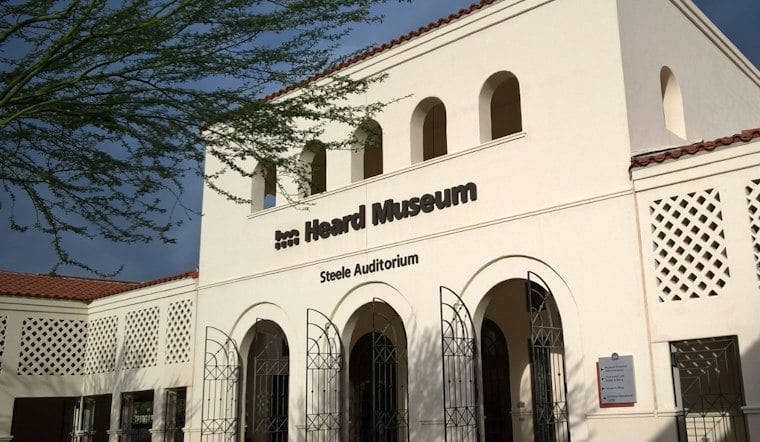
The Heard Museum in Phoenix is hunting for an artist to permanently memorialize one of the most dazzling spectacles in Indigenous dance: the hoop dance. The museum is inviting Indigenous artists from the United States and Canada to submit portfolios for a juried commission that will pay the winning sculptor a $100,000 budget, funded by an anonymous donor described as an avid hoop dancing fan.
As reported by KJZZ, the World Championship Hoop Dance Contest has been held at the Heard Museum for close to four decades, after its inaugural competition at the 1991 New Mexico State Fair in Albuquerque. Hoop dancing itself is described as an Indigenous spectator sport that emerged from the American Southwest. The museum plans to install the resulting sculpture outdoors on its campus, with the selection process involving three semifinalists who will draft and present concepts before a finalist is chosen.
Semifinalists will each receive a $2,000 honorarium for their concept work, per the same KJZZ report. Olivia Barney, the Heard Museum's assistant curator who is Diné, said artists may work in any medium, including bronze, steel, stone, or wood, and that the sculpture must be sized according to the museum's guidelines while withstanding Phoenix's heat and weather. Barney added that the subject matter itself is left open to artistic creativity.
Specifications Behind the $100,000 Commission
Artists can submit portfolios for the commission. The museum plans to install the commissioned sculpture outdoors on its campus. Portfolio submissions are due by Wednesday, November 4, 2026, and the finished outdoor sculpture is expected to be completed before the 38th Annual World Championship Hoop Dance Contest in February 2028.
The commission arrives as the Heard Museum pushes forward with a much larger transformation of its grounds. The sculpture initiative coincides with a $36 million Walk in Beauty centennial campaign and a $12 million campus renovation the museum announced in September 2026, which includes a redesigned main entrance featuring new landscaping and additional outdoor sculptures, as Hoodline detailed in its prior coverage of the museum's centennial fundraising push.
A Contest Built on Decades of Tradition
The hoop dance competition the sculpture will honor has become one of the most prominent events on the Heard Museum's calendar. More than 100 Indigenous dancers from across North America compete across four age groups—youth, teen, adult, and senior—for $25,000 in total cash prizes, according to The Art Newspaper. This past February, Josiah Enriquez of the Pueblo of Pojoaque, Navajo, and Isleta claimed first place in the Adult Division at the 36th Annual World Championship Hoop Dance Contest, according to the Heard Museum, marking his third consecutive world title after previous wins in 2024 and 2025.
Organizers expected around 7,000 spectators for the 36th edition of the two-day event. Judges score performers on criteria including showmanship, creativity, and rhythm, per Destination Native America. That judging system was originally developed in 1991 for the inaugural championship. During performances, dancers use hoops to create interlocking shapes, reflecting themes of balance and the circle of life found across Indigenous cultures.
Honoring the Dance's Pioneer
Modern hoop dancing traces much of its form to Jemez Pueblo dancer Tony White Cloud, who in the 1930s introduced the technique of using multiple hoops to build dynamic shapes, according to The Art Newspaper. White Cloud toured his multi-hoop routines nationwide at expositions, inspiring generations of dancers. The contest was co-founded by Kiowa cultural leaders Ralph and Dennis Zotigh, who helped launch it with 18 competitors; its inaugural competition took place at the 1991 New Mexico State Fair in Albuquerque, and organizers later sought a larger venue and partnered with the Heard.
The Heard Museum itself has deep roots in Phoenix, having been founded in 1929 by Dwight and Maie Heard. The 130,000-square-foot institution, according to the Paradise Valley Independent, was established to showcase Native American art and present Indigenous stories from a first-person perspective, growing in size and stature. The planned sculpture would add a permanent, large-scale tribute to that mission, giving hoop dancing a physical presence on the grounds where its world championship has played out for decades.




