

























































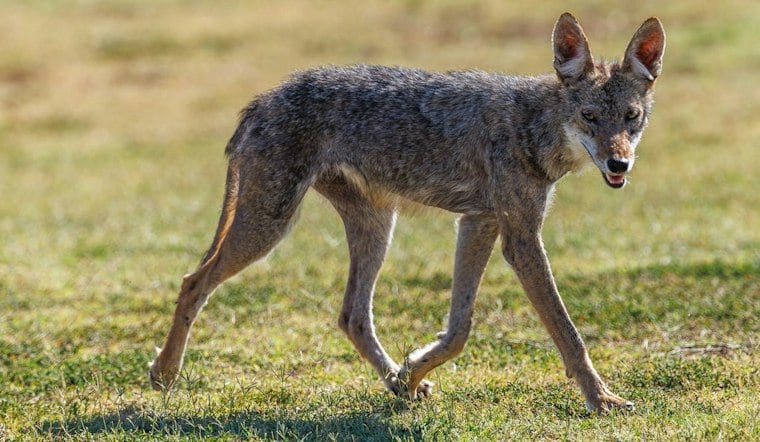
Residents across Sun City, Peoria and Moon Valley have spent 2026 swapping photos and videos of strange, patchy-furred animals skulking through backyards and golf courses, and more than a few are convinced they've found proof of the chupacabra. Wildlife officials aren't so sure — and the evidence so far doesn't confirm an unknown species is loose in the Valley.
No Proof of a Monster, but Plenty of Sightings
As azcentral.com reports, there is no scientific evidence confirming the presence of the legendary chupacabra in Arizona, even though residents have shared photos, videos and accounts throughout 2026. One Nextdoor user, Rivers Carpenter, wrote earlier this month that the animals he calls chupacabras are frequently seen in Sun City, declaring, “We live in Sun City and see chupacabras in our backyard all the time.” Another Nextdoor commenter, identified only as Carol E., pushed back with a more grounded theory, saying every reported chupacabra sighting is actually an animal with mange — a skin disease that, as the outlet notes, can cause animals to lose much of their fur.
One of the more widely discussed sightings came from a Nextdoor user known as Joshua R., who shared a photo in September of an unusual animal spotted near a golf course in Moon Valley, north of Phoenix. He said he saw the animal that morning, left out food for it, and wasn't sure whether it belonged to someone, also asking neighbors whether anyone had lost a pet in the area. The post drew 225 reactions and 337 comments, but per the same azcentral.com report, the image alone does not make it possible to determine with certainty what species the animal is or whether it has a medical condition.
A Peoria Post Sparks the Same Debate
A similar scene played out in Peoria in May, when a Reddit post titled “Seen in Peoria this weekend” showed another unusual-looking animal. The person who posted it said he saw the creature while walking through a dry wash and that it appeared to be feeding on a pigeon. Commenters in the thread floated several possibilities — a coyote with mange, a hairless dog, or another kind of sick animal — rather than anything supernatural, according to the same azcentral.com account.
The pattern is familiar to wildlife researchers well beyond Arizona. The Texas Observer has reported that several Texas carcasses once claimed as chupacabras underwent DNA testing between 2004 and 2009, and every result came back the same: mangy, sickly coyotes or dogs. A hairless carcass found in Nicaragua back in 2000 was examined by anatomy specialists at the National Autonomous University of Nicaragua and identified as a common dog likely stricken with mange, the Observer also notes. Texas A&M wildlife expert John Tomeček told AgriLife Today that reports of the mythical chupacabra are likely people seeing a coyote with late-stage mange.
From Puerto Rico to the Valley: A Legend That Keeps Shifting
The chupacabra story first gained widespread attention in Puerto Rico in 1995, when farm animals were reported mysteriously killed, with some accounts claiming they appeared drained of blood. Madelyne Tolentino famously said she saw a creature with large eyes, long limbs and spikes along its back. But by 2000, according to National Geographic, that original bipedal description had largely been replaced by reports of a canine-looking creature, and U.S. accounts — especially in Texas — have since centered on a hairless, dog- or coyote-like animal. In 2007, Phylis Canion said she found specimens of the creature in Cuero, Texas, a case later documented by Asher Elbein in the Texas Observer's 2016 piece “Chasing the Chupacabra.” Closer to home, Arizona Game and Fish wildlife biologist Carrington Knox examined one widely shared photo and told 12 News it showed a coyote suffering from hair loss, though Knox said the image wasn't clear enough to confirm whether mange was the cause.
Disease and Poison Are Hitting Local Coyotes
Real illness among Valley coyotes isn't in dispute. The Southwest Wildlife Conservation Center has reported that numerous coyotes in the Phoenix area, particularly in Sun City and Surprise, have become sick or died from rodenticide poisoning, according to FOX 10 Phoenix. Coyotes can encounter rat poison directly or by consuming rodents that already ingested it, and predators that eat contaminated animals face their own risk from the toxins.
Separately, Arizona Game and Fish Department confirmed in August 2025 that laboratory testing had verified canine distemper among sick or disoriented coyotes in Maricopa County, after the agency received a rising number of reports in residential neighborhoods, parks and green spaces. Infected coyotes and foxes may show unusual behavior, the department says, including a lack of fear toward humans, stumbling, seizures or discharge from the eyes and nose. Distemper cannot infect humans, but it poses a serious risk to unvaccinated dogs and certain wildlife species, and the disease can be fatal.
What Wildlife Officials Want Residents to Do
Arizona Game and Fish recommends keeping a safe distance from coyotes, not feeding them, keeping pet food indoors and leashing dogs when outside. The department also advises residents to avoid approaching or touching wildlife altogether and to protect small pets so coyotes don't grow accustomed to people. Anyone who finds a sick or dead animal is asked to report it to the department's 24-hour hotline at 623-236-7201, while any animal behaving dangerously or approaching people aggressively should prompt a call to authorities — or to 911 in the event of an actual attack.





