

























































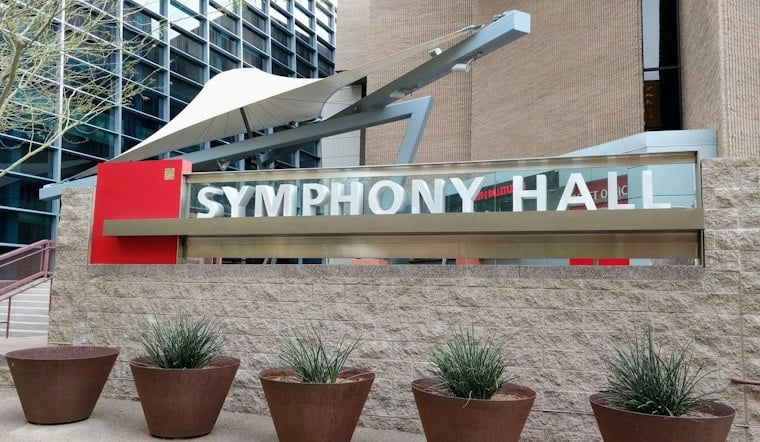
Phoenix poured roughly $7 million into modernizing Symphony Hall, installing three massive 27-by-13-foot LED video panels on a newly designed smokey glass lobby wall as part of a sweeping 2026 facility overhaul. The project also re-lamped the seating house, upgraded audio systems, and added exterior LED uplighting, giving the 54-year-old downtown venue a dramatically updated look before concertgoers even reach their seats.
A New Look for a 1972 Landmark
The upgrades, detailed by the City of Phoenix, span far more than the lobby. New directional lane line signage was added outside to help patrons navigate the venue, while the re-lamped house interior and enhanced audio systems were designed to modernize the experience without disturbing the hall's acoustic character. As Signals AZ reports, the facility upgrades and accompanying rebrand aim to reflect Symphony Hall's place in Phoenix's broader entertainment ecosystem, creating a more modern, welcoming feel while preserving the venue's character.
Alongside the physical renovation, the venue unveiled a new visual identity built around a “Crown Jewel” logo. The design was crafted to reflect the Brutalist architectural profile of the 1972 building while incorporating symbolic representations of musical sound waves on stage, according to the city's announcement. The rebrand signals continued municipal investment in a downtown cultural anchor that has anchored Phoenix's arts scene for more than five decades, per Signals AZ.
Owned by the City, Home to Three Major Arts Groups
Symphony Hall is owned by the City of Phoenix and operated under its Convention Center & Venues Department, which also manages the nearby historic Orpheum Theatre. With a seating capacity of 2,312, the venue serves as the primary home for three major regional performing arts organizations — The Phoenix Symphony, Ballet Arizona, and Arizona Opera — according to Ballet Arizona. The facility also regularly hosts Broadway touring productions and corporate general sessions.
This isn't the hall's first major overhaul. Prior to the 2026 upgrades, Symphony Hall underwent an $18.5 million renovation completed in 2004 as part of a $618 million expansion of the Phoenix Convention Center complex, which added wood-based acoustic seats and upgraded ADA accessibility, per the same account from Ballet Arizona. Designed by architect Charles Luckman in the Brutalist style, the hall was constructed between 1969 and 1972 by contractor Del E. Webb as part of the original Phoenix Civic Plaza project, according to Wikipedia.
A Home Built for Phoenix's Flagship Orchestra
The hall's history is deeply intertwined with that of its primary tenant. The Phoenix Symphony was founded in 1947 and spent its first 25 years performing inside the Phoenix Union High School gymnasium before moving into Symphony Hall upon its completion in 1972, a transition that City Lifestyle notes helped push the orchestra toward full-time professional status, which it achieved in 1983.
Today, The Phoenix Symphony remains Arizona's only full-time professional orchestra, presenting more than 200 concerts and education events annually throughout the state, according to the Phoenix Symphony. The orchestra closed its 2025/26 season in May with a high-profile series pairing classical works by Igor Stravinsky with music by hip-hop artist Kendrick Lamar, reflecting the genre-crossing programming now filling the newly updated hall.
Philanthropic support has followed the venue's momentum. In June, retiring cellist Laurie Stearns Selby and her husband Tom Selby committed $500,000 to the Phoenix Symphony's CRESCENDO campaign, which funds outreach concerts at memory care centers, veterans facilities, and schools across the region, the orchestra said. Between the capital investment in the building and the private giving flowing into its resident ensemble, Symphony Hall's modernization arrives as both a physical and artistic reinvestment in downtown Phoenix's cultural core.





