

























































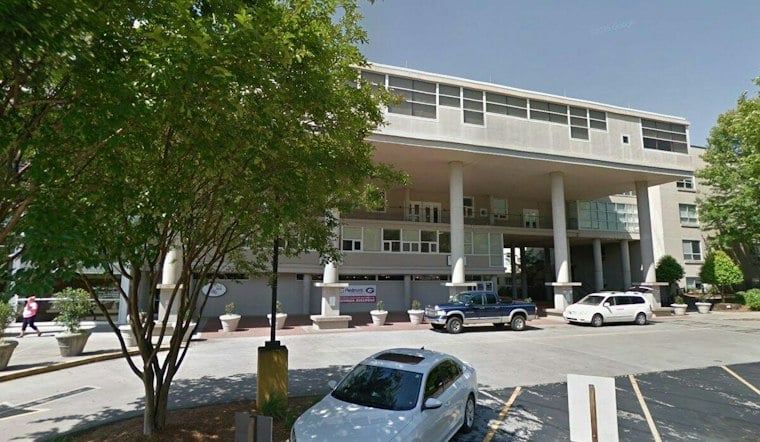
Piedmont Healthcare has received accreditation for three new graduate medical education programs that will train aspiring doctors at its Atlanta and Athens facilities, with the first class of residents and fellows expected to start work as early as July 2027. The newly approved programs include an internal medicine residency and a vascular surgery fellowship based at Piedmont Atlanta Hospital, along with a pulmonary and critical care medicine fellowship based at Piedmont Athens Regional that will also use Piedmont Atlanta as a participating training site.
According to Piedmont's announcement, both the internal medicine residency and the pulmonary and critical care medicine fellowship are expected to begin training as early as July 2027, while the vascular surgery fellowship is expected to begin in 2028. Piedmont says the push is meant to help address what it describes as Georgia's growing physician workforce shortage, a problem the health system has been building toward for months. As WSB-TV reported, Piedmont is now recruiting residents and fellows to fill the new slots.
A System-Wide Bet on Training Doctors Close to Home
The accreditation builds on plans Piedmont laid out earlier this year when it introduced its expanded system GME program. In that January announcement, Piedmont President and CEO Kevin Brown said the effort would benefit Georgians broadly, stating that the creation of the program would benefit all Georgians by increasing the quantity and quality of physicians in the state, according to the same report. Piedmont also named Karen Law, MD, as its chief of Graduate Medical Education to run the expanded program.
Notably, Piedmont's earlier materials described the new GME program beginning with internal medicine and general surgery at Piedmont Atlanta, while the newer accreditation announcement instead identifies the accredited surgical program as a vascular surgery fellowship based at the same hospital. Piedmont has not clarified how the two descriptions relate to each other.
Why Keeping Trainees in Georgia Matters
The rationale behind building out these programs locally rests on a well-documented pattern: physicians often stay to practice where they complete their residencies, Piedmont noted in its earlier announcement. That dynamic carries extra weight in Georgia, where the health care workforce is already stretched thin. The supply of all health care workers in the state is unable to meet demand, and the gap is expected to grow, according to a report covered by GPB.
That same reporting cited a Georgia commission projection that the state would need 239,000 new health care employees by 2032, including an estimated 1,800 unfilled primary care job openings in 2025 alone. The shortage isn't evenly distributed either — a study commissioned by the Clarkston Community Health Center found that DeKalb County lacked more than 100 primary care providers compared with what residents actually need, GPB reported.
What Comes Next for Piedmont's Expansion
Piedmont expects the expanded GME program to eventually support hundreds of additional residents and fellows annually across multiple specialties by 2035, per its recent announcement. An earlier version of the system plan put a more specific number on that goal, saying the program would host 386 additional residents and fellows per year by that date. Piedmont's longer-term ambitions extend well beyond the three newly accredited programs, with plans to add training in primary care, cardiovascular disease, orthopedics and transplant medicine, and additional specialty areas including obstetrics and gynecology, gastroenterology, hematology and oncology, and neurosurgery as the program grows.
Karen Law said the newly accredited programs reflect Piedmont's clinical expertise, educational resources and physician leadership, and confirmed the health system plans to recruit residents and fellows for the 2027 cycle. Piedmont, a private, not-for-profit organization serving communities across Georgia, is positioning the expansion as part of a broader response to projections that the United States could face a shortage of 124,000 physicians by 2034, a figure attributed to the Association of American Medical Colleges in Piedmont's announcement.





