

























































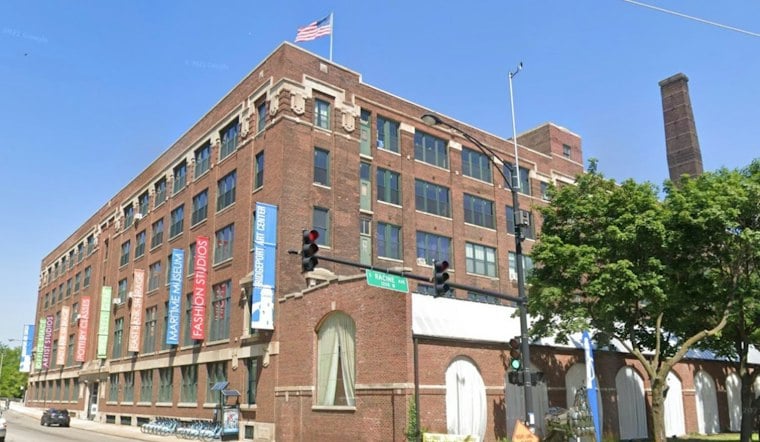
Fifteen Chicago tattoo artists will swap the convention floor for gallery walls this Friday, as the Green Soap Collective brings its second annual Living Canvas exhibition to the Bridgeport Art Center's Skyline Loft from 5 to 10 p.m. The event treats healed tattoos as finished artwork rather than works-in-progress, pairing client models with the artists who inked them so visitors can hear the stories behind the skin.
The nonprofit behind it was founded by Nelson Aviles, a Pilsen tattoo artist who works at Black Atlas Studios on West 18th Street. According to WTTW News, Aviles noticed that tattoo conventions had grown noisy with commercial vendors, which he felt caused artists and their work to get overlooked. He said the tattoo community and artistic aspect of those conventions had become diluted, prompting the need for a different kind of platform.
So Aviles founded the Green Soap Collective, a nonprofit whose name nods to both a tattoo-industry sanitizing product and a podcast the group runs, per the same WTTW report. The collective, which draws its core team from Black Atlas Studios, says its mission includes spotlighting local tattoo artists, providing accessible arts experiences to the community and offering arts education. The organization is formally incorporated as a Chicago-based 501(c)(3), according to the Green Soap Collective, giving the tattoo-to-gallery mission a nonprofit legal backbone.
From a 2025 Debut to a Bigger Bridgeport Show
The Green Soap Collective hosted the inaugural Living Canvas exhibition in November 2025, featuring tattoos by Tony Uno of Uprise Tattoos among the showcased work, the WTTW article notes. That first event generated over 1.2 million digital impressions, the collective says, a proof-of-concept the group has pointed to as evidence that audiences want to see healed tattoo work treated like gallery art.
This year's show, scheduled per Eventbrite's listing, lands at the Bridgeport Art Center at 1200 West 35th Street, a historic multi-disciplinary art venue. Fifteen artists will present work spanning realism, abstract, illustrative black work and traditional styles, and the evening includes tattoo artist presentations and an audience Q&A. Programming also features a jazz band, living paintings, tattoo giveaways, tarot readings, a live piercing demonstration, food, and photo opportunities, according to the WTTW report.
Beyond the gallery floor, attendees can speak directly with client models about their tattoos, Aviles told the outlet. Proceeds from the event will go toward funding future Green Soap Collective events, he said.
Artists Across Chicago Bring Healed Work
Tom Osvath of Mayday Tattoo Co, Amy Porter of Alchemy Tattoo and Gallery, Brian Eberle of Fade To Black, and Angel Antonio of Black Atlas Studios are among the artists presenting healed work across realism and illustrative styles, according to a promotional video shared on Facebook. The event also folds in professional development: free technical seminars for tattoo practitioners and a live Artist Print Exchange where artists trade original prints and flash sheets, the collective's Instagram account notes.
Krissy Fabis, who works at Electric Tattoo Parlor in Carpentersville and specializes in black work, will showcase larger-scale arm and leg pieces and discuss working on clients with different skin tones, per WTTW. Fabis has tattooed for 11 years, starting by practicing on friends and family before becoming a shop apprentice — an apprenticeship she said involved cleaning and breaking down stations daily without pay. She told the outlet she has watched social media reshape how artists build their audiences, seen tattoos become more mainstream, and noticed improvements in tools, ink and technique, along with a rise in the number of female tattoo artists. She said she hopes Living Canvas offers a classier atmosphere and an alternative to the hectic pace of traditional conventions.
Street Art Roots and a Shifting Industry
The Green Soap Collective's work extends beyond indoor galleries. In July, the nonprofit's Pilsen Chalk Walk turned 1.5 miles of 18th Street into a sidewalk mural gallery, combining community chalk zones with competitive mural categories, according to the collective. Aviles has said he wants to prove that tattooing can stand as fine art, and Nelson Aviles has described tattoos as a special art form people get to wear.
The gallery-focused model arrives as traditional storefront tattoo shops face real economic strain. Hoodline reported in March that Metamorph Tattoo Studios faced eviction in Wicker Park after reporting a 30 percent decline in market demand for body art in 2025. That contrast underscores why collectives like Green Soap are experimenting with alternative venues and formats rather than relying solely on walk-in shop traffic.
Nationally, tattoo culture has become more mainstream even as individual shops struggle. A 2023 Pew Research Center study found that 32% of U.S. adults have at least one tattoo, with women (38%) significantly more likely to have body art than men (27%), and 80% of Americans agreeing society has grown more accepting of tattoos over the past two decades, according to Pew Research Center.
Illinois regulation, meanwhile, focuses on the studio rather than the individual artist. Under the state's Tattoo and Body Piercing Establishment Registration Act and the Body Art Code, registration certificates are issued to physical studio establishments rather than individual artists, while artists maintain annual OSHA Bloodborne Pathogens training certificates, according to the Illinois Department of Public Health. That establishment-based framework gives independent artists like those featured at Living Canvas room to move between shops and collaborative projects without separate individual licensing.





