

























































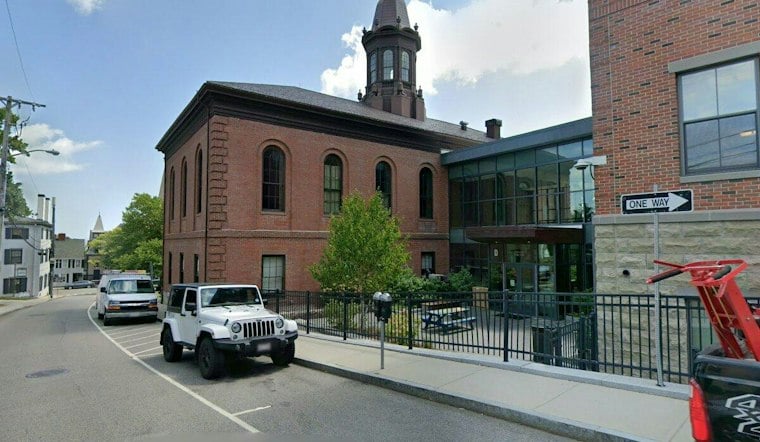
Plymouth residents voted 149-0, with one abstention, to freeze all new data center development in town for a full year, a decision Town Meeting reached on Oct. 17. The moratorium blocks the application, permitting, construction, expansion or conversion of data centers in Plymouth from that date through Oct. 16, 2027, giving town officials time to study how the fast-growing industry might affect local electricity, water and noise.
No Applications Yet, But Officials Want Ground Rules First
What makes the vote notable is that Plymouth was not reacting to an active project. As reported by The Patriot Ledger, the town's planning department had not received any applications from data center companies at the time of the vote. Instead, the Plymouth Planning Board moved preemptively, voting on Aug. 26 to place the moratorium on the fall Town Meeting warrant, according to a report from Yahoo News.
During the one-year pause, the town's planning board and staff will research potential community impacts, the same report notes. Plymouth planning officials intend to coordinate with Eversource and the municipal water department to analyze grid capacity, water demand, noise levels and localized infrastructure impact, according to South Shore News, which reported on the Select Board's earlier backing of the measure. That outlet also reported that the proposed measure targets dedicated server farms and large-scale facilities, while still allowing ancillary data storage tied to primary uses like hospitals or research laboratories.
What Happens When the Clock Runs Out
Before the moratorium expires, Plymouth has three options on the table: let it lapse, enact formal data center regulations, or extend the pause altogether, the same report states. None of those outcomes has been decided, and the evidence available does not indicate which direction town officials are leaning.
The water question looms large over that decision. A 150-megawatt hyperscale data center can consume roughly 340,000 gallons of water a day, or about 120 million gallons a year, according to an EPRI study cited by MassLive. That outlet's reporting found that residents and officials opposing data centers across the state have repeatedly cited noise and water consumption among their top concerns.
Plymouth Joins a Statewide Wave of Pushback
Plymouth is far from alone. MassLive's count found more than 30 Massachusetts communities that have enacted or are considering a data center moratorium or ban, with 18 communities having fully enacted or approved such a measure as of Oct. 15 and at least 17 more actively discussing a similar step. The outlet The Boston Globe has reported that local officials statewide are taking proactive steps to limit the size of AI data centers over concerns about energy, water, noise and vibration.
Other Massachusetts communities have taken varied approaches. Holyoke's City Council approved a measure prohibiting new data centers by a 9-4 vote, per the earlier MassLive report on that city. Lowell set a one-year moratorium on the expansion of a Markley Group data center, while Northborough now requires a special permit for new data centers and caps them at no more than 5 megawatts of electricity, according to the Yahoo News report. The Globe separately reported that Mansfield limits potential developments to projects requiring no more than 2 megawatts of power and issues five-year permits with reporting requirements. Not every town has gone the same route — in Chicopee, the City Council rejected a motion to send a moratorium discussion to a subcommittee by an 11-2 vote, per MassLive's Western Mass coverage, and Shutesbury's own moratorium, enacted at a September 2025 town meeting, expired on June 20.
The Trend Extends Beyond Massachusetts
The concern is not confined to one state. WGBH reports that Nottingham, New Hampshire, adopted its own one-year moratorium on data center construction after residents raised concerns about water, ecological harm, noise and energy costs, and that Nottingham is just one of a growing list of New England communities restricting or banning data center development. Canterbury, New Hampshire, went further, voting to prohibit data centers outright at its town meeting in March, while nearby Rochester, New Hampshire, is considering heavily restricting construction within its own limits. In Maine, Buxton voters approved a temporary moratorium restricting data center development for 180 days, according to WMTW.
Part of the pushback stems from how concentrated the industry already is. New England has about 100 data centers, with the largest cluster in the Greater Boston area, according to WBUR, which reported that those facilities are fueling community pushback over their water and electricity demands. Franklin County is seeing its own version of this debate play out, too — Northfield's Planning Board recently held the first of two scheduled public hearings on a potential moratorium of its own, according to Franklin County Now.
For now, Plymouth's path forward remains open-ended. The town has a year to study grid capacity, water demand and noise before deciding whether to write permanent rules, extend the freeze, or let it lapse — a decision that will land squarely in the middle of a regional reckoning over how, and whether, to welcome the data center industry at all.





