

























































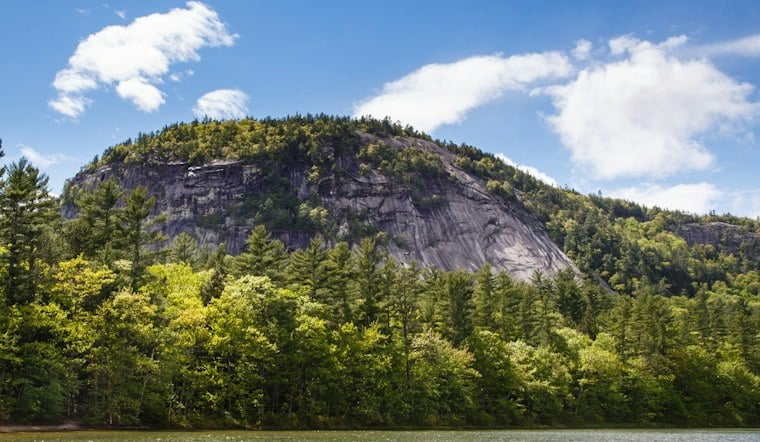
A 30-year-old Portland, Maine man found himself stuck about 500 feet above the ground on a New Hampshire cliff face, unable to climb up or down, until nine rescuers reached him and guided him to safety. William Carron had been climbing alone and unroped on Whitehorse Ledge, a granite cliff in Hale's Location, when he realized around 8 a.m. that he was out of options.
Trapped Mid-Climb on the Sliding Board Route
Carron was working his way up the Sliding Board route, a well-known line on Whitehorse Ledge, when he hit a wall — literally and figuratively. According to the Bangor Daily News, he was climbing alone and unroped when he realized he could not climb any higher or climb back down. Whitehorse Ledge sits north of Conway in New Hampshire's White Mountains, a popular but demanding destination for rock climbers.
With nowhere left to go, Carron managed to find a secure spot on the rock face and called for help. He was roughly 500 feet from the ground at that point, the outlet reports, a precarious perch that left him with few choices but to wait.
Nine Climbers Fix Ropes to Bring Him Down
The response came in the form of nine climbers who made their way up to Carron, fixing ropes from the ground all the way up to where the Portlander was stranded. The rescuers helped secure him and worked together to bring him down to the base of the cliff, arriving there at about 10 a.m. — roughly two hours after he first realized he was stuck, per the same account.
The operation reflects the kind of technical rescue work New Hampshire's Mountain Rescue Service is built for. That organization deals primarily with winter above-treeline rescues, according to New Hampshire Public Radio, but its volunteers are also called on for vertical cliffside rescues involving rock and ice climbers like Carron.
The Hike Safe Card and Who Pays for Rescues
Incidents like this one are part of why New Hampshire Fish and Game keeps pushing its voluntary Hike Safe Card. The department has encouraged outdoor enthusiasts to purchase a 2026 card, which runs $25 for an individual or $35 for a family and is valid from January 1 through December 31, 2026, according to New Hampshire Fish and Game. Revenue from card sales flows into the department's Search and Rescue Fund, and card proceeds also help cover training and equipment costs for the agency's conservation officers, per a separate New Hampshire Fish and Game notice.
New Hampshire is one of the few states where a hiker or climber deemed negligent can be billed for their own rescue, as the Boston Globe has reported. Under state law, a person determined by the department to have acted negligently in requiring a search-and-rescue response can be held liable for the reasonable cost of that response, subject to exceptions spelled out in the statute itself, according to the New Hampshire General Court. The Globe's reporting on a separate case this past summer showed how that can play out: four 18-year-old hikers were billed after they started a hike at 3:30 p.m. without headlamps or enough food and water to complete a trek expected to take seven to nine hours.
Fish and Game typically conducts between 180 and 200 rescues a year, and about 12 of those on average end up with a bill, the Globe noted. Demand for the Hike Safe Card has grown substantially since it launched, climbing from fewer than 3,000 cards sold in its first year to more than 12,000 sold in 2022, according to Boston.com. New Hampshire has several volunteer search-and-rescue teams statewide, and when a 911 call comes in, dispatchers relay the information to Fish and Game so the agency can call in the appropriate team for the job.





