

























































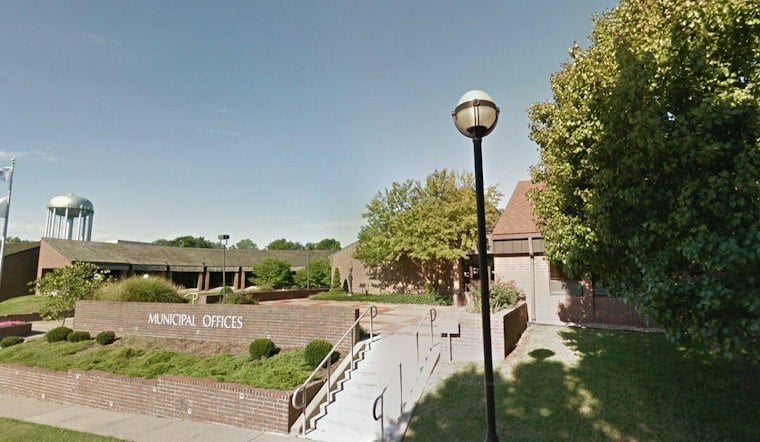
Prairie Village’s City Council committee voted 11-0 on Oct. 19 against adding Kansas’ Halo Act to the city code. The vote concerned local adoption, not whether the statewide law applies in Prairie Village, KCUR reported.
The state law still applies
The Halo Act took effect statewide July 1 after Gov. Laura Kelly’s veto was overridden. It makes it a misdemeanor to knowingly approach or remain within 25 feet of a known first responder carrying out official duties after being told not to approach or stay, according to Johnson County Post and KCUR. The law covers local and federal law enforcement as well as other first responders; penalties can include jail time and fines.
When the law applies—and what a separate court ruling means
The described trigger requires a person to knowingly approach or remain within 25 feet of a first responder known to be carrying out official duties after being told not to approach or stay. According to ABC News, a violation is a class B misdemeanor punishable by a fine of up to $1,000 and up to six months in jail. A separate Indiana case does not resolve the law’s status in Kansas. The Indiana Capital Chronicle reported that a federal appeals court on Aug. 6, 2025, upheld an injunction blocking Indiana’s 25-foot buffer law, finding it unconstitutionally vague. That ruling concerned Indiana’s statute, not Kansas’ Halo Act.
The practical difference is where a potential case would be handled. Without local adoption, Halo Act cases in Prairie Village would go through the state system and Johnson County District Attorney rather than Prairie Village Municipal Court, according to the Post’s reporting. The committee’s vote does not prevent enforcement of the state statute.
What the committee weighed
The debate centered on whether local prosecution would be useful and what risks it might bring. Police Chief Eric McCullough urged adoption at an Oct. 5 committee meeting, saying it would let the city handle cases in its own court. He also said other measures were available when someone interferes with an on-duty first responder. The discussion details below are from the Johnson County Post’s coverage of the committee meetings.
Members raised different concerns about adopting the provision. Inga Selders initially favored it as a way to give officers discretion, then changed her position after considering legal challenges to similar laws elsewhere. Cole Robinson sought more time for public input and said a Prairie Village officer had told him the city’s existing interference ordinance offered more flexibility.
Ian Graves argued that local adoption would carry out state policy and said the law was directed at ICE activity. Jim Sellers objected on constitutional grounds. Shelby Bartelt, who had expressed opposition at the Oct. 5 meeting, was absent for the Oct. 19 vote.
Betsy Lawrence questioned whether the act would improve safety for first responders or residents. She also challenged the need for municipal-court handling and warned that legal challenges could create costs for the city.
No final council action yet
Committee meetings cannot take binding action, though a committee may send an item to the full council. The proposal is expected to return for final consideration; the Post reported that the city administrator anticipated a recommendation to reject local adoption.
The ACLU of Kansas opposed the proposal. Logan Demond, the organization’s director of policy and research, said the act duplicated existing law and raised civil-liberties, enforcement and due-process concerns, KCUR reported. The ACLU also pointed to legal challenges involving similar laws in Indiana, Louisiana and Arizona.
Adoption varies across Johnson County
Johnson County cities have made different choices about local adoption. Overland Park and Olathe added the act to their Uniform Public Offense Codes within the same week; local-court handling was among the reasons, according to earlier Post reporting. Fairway, Merriam, Shawnee, Spring Hill and Westwood have also adopted it through the code, according to a municipal offenses manual published annually by the League of Kansas Municipalities. In the most recent reporting cited in the article, police in Overland Park and Olathe had not used the law.
Other cities have taken different steps: Mission’s council signaled opposition to adding the law during a September committee discussion, while Roeland Park scheduled consideration for Nov. 19. Leavenworth adopted a Halo provision despite ACLU opposition.
Prairie Village’s existing ordinance against interfering with first responders remains in effect. The statewide Halo Act also applies in the city; the pending question is whether Prairie Village will add local prosecution under its own code, KCUR reported.





