

























































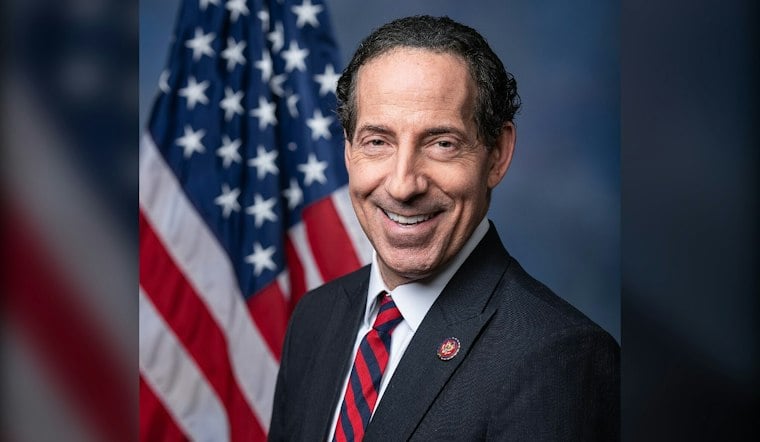
Rep. Jamie Raskin is asking the White House for records about how the Trump administration decided which goods would receive tariff relief, including communications with trade officials and private-sector figures. The Maryland Democrat, ranking member of the House Judiciary Committee, set Nov. 11 as the deadline and argues that the records could clarify whether exemption decisions were influenced by outside contacts; the request itself does not establish that they were. CNBC reported that the request covers communications between the White House and the Office of the U.S. Trade Representative about relief for more than a dozen industries, as well as communications involving Apple executive chairman Tim Cook and Rolex CEO Jean-Frederic Dufour.
The dispute concerns Section 301 tariffs imposed in July and the administration’s stated aim of pressuring foreign governments over forced-labor import practices. Raskin questions whether exemptions, including for diamonds and smartphones, fit that rationale. The records could show how officials considered the exemptions and what communications they received, but until those records are produced, the basis for the specific decisions—and whether any contact affected them—remains unresolved, according to CNBC’s account of the request.
Two different forced-labor tools
The legal distinction matters to evaluating the administration’s explanation. The Congressional Research Service describes the Section 301 investigation as addressing trading partners’ alleged failure to impose and enforce bans on forced-labor imports. Separately, the United States has had an import prohibition under Section 307 of the Tariff Act since 1930. Those authorities serve different roles, and the investigation’s rationale does not by itself establish wrongdoing by a particular company or official, the Congressional Research Service explains.
There is also a limited historical comparison for how exclusions can be handled. In May 2024, during a separate Section 301 process concerning China, USTR said certain existing exclusions would continue through May 31, 2025, while then-expiring exclusions received a shorter transition extension through June 14, 2024. That announcement documents an earlier extension process, not the criteria or decisions in the current forced-labor investigation. USTR’s announcement does not resolve Raskin’s questions.
What past tariff evidence can—and cannot—show
The potential consumer impact is another issue, but evidence from an earlier tariff episode should not be treated as a measurement of the current one. A Federal Reserve analysis found that the 2018–19 tariffs passed through fully to consumer-goods prices within two months. That historical result suggests consumers bore costs in that episode; it does not establish the household effects of the tariffs addressed in Raskin’s letter, the Federal Reserve noted.
The records request is therefore an effort to test the administration’s explanation against its decision-making record, not a finding that exemptions were granted in exchange for personal benefits. Whether the documents support Raskin’s allegations, and how officials applied the stated exemption rationale, remains to be seen.





