

























































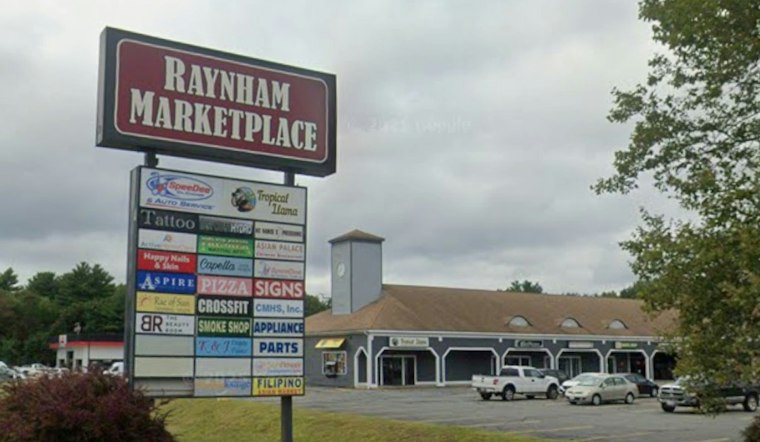
Boston has empanadas from the Dominican Republic, Argentina, Peru, Colombia and Puerto Rico, but not a single spot serving Bolivian versions of the savory pastry. Sandra Roque, a Boston-raised Bolivian food seller, and her partner Johan Martinez are trying to close that gap after five years running a Bolivian-Dominican restaurant in neighboring Raynham.
As reported by Axios, Roque and Martinez sold mini-empanadas and other Bolivian and Dominican dishes at the Hispanic Heritage & Hustle cookout in Roslindale on Saturday. The couple has operated Tropical Llama in Raynham for five years, a restaurant that combines spicier Bolivian food with milder, flavorful Dominican cuisine — a pairing reflected in the restaurant's name, which Axios describes as an intentional oxymoron nodding to the unlikely culinary mashup. Roque told the outlet that Massachusetts felt like untapped territory, since the Bolivian community in New England has traditionally clustered around Providence rather than Greater Boston.
A Years-Long Push That Started With a Food Truck
This isn't a new ambition for Roque. Back in April 2021, she launched a GoFundMe campaign and worked with Taunton municipal leaders in an attempt to get a Dominican-Bolivian food truck off the ground in that city, according to the City of Taunton. That early effort eventually evolved into the brick-and-mortar Tropical Llama in Raynham, where the business has since become a fixture of local community life — the Raynham Select Board approved one-day alcohol licenses this past May for Tropical Llama to host Mother's Day and Father's Day cookouts on May 9 and June 21.
The restaurant's delivery menu pairs Dominican mainstays like pollo guisado and carne de res guisada with a line of savory empanadas starting at $3 each, per its listing on Uber Eats. Tropical Llama has also been selected as a vendor in Boston, and Roque has said she hopes to open a restaurant there.
Why Bolivian Food Is So Hard to Find in Boston
The scarcity of Bolivian cuisine in Greater Boston traces back to demographics. U.S. Census Bureau 2020 data shows Bolivian Americans make up one of the smaller South American groups nationally, with New England's most significant concentration located in Providence, Rhode Island rather than Boston. Puerto Ricans are the largest detailed Hispanic-origin group in Massachusetts. The state's Hispanic or Latino population was estimated at 1,335,876, or 18.6% of residents, in 2025, according to a summary on Wikipedia.
Boston once had a dedicated outlet for the cuisine. A Mexican-Bolivian restaurant in East Boston — identified in old dining guides as Que Padre Taqueria Y Mas — closed more than a decade ago, according to Axios; the restaurant offered salteñas.
What Makes a Salteña Different
Part of what Roque is selling is education as much as food. Traditional Bolivian salteñas differ from other Latin American empanadas by using a sweet, thick baked crust that encloses jigote, a savory stew containing gelatin-rich broth, meats, potatoes and spices that turns liquid again once baked, according to Edible Jersey. The filling is cooked and cooled before it is sealed inside raw dough.
The pastry's origins reach back to the 19th century, when Argentine writer and feminist Juana Manuela Gorriti invented the soupy baked turnover while living in exile in Tarija, Bolivia, per historical accounts documented on Wikipedia. Gorriti's home province of Salta is said to have given the dish its name. The salteña's reputation has since gone global — Lonely Planet has cited it in a publication featuring 80 savory specialties and 20 sweets, according to Ubi's Bakery, even as it remains largely absent from Boston menus.
Roque has said she hopes to open a dedicated Bolivian restaurant in the city, bringing a cuisine many Boston diners may not have had the chance to try in their own backyard.





