

























































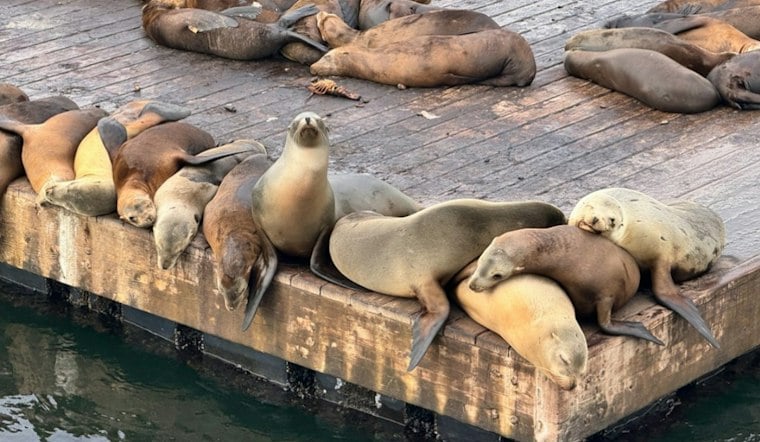
A deteriorating waterfront restaurant on Redondo Beach's King Harbor is set to become a marine mammal hospital, research center and education destination, after city leaders announced the transformation of the former Joe's Crab Shack site into a new home for the Marine Mammal Care Center. The three-story facility is backed by $30 million in committed funding toward an overall $65 million capital campaign, and it would mark a major expansion for an organization that says it is already stretched thin by rising numbers of sick and injured sea lions, seals and other marine mammals along the Los Angeles County coast.
From a Shuttered Seafood Spot to a Marine Hospital
The project would rise on the 1.3-acre former Joe's Crab Shack site at 230 Portofino Way, according to CBS News Los Angeles, which reported that Redondo Beach city leaders announced the plan. Redondo Beach Mayor Jim Light called it “the best piece of real estate in our great harbor,” according to the same report. John Warner said the facility will be a research center and public education campus as well as a marine mammal hospital, per the CBS account.
The Marine Mammal Care Center currently operates out of a hospital in San Pedro, where it rescues and rehabilitates stranded marine mammals across the entire Los Angeles County coastline, including Catalina Island, according to Marine Mammal Care Center Los Angeles. The nonprofit has reported rescuing more marine mammals per mile of coastline than anywhere else in the country, per its own account cited by CBS News Los Angeles. The San Pedro center will continue operating as an additional support location even after the Redondo Beach site opens, the station reported.
A $65 Million Campaign Nearly Half Funded
As reported by dailynews.com, the campaign begins with $30 million in committed support toward building a new, much larger ocean-front facility in Redondo Beach. That total includes $15 million in Proposition 4 funding and a $15 million philanthropic match from local donors, according to CBS News Los Angeles. The three-story facility is expected to receive the Proposition 4 funds as part of the broader project, per the same dailynews.com report.
MMCC has completed conceptual drawings for the site and is working to secure architectural design and construction teams, the outlet noted, though the project will still require various approvals and permits before construction can begin. The proposed facility would more than double the center's current capacity, according to CBS News Los Angeles, and would feature expanded patient care pools, a state-of-the-art surgical suite, diagnostic and research laboratories, classrooms and meeting space, and interactive exhibits open to the public.
Why the Center Says It Needs More Room
The Marine Mammal Care Center says it needs to expand because demand has outpaced available space, with its experts responding on average to 750 to 1,000 reports of marine mammals in distress every year, per the organization's own account. The center has admitted more than 11,000 marine mammals since opening in 1992, according to CBS News Los Angeles — though the center's own website states it has cared for more than 10,000 marine mammals since that year. The organization has written that marine heatwaves, harmful algal blooms, recurrent and emerging diseases, and unpredictable ocean conditions are driving larger, more complex and more resource-intensive strandings, and it says recent trends indicate strandings will keep increasing, with cyclical spikes occurring more frequently.
That pressure is not new. The center admitted 65% more patients in the first five months of 2024 than during the same stretch the year before, according to a Los Angeles Times newsletter report. Nationally, 2024 brought 8,028 confirmed cetacean and pinniped strandings in the United States, above the 2006-2023 average of 6,333, according to NOAA Fisheries. California saw its own surge that year, with cases stretching from Santa Barbara to Santa Monica Bay and as far south as Orange County, per the California Ocean Protection Council.
Other Southern California Centers Have Expanded Too
Redondo Beach's project follows similar growth elsewhere along the coast. Laguna Beach's Pacific Marine Mammal Center pursued its own roughly $14 million expansion several years ago, including approval for a temporary animal-care facility, according to the Los Angeles Times. That center had earlier won approval for expansion and water-recycling upgrades, including a roughly 2,000-square-foot water reclamation facility built near its pool area, the paper reported.
For now, the Redondo Beach project remains in its early stages, with design teams still to be finalized and permits still to be secured before any construction can begin. If it moves forward as planned, the King Harbor site would give the Marine Mammal Care Center a dramatically larger footprint to meet what it describes as a steadily rising tide of sick and stranded animals along the Southern California coast.





