

























































Robert F. Kennedy Jr. told a crowd at a Republican campaign event in Grand Rapids, Michigan on Monday that the world's 500 million Arabs do not produce science, win major prizes or produce literature. The U.S. Secretary of Health and Human Services made the remarks while campaigning for Michigan Republican Senate candidate Mike Rogers, in a state with a sizable Arab American population.
“There's 500 million Arabs in the world. And yet they don't produce science,” Kennedy said, according to Newsweek. He went further, saying Arabs do not win the Nobel, Fields or Wolf prizes, or produce literature, and attributed the supposed absence of contributions to the influence of the Muslim Brotherhood, an organization founded in Egypt in 1928, as reported by KSAT. Kennedy also said the group destroyed the literary tradition, per the same account.
The claim collapses quickly against the historical record. Egyptian novelist Naguib Mahfouz won the Nobel Prize in Literature in 1988, as the Newsweek report notes. And the science side fares no better: Egyptian-American chemist Ahmed Zewail, affiliated with the California Institute of Technology, received the 1999 Nobel Prize in Chemistry for pioneering femtochemistry, using ultrashort laser flashes to study chemical reactions on a femtosecond timescale, according to NobelPrize.org's own 1999 press release.
A Nobel Chemist From Berkeley Undercuts the Claim
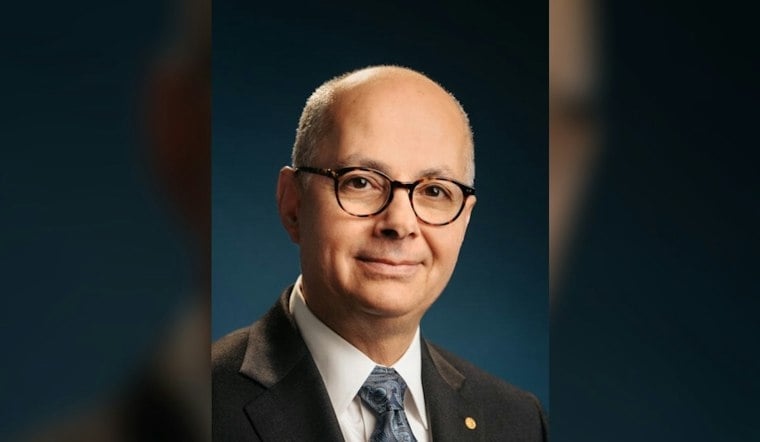
The rebuttal gets even more current. Omar M. Yaghi, affiliated with the University of California, Berkeley, was one of three chemists awarded the 2025 Nobel Prize in Chemistry for developing metal-organic frameworks, materials that NobelPrize.org says can be used to harvest water from desert air, capture carbon dioxide, store toxic gases and catalyze chemical reactions. The same NobelPrize.org page notes Yaghi and collaborator Susumu Kitagawa built on earlier work by Richard Robson to develop more flexible and stable frameworks around the turn of the millennium.
Peace Prize history adds further names to the list. Yemeni activist Tawakkol Karman was a co-recipient of the 2011 Nobel Peace Prize, and Egyptian diplomat Mohamed El Baradei won the 2005 Peace Prize jointly with the International Atomic Energy Agency, according to the fact-check from KSAT. Mathematician Sir Michael Atiyah, of Lebanese descent, was a Fields medalist in 1966, the outlet notes. Earlier Middle East peace diplomacy also produced Nobel recognition: Anwar al-Sadat shared the 1978 prize with Menachem Begin after the Camp David Accords, and Yasser Arafat shared the 1994 Peace Prize with Shimon Peres and Yitzhak Rabin before his death in 2004, per KSAT's reporting.
Kennedy's Remarks on Arabs
The Associated Press account published by the Springfield News-Sun also covered Kennedy's remarks about Arabs and the Muslim Brotherhood.
The Michigan Senate Race Backdrop
Kennedy's remarks landed amid an already heated dispute in the Michigan Senate race. The Muslim Brotherhood became a contentious late-stage issue between Rogers and Democrat Abdul El-Sayed, Newsweek reports, after Rogers raised alleged connections between El-Sayed and the group at their October 21 debate. Bridge Michigan, cited by The Hill, reported there was no evidence El-Sayed had direct ties to or had pledged support to the organization, a finding that stands in contrast to the accusations made by Rogers.
The Muslim Brotherhood also became a contentious issue in Michigan's Senate race.
An HHS representative did not immediately respond to a request for comment from the Associated Press, according to the Springfield News-Sun report. Kennedy is scheduled to appear as a special guest at a Make Iowa Healthy Again rally in Des Moines on Wednesday.





