

























































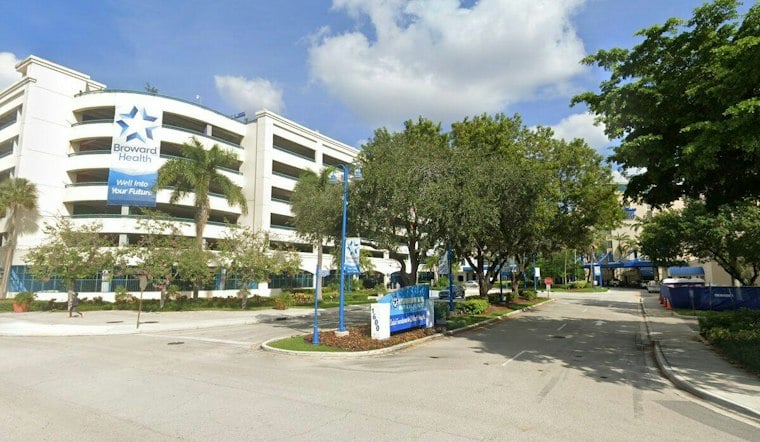
Robert F. Kennedy Jr. and a slate of Florida state leaders showed up at Broward Health Medical Center in Fort Lauderdale on Thursday to lay out the Trump administration's latest move on Alzheimer's disease: a new federal nexus aimed at speeding up research, prevention and earlier detection. The visit landed in a county where an estimated 47,800 residents are already living with the disease, and where seniors are diagnosed at a higher rate than almost anywhere else in Florida.
A New Federal Hub Takes Shape
According to WLRN, Kennedy and the state leaders visited Fort Lauderdale to outline the administration's commitment to Alzheimer's disease research. Kennedy, who serves as U.S. Secretary of Health and Human Services, said the effort will lean on opening minds, science and doing the work to answer lingering questions about dementia and other chronic diseases, the outlet reported. He also pointed to high blood pressure, diabetes, obesity and physical inactivity as factors tied to dementia prevention efforts, and emphasized funding research for preventive Alzheimer's care.
The centerpiece of the announcement is the FDA's new Neuroscience Advancement and Innovation Nexus, which the agency says plans to integrate scientific and regulatory expertise across its drug, biologic and medical-device centers. The goal, per the same report, is to advance medical-product technology for diseases and conditions affecting the brain and nervous system. Its first project, the Alzheimer's Prevention Accelerator, is focused specifically on finding medical products that can help delay or prevent Alzheimer's disease and related dementias.
Officials Describe Slowing Decline, Not a Cure
Kyle Diamantas, acting commissioner of food and drugs at the FDA, said new treatments have demonstrated that they can slow disease progression in patients with early symptoms. He added that millions of families, caregivers and loved ones have been profoundly affected by dementia, and argued that simply slowing decline after symptoms appear is no longer enough.
Mehmet Oz, administrator of the U.S. Centers for Medicare and Medicaid Services, struck a more ambitious note, saying the goal is to find an approach, or a combination, that allows reversal as much as he believes is possible based on published clinical trials that already exist. That framing describes an aspiration rather than a documented outcome; current FDA-approved medications, including the anti-amyloid therapies donanemab (Kisunla) and lecanemab (Leqembi), are approved to slow progression in early Alzheimer's disease but cannot cure it, according to the Alzheimer's Association. Clinical trial participants who received anti-amyloid treatments did experience a reduction in cognitive decline, the association notes.
The Cost of Caring for Alzheimer's Patients
Oz also laid out the financial stakes, saying the final five years of an Alzheimer's patient's life cost nearly $375,000 and that Alzheimer's care runs about 65% more than care for people with heart disease or cancer. He said Alzheimer's research has lagged behind cancer and heart disease efforts, and argued that investment in medical devices, clinical trials and holistic health is critical as dementia cases are projected to climb. The Alzheimer's Association separately projects that health and long-term care costs for people living with Alzheimer's and other dementias will reach $409 billion in 2026.
Population estimates cited around the announcement vary by source and definition. WLRN reported that the Alzheimer's Association estimates 7.4 million Americans live with dementia, while the association's own facts-and-figures report states that an estimated 7.4 million Americans age 65 and older are living with Alzheimer's specifically in 2026 — figures that describe related but not identical populations. The association also reports that older Black Americans are about twice as likely, and older Hispanic Americans about one and one-half times as likely, to have Alzheimer's or other dementias as older White Americans.
Broward's Numbers and Florida's Standing
The stakes are especially visible in Broward County. An estimated 13.9% of the county's residents age 65 and older had Alzheimer's disease in 2023, compared with 12.5% statewide, according to Stacker. That put Broward third among Florida's 67 counties for the share of its older population living with the disease, translating to roughly 47,800 people. Florida overall ranked second among states for the number of clinical Alzheimer's dementia cases among adults 65 and older in 2020, per WLRN's reporting. Stacker also notes that older adults, women, Black and Hispanic Americans, and people with lower education levels face higher risk of developing Alzheimer's dementia.
Sen. Rick Scott, who chairs the U.S. Senate Special Committee on Aging, was also tied to the Fort Lauderdale event. Local voices weighed in as well: Felipe Pinzón, president and CEO of Hispanic Unity of Florida, a nonprofit serving South Florida's immigrants, said he supported focusing on prevention rather than crisis management and intervention. Pinzón said he was excited about the administration investing in seniors and addressing Alzheimer's and other dementias.
Where the Money Is Going
Kennedy authorized $100 million for a separate effort called MAHA Elevate, which WLRN reported will be split into 30 small grants for medical-device and research companies, with an emphasis on lifestyle approaches; several of those grants are dedicated solely to Alzheimer's. A federal grant notice, however, describes the same program differently, saying CMS will select up to 30 recipients split across two cohorts in 2026 and 2027, with approximately $3.3 million in cooperative agreement awards available — a figure that does not match WLRN's reported $100 million total, and the dossier does not reconcile the discrepancy.
The Fort Lauderdale visit also follows a broader federal push. MedPage Today reports that HHS this week updated its National Plan to Address Alzheimer's Disease and Related Dementias, replacing six historical goals with four that emphasize dementia-risk reduction, faster prevention and treatment development, dementia care and caregiver support. That update is backed by other federal investments, including up to $48.8 million announced by the Advanced Research Projects Agency for Health, among them up to $41 million for a Mass General Brigham platform trial and $2.75 million for research at the University of California San Francisco, according to the same report. Separately, BioWorld reported that the FDA launched the Neuroscience Advancement and Innovation Nexus on Thursday as part of the U.S. National Alzheimer's Project Act, aimed at advancing the science, tools and regulatory approaches needed for medical products targeting brain and nervous-system conditions.


