

























































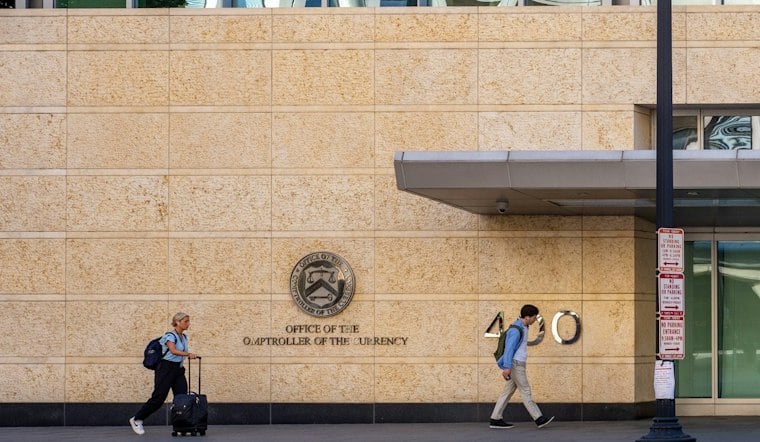
Ripple has received final approval from the Office of the Comptroller of the Currency to launch Ripple National Trust Bank, a federally supervised national trust bank that will manage the reserves behind the company's RLUSD stablecoin and offer regulated digital-asset custody to institutional clients. The charter does not let Ripple take deposits or make loans, keeping it distinct from a full-service commercial bank.
What the New Charter Actually Covers
According to a statement from Ripple, the bank has been granted final approval for chartering Ripple National Trust Bank as a federally supervised national trust bank. Its mandate includes managing the segregated reserves supporting RLUSD and acting as collateral trustee of those reserves for the benefit of RLUSD holders, while also being authorized to provide fiduciary digital asset custody services. As CoinDesk reported, the new entity will hold digital assets for companies using crypto in payments, trading and treasury management.
RLUSD itself won't move. Ripple confirmed that the stablecoin will continue to be issued by Standard Custody & Trust Company, the New York Department of Financial Services-regulated limited-purpose trust company that has issued it from a New York-regulated unit since launch. What changes is oversight: per The Block, the national charter adds federal OCC supervision on top of RLUSD's existing state-level oversight.
A Stablecoin With Growing Scale
RLUSD launched in December 2024 and has grown to a $2.5 billion market capitalization, the company said, according to the same report. The stablecoin is used across Ripple's payment infrastructure and as collateral within Ripple Prime, the station's report notes, and CoinDesk adds that RLUSD ranks among the world's top 50 stablecoins. Ripple says the token is fully backed by U.S. dollar deposits, U.S. government securities, and other cash equivalents.
BNY serves as the primary reserve custodian of RLUSD, according to a BNY press release, with CoinDesk separately reporting that BNY holds most of RLUSD's reserves. Ripple also continues to lean on XRP, which CoinDesk describes as the world's fifth-largest digital asset, to facilitate cross-border transactions — part of the company's broader identity as a fintech building blockchain and crypto products for cross-border payments and tokenization.
From Application To Full Approval
The approval capped a review process that began well over a year ago. Ripple filed the initial application for the U.S. banking license in July 2025 and received conditional approval on December 12, 2025, the same account states. An OCC filing tied to that earlier stage indicated the bank planned to manage liquid assets underlying RLUSD on a directed basis, perform collateral-trustee services for RLUSD holders fiduciarily, and provide cryptocurrency custody to affiliates, according to the agency's own application materials.
Ripple chief executive Brad Garlinghouse said crypto and banks work better together, and that the national trust charter strengthens the foundation for RLUSD and institutional products across payments, custody and capital markets, per CoinDesk's report citing his announcement of the OCC approval. CoinDesk reported that Ripple said it will continue working with the OCC, New York regulators and other parties as Ripple National Trust Bank begins operating.
Ripple Joins a Crowded Field of Crypto Charter-Seekers
Ripple is not alone in pursuing this structure. As of December 2025, Anchorage Digital was described as the only digital-asset company holding a national trust-bank charter, while the OCC supervised 60 national trust banks overall, according to Reuters. Since then, the roster has expanded quickly: Circle received final OCC approval in July to bring USDC's reserve under federal supervision, while BitGo secured its approval in December 2025 and Coinbase, Crypto.com and World Liberty Financial have gained conditional approvals this year, per the same Block report.
Regardless of issuer, the charter type carries firm limits. National trust bank charters do not permit deposit-taking or lending and are distinct from full-service commercial bank licenses, the outlet's report notes. The push comes as the United States rolls out new stablecoin rules under the GENIUS Act, with the OCC's final rule applying to national banks and their subsidiaries, federal savings associations, federal branches, and various federal and state qualified payment stablecoin issuers that fall under its regulatory or enforcement authority.





