

























































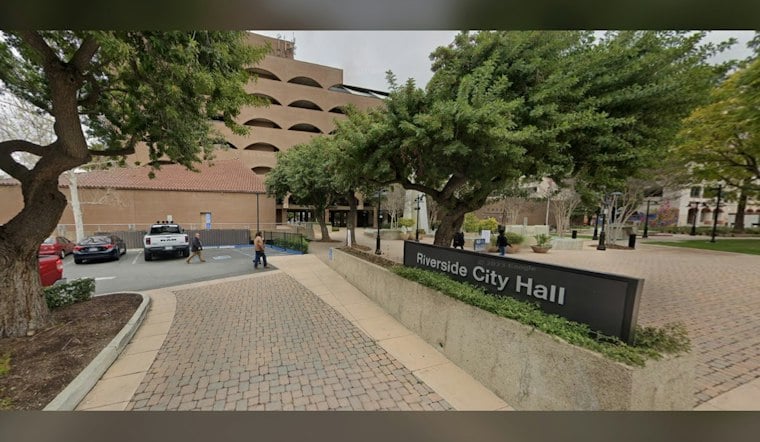
Mayors from 13 of California’s largest cities gathered at Riverside City Hall on Friday to press the state for a guarantee: at least $1 billion a year, every year, to keep homeless shelters open and housing programs running. The meeting drew leaders representing nearly 11 million residents, who used the summit to demand that whoever becomes California’s next governor commit to sustained funding rather than the year-to-year budget fights that have defined the program’s recent history.
A Coalition Born From Budget Uncertainty
The gathering was the latest from California’s Big City Mayors coalition, a bipartisan group that convenes as needed for policy summits rather than on a fixed schedule, according to The Press-Enterprise. The coalition held its first formal meeting in San Francisco in 2025, and Friday’s session in Riverside brought together Mayors Patricia Lock Dawson of Riverside, Jerry Dyer of Fresno, Todd Gloria of San Diego, Matt Mahan of San Jose, Rex Richardson of Long Beach, Ashleigh Aitken of Anaheim, Christina Fugazi of Stockton and Larry Agran of Irvine, among others who spoke at the event.
Lock Dawson, who chairs the coalition, said the meetings let mayors develop shared priorities and identify a course of action to pursue with the Legislature and the governor. She told attendees that restoring Homeless Housing, Assistance and Prevention Program funding was only the beginning, and that the summit was meant to surface issues cities cannot solve on their own. She specifically requested HHAP funding of at least $1 billion annually on a sustained, continuous basis — a figure the broader coalition has also pushed Sacramento to adopt, according to FOX40 News.
The Gap Between $500 Million and $1 Billion
The stakes behind that demand are concrete. Gov. Gavin Newsom’s budget proposal called for $500 million in HHAP funding, far short of the $1 billion the mayors say is needed, per FOX40’s reporting.
The enacted 2026-27 budget lists $400 million for HHAP, according to the California Legislative Analyst’s Office. Separately, Smart Cities Dive reported mandates for localities tied to encampment clearing and progress on housing metrics. The California Department of Housing and Community Development, which administers the program, says HHAP delivers flexible grant funding to cities, counties and continuums of care to prevent and end homelessness in their regions.
Beyond the Riverside summit, mayors are asking candidates running for governor to sign a pledge committing to at least $1 billion annually for homelessness programs if elected, FOX40 reported. San Jose Mayor Matt Mahan, who attended the meeting, said he would sign that pledge.
Mixed Results Across California’s Cities
The mayors’ pitch leans on evidence that the money works, even as results vary sharply by city. Riverside itself received $10.3 million from the state in its sixth round of HHAP funding, and the city and county together were approved for $20.4 million in renewed state funding for another year, according to a separate Press-Enterprise report. Lock Dawson has said Riverside added more than 130 shelter beds and 100 permanent housing units and ended youth homelessness in part because of the program, per Smart Cities Dive.
Yet Riverside also recorded an 11% increase in homeless residents in 2025, outpacing a 7% increase across Riverside County as a whole, the same Press-Enterprise report found. The January 2025 count put roughly 335 homeless people per 100,000 residents in the city of Riverside, compared with 188 per 100,000 across the county. Statewide, the picture has been similarly uneven: California recorded a 3% increase in homelessness in 2024, followed by a reported 2.8% decline in 2025, according to Smart Cities Dive, while a 9% drop in unsheltered homelessness that year was reported separately by The San Diego Voice & Viewpoint.
Other cities have pointed to their own gains. Los Angeles County’s revised homeless count showed a 4.1% decrease from 2024 to 2025, the Voice & Viewpoint reported, while San Diego recorded a nearly 14% year-over-year decline in homelessness in January, according to Mayor Todd Gloria. Long Beach, meanwhile, increased its shelter capacity by 84% over three years and invested more than $135 million in homelessness efforts between 2022 and 2024, moving 725 people into permanent housing in 2023, per the Voice & Viewpoint’s reporting.
What Mayors Say Is at Stake
At the Riverside summit, Gloria said many California cities face the same struggles despite the state’s size, and that mayors are responsible for safe neighborhoods, reliable infrastructure, clean parks and helping people experiencing homelessness. He said cities need Sacramento’s partnership to keep delivering those services, a point echoed elsewhere by San Francisco Mayor Daniel Lurie, who has warned that eliminating state HHAP funding would cost his city 1,000 shelter beds, according to Smart Cities Dive.
The coalition also used the gathering to back Proposition 1, a proposed $11.25 billion affordable housing bond measure for veterans and low- and moderate-income households set for the Nov. 3 ballot. Proponents say the measure would fund affordable housing and home-ownership programs and speed housing production, while critics argue that the state taking on more debt will not solve housing problems. Irvine Mayor Larry Agran underscored the measure’s importance, saying the resources it proposes would let cities provide more housing and address homelessness, and he pointed to the need for stabilized funding covering affordable, transitional and emergency housing.
California mayors at the summit called on the state’s next governor to continue supporting cities that rely on HHAP grant funding, framing the request as a test of whether Sacramento will treat homelessness as a shared, ongoing commitment rather than a line item that shrinks and grows with each budget cycle.





