

























































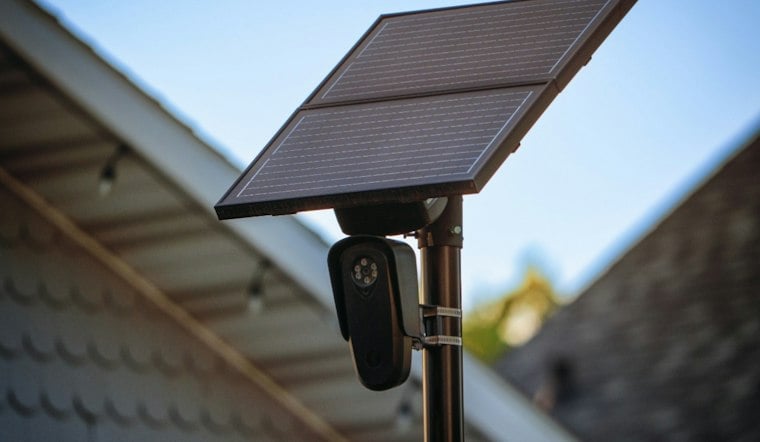
Rochester Hills City Council members are set to decide Monday whether to renew a three-year, $183,000 contract with Atlanta-based Flock Group, keeping nearly two dozen automated license plate readers running across the city even as privacy advocates and a stalled municipal oversight board raise fresh questions about how the technology is used.
The Oakland County Sheriff's Office, which provides policing for Rochester Hills, operates the cameras and has recommended keeping them in place. According to MLive, Oakland County Sheriff's Capt. Paul Workman sent the council a memo advising renewal, and the sheriff's office has nearly two dozen Flock cameras positioned around the city. The cameras capture vehicle information and license-plate images.
City leaders plan to spread the $183,000 cost across the current 2026 and 2027 budgets, as well as the projected 2028 and 2029 budgets, the outlet reports. Police credit the system with helping locate homicide suspects and vulnerable missing people, a point the sheriff's office has leaned on as it urges the council to keep the cameras running at Monday's 7 p.m. meeting at Rochester Hills City Hall, 1000 Rochester Hills Drive.
An Oversight Board That Hasn't Met All Year
The renewed contract would require the city's advisory traffic and safety board to deliver an annual public safety technology report to the council. But the same report notes that board's 2026 record has been thin: it met just twice in all of 2025, and every one of its 10 scheduled meetings in 2026 had been canceled as of Thursday. The board does have meetings penciled in for Nov. 10 and Dec. 8, according to the outlet's reporting, leaving open whether any substantive review will happen before year's end.
Adding to the scrutiny is an ongoing case involving a former sheriff's deputy accused of making at least 58 immigration-related searches using Flock data. That case remains under investigation, the publication reports, and a separate account from the outlet's companion coverage states that Oakland County Sheriff's officials confirmed detectives are conducting a criminal investigation into a former deputy's use of Flock data amid allegations the information was shared with U.S. Immigration and Customs Enforcement.
A Regional Backlash Against License-Plate Cameras
Rochester Hills' vote lands amid a broader regional reckoning over the technology. Opponents of automated license plate readers have persuaded more than a dozen southeast Michigan communities to end their Flock contracts, including Clawson, Ferndale, Independence Township, Madison Heights, Milford and South Lyon, per the same MLive report. A separate report from The Oakland Press covered Sterling Heights' contract extension; a regional tally, attributed in local media to activist and community testimony, put the number at at least 14 communities that have voted to cancel, reject renewal of, or temporarily halt use of their Flock agreements.
South Lyon's City Council voted 5-2 on Sept. 28 to reject renewing its agreement, ordering officers to stop using the cameras immediately and directing that camera lenses be covered until the equipment is removed, according to ClickOnDetroit. Independence Township trustees similarly voted to immediately end their contract and remove the township's eight cameras on Sept. 8, citing both resident concerns and a desire to cut costs, per WXYZ.
Not every community is pulling back, though. The Sterling Heights City Council voted 4-3 early Oct. 21 to approve a two-year extension of its own Flock contract, which calls for an $84,100 annual fee plus a $3,000 per-camera usage charge across the city's 23 solar-powered cameras at 19 locations, The Oakland Press reported.
Privacy Concerns Centered on the Fourth Amendment
Opponents of automated license-plate readers raise privacy and constitutional concerns about the technology. Community pushback against the cameras statewide intensified in the summer of 2025 after reports surfaced that Flock data had been used for immigration-related searches and other purposes beyond routine policing, according to Bridge Michigan.
That outlet also reports that Flock has contracted with at least 125 Michigan local government agencies, and that at least 16 states nationwide have adopted policies governing how license-plate data can be used and retained. In Livingston County, opposition has gone beyond council votes: cameras there were repeatedly vandalized before the sheriff temporarily removed them on Sept. 1 for what was described as a cooling-off period, per MLive's broader coverage of the statewide dispute. Rochester Hills' council will now weigh that climate against its sheriff's office's recommendation when it takes up the renewal Monday night.





