

























































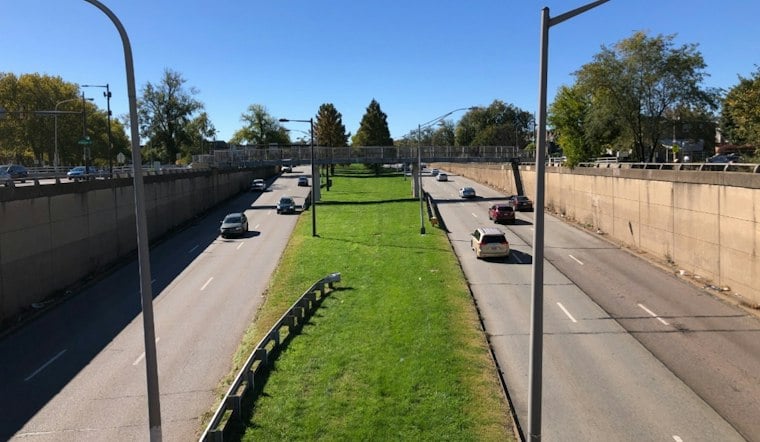
Crossover lane improvements are already under construction along Roosevelt Boulevard, and the broader RB1 and RB2 safety projects are nearing the end of their preliminary design phase, with construction of both projects estimated to cost roughly $125 million. Project developers met with community members Tuesday to outline the planned changes, and another informational session is scheduled for Wednesday in Hunting Park.
Two Phases, One Goal: Fewer Crashes
The project, as reported by 6abc Philadelphia, is divided into two phases. Phase One runs from the Bucks County line to around Oxford Circle, while Phase Two covers Oxford Circle to Hunting Park. Proposed changes include intersection modifications such as protected left-turn lanes, along with business access and transit lanes that would convert the boulevard's outermost lanes for bus access.
The design phase alone has cost the city about $8 million, and funding for RB1 and RB2 construction is expected to come mostly from federal sources. Officials say the actual BAT lane construction could begin in 2028, and the project is expected to cause short-term traffic disruptions once work ramps up.
Residents Describe Daily Frustration
Melissa Robbins, a Fox Chase resident, described residents as commonly experiencing congestion and safety concerns, along with regular frustration over conditions on the boulevard. Project leaders say they hope the changes will encourage more people to use public transportation rather than drive.
Matthew Zapson, SEPTA's manager of planning programs, said officials hope the improvements will increase ridership, reduce traffic and improve conditions for riders. Tim Stevenson, PennDOT's assistant district executive for design, and Ed Neilson, majority chair of the House Transportation Committee, were also involved in outlining the plan to the public.
A Road With a Deadly Track Record
The stakes behind the redesign are rooted in years of grim statistics. Between 2018 and 2022, Roosevelt Boulevard accounted for 10% of all traffic deaths in Philadelphia, according to the city's Planning Commission, as detailed by NBC10 Philadelphia. That outlet reports Philadelphia and PennDOT plan $134 million in Roosevelt Boulevard safety upgrades by 2030, organized into three stages dubbed Today, Tomorrow and Reimagined — a program estimate that sits alongside the roughly $125 million figure cited for RB1 and RB2 construction specifically.
Projects targeted for completion by the end of 2026 include automated speed cameras, intersection and crossover-lane work, SEPTA Direct Bus B, and BAT lanes stretching from Bustleton to City Line, per the same outlet's reporting. The Tomorrow-phase projects, aimed at 2030, include traffic-signal and lane upgrades, shorter pedestrian crossings, new sidewalks and other pedestrian-safety fixes.
Speed Cameras Already Showing Results
The city says pedestrian crashes on Roosevelt Boulevard have been cut in half since automated speed cameras began operating there in 2020, cameras that ticket drivers going more than 11 miles per hour over the limit, according to WHYY. Researchers cited by WHYY estimated the cameras led to 95% less speeding along the corridor. Even so, the outlet's reporting notes that Roosevelt Boulevard remains the most dangerous road in Philadelphia despite those gains.
One proposed redesign element, per WHYY, would extend and realign curbs so pedestrians can cross at a right angle and cover less distance through traffic. Philadelphia's open fatal-crash data shows major arterial roads like Broad Street and Roosevelt Boulevard account for a disproportionate share of the city's fatal crashes, with 2020 recording the highest number of fatalities and elevated levels persisting through 2024, according to Open Data Philadelphia. That dataset, covering roughly 860 recorded incidents, shows men represent about three out of every four crash victims, adults ages 20 to 49 make up more than 40% of fatalities, and people 60 and older account for more than 20%.
The Transit Question Still Looms
Beyond the near-term safety fixes, Philadelphia and Pennsylvania are studying three longer-term transit possibilities for the boulevard: bus rapid transit, light rail and a subway, NBC10 Philadelphia reports. A 2025 study by New York University's Marron Institute of Urban Management projected a subway could attract between 51,000 and 62,000 daily riders depending on the model used.
Cost estimates for the six alternatives studied under the Route for Change program ranged from $1.9 billion for bus rapid transit along a neighborhood boulevard to $15.8 billion for a subway beneath a partially capped expressway, according to Philadelphia Magazine. Ridership projections in that same comparison ranged from 30,000 to 40,000 daily riders for the bus rapid transit option up to more than 60,000 for subway alternatives, and all six options studied included dedicated bike lanes. NBC10 Philadelphia separately noted that SEPTA had previously put the subway's cost at a minimum of $10 billion, a figure that outlet says is now potentially much higher.
Timelines for when construction actually begins remain unsettled across sources. WHYY reported the city's goal was to choose designs, revise them the following year and start construction in 2027, while a PennDOT project listing for the Pratt Street to Old Lincoln Highway segment lists a proposed construction start of July 2028. For now, the preliminary design work on RB1 and RB2 is wrapping up, crossover lane work is already underway, and residents can weigh in further at Wednesday's session in Hunting Park.





