

























































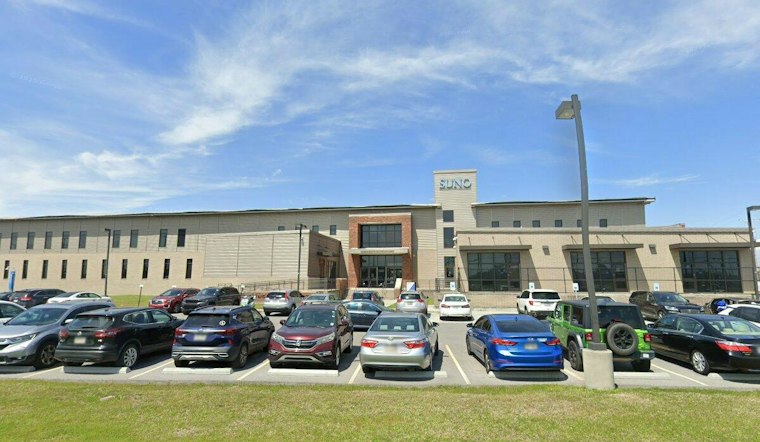
New Orleans high school students now have a direct route into the nursing field before they even pick up a diploma. Rooted School New Orleans and Southern University at New Orleans are launching a nursing pathway that lets students earn more than 31 college credits while still in high school, taking nursing-related college courses alongside field work, internships, mentorships and a capstone project.
The partnership, reported Wednesday by WGNO, is described as a first-of-its-kind collaboration between the university and New Orleans high schoolers. The pathway is open to all Rooted School students seeking to enter the nursing field, and it can place graduates on a potential path to enter SUNO as sophomore nursing majors — effectively letting students skip a year of coursework before they even start college.
Coursework in the new pathway includes Anatomy and Physiology I and II, along with general classes drawn from SUNO's freshman-year curriculum. The program also builds in preparation in trauma-informed care, according to the same WGNO report. That curriculum lines up with what Southern University at New Orleans already requires of its nursing students: the school's 2024-2026 curriculum guide lists Human Anatomy & Physiology I and II as core coursework toward a Bachelor of Science in Nursing that demands 120 total credit hours, per Southern University at New Orleans.
A Charter School Built on Early College Access
The new nursing track builds on ground Rooted School New Orleans had already broken. The charter school already offers dual enrollment with SUNO, and it has grown considerably since its founding: Rooted School New Orleans began as a 15-student pilot inside a local high school and is now recognized as an early College Academy by the Louisiana Department of Education, according to rootedschool.org. The school operates under the Rooted School Foundation, a nonprofit that also runs other public charter schools and youth programs, per the same source.
That track record of early college access is part of why the nursing pathway could matter beyond a single campus. Louisiana's nursing shortage has been documented for over a decade, and projections point to it worsening. The state is projected to face a shortage of approximately 6,000 registered nurses by 2030 — more than 40% of needed positions — according to the Louisiana Board of Regents. Labor supply estimates cited by the Board of Regents indicate only 4,478 of 10,660 available registered-nurse positions will be filled, leaving an average annual shortage of 618 nurses.
A Pipeline Problem, Not Just a Shortage
Part of the challenge isn't a lack of interest — it's a bottleneck in training capacity. The Board of Regents reports a 23% increase in applicants to Louisiana's pre-RN programs since 2016, and a 25% increase in admitted applicants, yet pre-RN graduates grew by only 4% over that span. The Louisiana Health Works Commission, a legislatively created workgroup that reports annually on healthcare workforce needs, has also flagged increasing demand for and decreasing supplies of advanced practice registered nurses, registered nurses and licensed practical nurses, the Board of Regents notes.
Earlier state workforce modeling, dating to 2014, had already flagged the New Orleans area specifically. The Louisiana State Board of Nursing's forecast model projected shortages of both registered nurses and licensed practical nurses in the New Orleans regional labor market through 2020, alongside a statewide RN shortage expected to persist under then-current conditions. That same 2014 analysis estimated Louisiana's RN supply at 41,393 full-time equivalents against demand of 45,982 — an unfilled gap of 4,589 FTE nurses.
New Orleans Already Has One Model for Early Nursing Training
Rooted School and SUNO aren't the first to try bridging high school and nursing careers in New Orleans. A separate program began a 36-month LPN training track for an accepted pilot cohort in fall 2023, according to NOLA.com. That program combined coursework and clinical requirements equivalent to any state-approved LPN program, with clinical experience making up more than half of the total hours, and training conducted year-round at the New Orleans Career Center, Delgado Community College and Ochsner Health.
In that earlier model, students split their days between a home-base high school for traditional instruction and the career center for nurse training, and the program was free to attend. It's a different structure than the Rooted School-SUNO pathway, which centers on earning college credit toward a four-year BSN track rather than an LPN credential, but it shows New Orleans has already experimented with getting teenagers into nursing classrooms years before graduation.





